
The literary map of 2026 is being drawn not in the ivory towers of the old establishment, but in the bustling markets of Lagos, the sun-drenched streets of Montego Bay, and the digital spaces where serialized fiction bleeds into the canon. As we make our way into this new year, the buzz from booksellers in Abuja, Nairobi, and Brighton suggests a shift in gravity, a move away from the performative trauma narratives that once dominated the “African” shelf and toward a more kaleidoscopic vision of Black existence.
The writers demanding our attention this year are satirists, fantasists, historians, and thrill-seekers. They interrogate power, dissect masculinity, and, crucially, insist on joy in their works of satire, sorcery, and secrets from Africa and the Diaspora. These writers are not waiting for permission. They are renting secrets, invoking magic, pillaging the dead, and counting to ten. From the digital serials of Grace Grandi to the historical excavations of Lanre Bakare, these ten authors offer a vision of African and diasporic literature that is confident, varied, and unwilling to be pigeonholed.
They remind us that while the world may be burning, the storytellers are still tending the fire. Their work is set to define the conversations of 2026. Read them, and watch the horizon expand.
1. Women Rent Men and Secrets Here by Damilare Kuku

If 2022’s Nearly All the Men in Lagos Are Mad established Damilare Kuku as a sharp-tongued observer of modern romance and a satirist of secrets, her 2026 offering, Women Rent Men and Secrets Here, published by TBLNG Press in February and publishing with Simon & Schuster UK in July, cements her status as the satirist laureate of the Nigerian social scene. Kuku has always possessed a forensic eye for the absurdities of gender dynamics in Lagos, but her latest work, arriving mid-year from Simon & Schuster, digs deeper into the architecture of scandal.
The novel centers on Ara Ikoyi, an author running on empty, who finds a muse in her neighbor’s explosive downfall. Kuku isn’t just serving tea; she’s examining the cost of consumption. The narrative frame, where stories are currency and privacy is a myth, mirrors our surveillance culture. Kuku’s Lagos is a place where the walls have ears, and the aunties have Instagram accounts.
What makes her work essential reading in 2026 is her refusal to moralize. She presents her characters, with their Brazilian butt lifts and buried secrets, not as caricatures, but as survivors navigating a patriarchy that demands performance at every turn. Expect Women Rent Men and Secrets Here to be the book you see on every subway and danfo bus this summer; it is a mirror held up to a society obsessed with image, cracking under the weight of its own double standards.
2. The Aquatics by Osvalde Lewat

From Lagos satire, we move to the fictional nation of Zambuena in Osvalde Lewat’s The Aquatics (Les Aquatiques). Though Osvalde Lewat is a celebrated filmmaker and photographer, the literary voice of this political alchemist is distinct—visual, yes, but with a rhythmic interiority that translates powerfully in Maren Baudet-Lackner’s English rendering. Translated by Maren Baudet-Lackner and published by Coffee House Press in December 2025, we’re cheating a bit with slipping this one in for 2026 reading – but only by a few weeks.
In The Aquatics, Lewat tackles the intersection of personal repression and state power through the eyes of Katmé Abbia, a woman whose privilege as a prefect’s wife cannot shield her from the suffocation of her marriage. The catalyst for her awakening is Samy, a gay artist whose very existence is an act of rebellion in a country where homosexuality is criminalized.
Lewat does not tread lightly here. She explores how political regimes sustain themselves by policing their citizens’ private lives. Katmé’s journey from “obedient wife” to a woman forced to make impossible choices is a masterclass in character development.
The Aquatics is not merely a story about a woman finding her voice; it is a critique of the silence that sustains authoritarianism. In our time, as global politics become increasingly polarized, Lewat’s nuanced exploration of loyalty to oneself versus one’s society strikes a resonant chord.
3. Hassan and Hassana Share Everything by Elnathan John
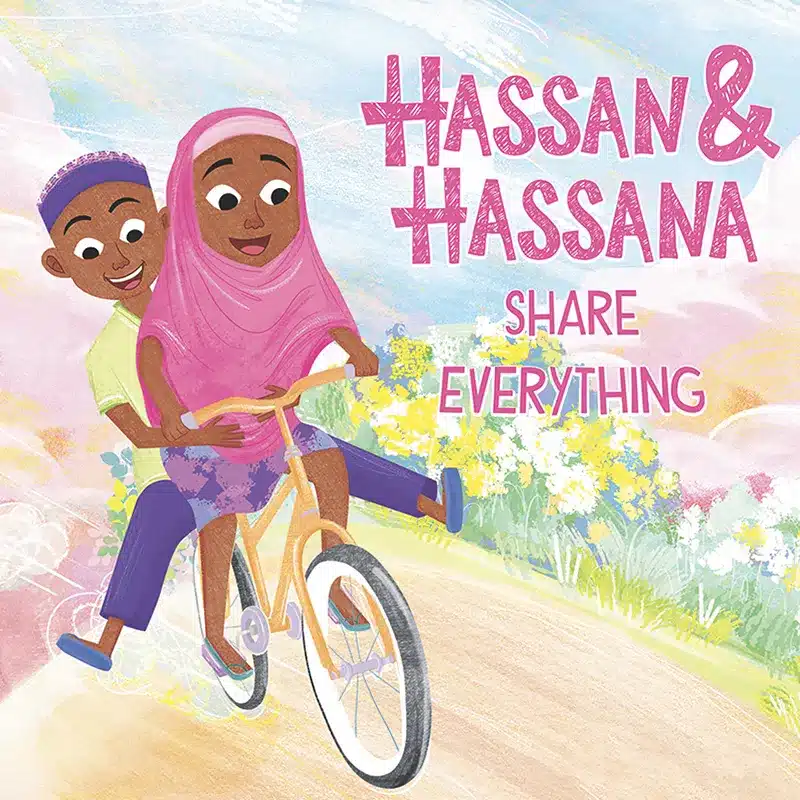
Subversive storyteller Elnathan John has long been a literary provocateur. With Born on a Tuesday, he gave us a harrowing, humane look at religious extremism. With Be(com)ing Nigerian, he skewered his homeland’s idiosyncrasies. In late 2026, however, John makes a fascinating pivot with Hassan and Hassana Share Everything, a picture book from Cassava Republic.
It might seem a surprising turn for a writer known for hard-hitting political commentary, but children’s literature is often the most radical space of all. By focusing on twins, a culturally loaded symbol in Nigeria, John explores the roots of gender and equality.
The story of a boy and a girl who look identical but are treated differently by the world allows John to dismantle patriarchal norms before they harden in young minds. When Hassan gets a bike, and Hassana gets drums, the disruption of expectation is gentle but profound. John’s venture into this genre signals a broader understanding of “political writing”: to change the future, one must speak to those who will inhabit it. It is a quiet revolution, painted in primary colors.
4. Pillaging the Dead by Degol Hailu

While Kuku satirizes the social, Degol Hailu, a master architect of absurdity, satirizes the systemic. His debut novel, Pillaging the Dead, set for release in September 2026, promises to be one of the most biting political satires of the year. Hailu, an Ethiopian-born economist, brings a scholar’s understanding of systemic rot to the story of Tarik, a student-turned-hawker selling banned books in an unnamed African dictatorship.
The premise alone, a protagonist navigating a repressive regime by trading in forbidden knowledge, invites comparisons to the greats of African satire, from Ngũgĩ wa Thiong’o to Alain Mabanckou. However, Hailu’s voice is distinctly contemporary. He captures the specific texture of modern authoritarianism: the blend of terrifying brutality and bureaucratic incompetence.
Pillaging the Dead moves between the zany and the harrowing, a tonal tightrope that reflects the surreal experience of living under a government that is both a joke and a death sentence. In 2026, as we witness the resurgence of strongman politics globally, Hailu’s fiction serves as a necessary, if dark, comic relief.
5. A Dance of Burning Blades by MH Ayinde
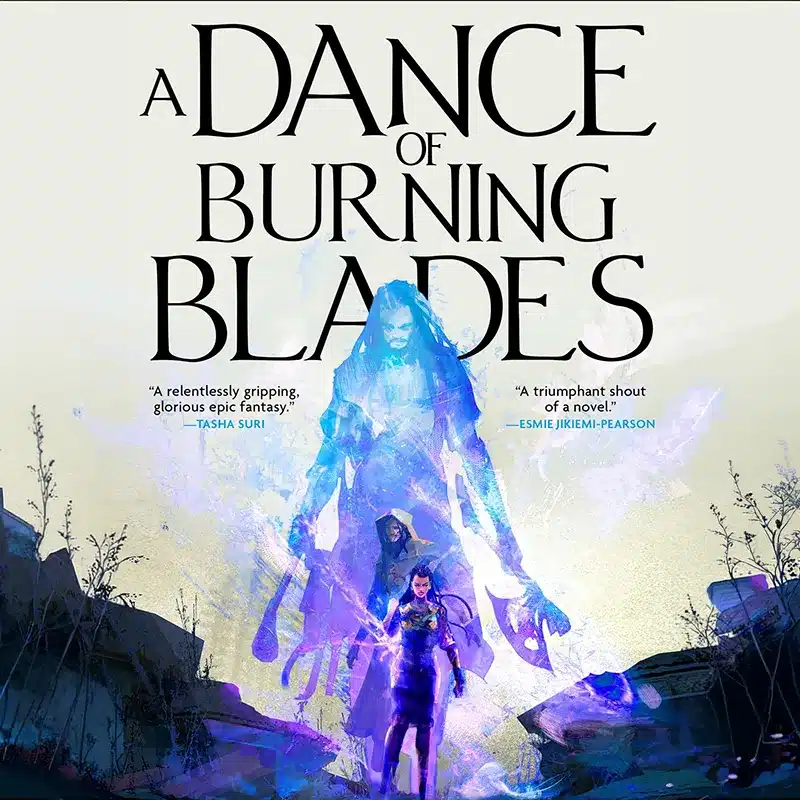
Fantasy has become one of the most exciting frontiers in African literature, and MH Ayinde, a weaver of new myths, is leading the charge. Following the success of A Song of Legends Lost, her sequel, A Dance of Burning Blades, publishing in April 2026, continues the “Invoker Trilogy”. Ayinde’s work stands out because she treats magic not as escapism, but as a mechanism of history and memory.
In the world of the Nine Lands, the “greybloods” and the “clans” are locked in conflicts that echo real-world histories of colonization and erasure. A Dance of Burning Blades expands the scope, dealing with the fallout of rebellion and the heavy burden of vengeance. What makes Ayinde a writer to watch is her refusal to simplify the morality of war. The protagonists are flawed, the victories are pyrrhic, and the magic system, rooted in ancestor worship and lineage, feels tactile and grounded.
As readers increasingly crave fantasy that moves beyond Eurocentric tropes, Ayinde is building a canon that feels both ancient and urgent. She is crafting a mythology for a generation that knows history is written by the victors, but remembers that the losers have ghosts.
6. Deadly Confessions by Busayo Matuluko
The Young Adult thriller genre is experiencing a renaissance, and queen of Lagos noir Busayo Matuluko is sharpening its edge. After the success of ’Til Death, she returns in 2026 with Deadly Confessions (expected mid-year). Matuluko has carved out a niche that might be best described as “Lagos Noir for Gen Z”.
Her protagonist, Lara Oyinlola, is a true-crime-obsessed sleuth, but the real star of Matuluko’s work is Lagos’ class stratification. In Deadly Confessions, the disappearance of a maid in the wealthy enclave of Hibiscus Lane becomes the catalyst for an investigation that peels back the gilt of the elite. Matuluko masterfully uses the visibility and invisibility of domestic workers to drive her plot. It’s a “cosy” mystery with teeth.
By placing the narrative within the YA sphere, she introduces younger readers to complex questions about labor, privilege, and justice, all wrapped in a propulsive, page-turning package. Matuluko proves that genre fiction can be as socially engaged as any literary novel, provided you have the courage to look where others look away.
7. We Were There by Lanre Bakare

Journalist Lanre Bakare has spent years documenting culture for The Guardian, but his 2025/2026 book We Were There (arriving in paperback this April) is his magnum opus of cultural cartography. It is a work of historical reclamation that challenges the London-centric narrative of Black British history.
Bakare travels to the “forgotten” cities, Sheffield, Liverpool, Cardiff, Birmingham, to map the Black presence that powered Britain’s industrial heartlands. This is not just history; it is an intervention. At a time when questions of belonging and national identity are fiercer than ever in the UK, Bakare provides the receipts. He shows us that Black history is not a sidebar to the British story; it is the ink in which it is written.
Bakare’s writing style is accessible yet authoritative, blending reportage with deep archival research. For readers in 2026, We Were There is a vital corrective, a book that reshapes the mental map of Britain and insists that “we” were indeed there, everywhere, all along. (The Paperback edition of We Were There is anticipated for April 2026.)
8. The Beast of Green Manor by Grace Grandi
Perhaps the most fascinating trajectory on this list belongs to Nnamani Grace Odi, known to her legions of digital fans as Grace Grandi. Odi represents the future of publishing: a writer who built a massive following on serialized platforms like AlphaNovel before crossing over into the literary mainstream with The Beast of Green Manor.
Released just weeks ago in late December 2025, The Beast of Green Manor is a family saga that defies easy categorization. It carries the DNA of the serialized romance, the cliffhangers, the intense emotional beats, but marries it with the textured depth of a literary novel. Set against the backdrop of a shipping empire and a bustling market square (a nod, perhaps, to the diasporic blending of spaces), the novel dissects the De-Laurents family’s collapse with ruthless precision.
Odi’s transition from app-based storytelling to the traditional novel format signals a collapsing of boundaries. She writes with the pace of the internet and the soul of a griot, making her a digital alchemist, if you will. Watch her, because she understands how modern audiences consume stories better than almost anyone else in the industry.
9. My Own Dear People by Dwight Thompson
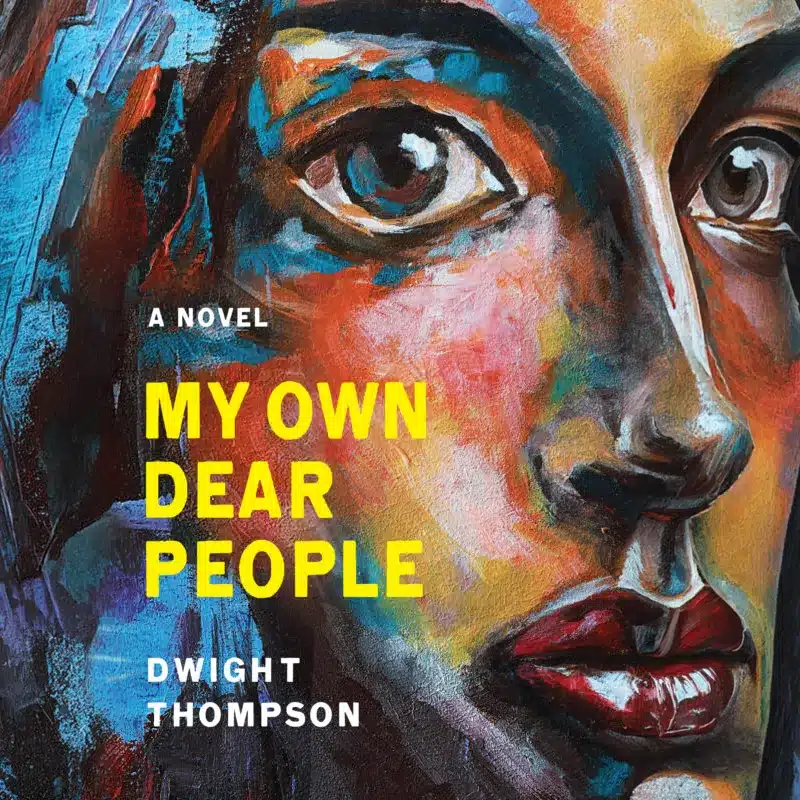
Although hailing from Jamaica, Dwight Thompson’s work resonates deeply with the continental and diasporic themes championed by African literary circles. His sophomore novel, My Own Dear People, arriving in April, is a harrowing exploration of toxic masculinity and the conspiracy of silence.
Set in Montego Bay, the novel follows Nyjah Messado, a young man haunted by his failure to intervene in a crime committed by his peers. Thompson’s prose is soaked in the humidity and tension of the Caribbean, but his subject matter, which gives voice to the silenced, is universal. He interrogates the “boy code”—the unspoken rules that demand complicity in violence to prove manhood.
In the vein of Marlon James or Kei Miller, Thompson uses the specific vernacular of his home to tell a story that feels mythic in its tragedy. My Own Dear People is a difficult, necessary book that asks what it costs to be a “good man” in a bad system. For the global Black community, Thompson’s dissection of male violence and shame is a conversation starter that is long overdue.
10. A Bouncy 123: A Counting Adventure by Sade Fadipe

Finally, we turn to Sade Fadipe, an author whose work reminds us that the literary ecosystem begins in the nursery. With A Bouncy 123 gaining renewed attention and fresh distribution in June 2026, Fadipe is ensuring that the next generation of readers sees themselves reflected in the books they hold.
Fadipe’s work is deceptively simple. On the surface, this is a counting book, a romp through a Nigerian village with characters Adanah and Kolade. Beneath the rhythm and the rhyme, however, lies a rigorous pedagogical and cultural project.
Fadipe, an education expert, is combating the “literacy famine” of diverse books in early childhood. Her depiction of rural Nigerian life is neither romanticized nor pathologized; it is simply fun. In an era of heavy themes, Fadipe’s insistence on Black joy, curiosity, and play is a radical act. Serving as a guardian of joy, she is planting the seeds for the readers who will one day consume the works of Damilare Kuku, Degol Hailu, and Elnathan John.
- 1. Women Rent Men and Secrets Here: TBLNG Press | Roving Heights
- 2. The Aquatics: Coffee House Press
- 3. Hassan and Hassana Share Everything: Cassava Republic Press
- 4. Pillaging the Dead: Cassava Republic Press
- 5. A Dance of Burning Blades: Saga Press | Simon & Schuster
- 6. Deadly Confessions: Simon & Schuster
- 7. We Were There: Vintage
- 8. The Beast of Green Manor: AlphaNovel
- 9. My Own Dear People: Akashic
- 10. A Bouncy 123 [new ed.]: Cassava Republic Press