

Gen X Suffers Mainstream Culture Constipation
In today’s overstuffed, mainstream culture of recycled “art”, nothing old moves and nothing new gets through. It’s enough to make a Gen-Xer pretty damn cranky.
In today’s overstuffed, mainstream culture of recycled “art”, nothing old moves and nothing new gets through. It’s enough to make a Gen-Xer pretty damn cranky.
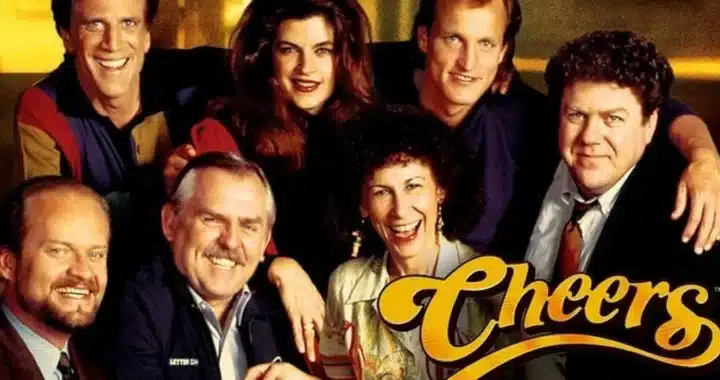
Cheers‘ characters float side-by-side as if suspended in a mug of amber-colored beer, going nowhere and befriending no one, least of all one another.

Every brick in Pink Floyd’s The Wall shows that haunting lies not in wailing and chain-rattling but in trauma, alienation, and absence.

The sexual world in Edmund White’s The Beautiful Room Is Empty expresses the tension between being and nothingness: the body insists on presence, yet the self remains elusive.

The Stone Roses’ songs remain capable of summoning emotions of extraordinary power. You can dance all night, hold the future in your arms, and drink from the well of youth.

The power in Kraftwerk’s music lies in how they persuade us that the human – sweaty, inefficient, psychologically noisy – is the least necessary component of the future.

Capitalism’s moral rot is tracked in three NYC films: from heroin dealers who risk arrest to insider traders who risk indictment to men in masks who risk nothing at all.

James Clavell’s Shōgun is about profound transformation through understanding, but FX’s Shōgun is just a spectacle of surfaces with no meaningful drive.

The Shining endures because it conveys all horror, real and imagined: Stephen King’s horror of the collapse of Man, and Stanley Kubrick’s collapse of History.

In Sue Townsend’s hands, comedy doesn’t soften despair; it sharpens it. Her creation, Adrian Mole, is a most perfectly flawed portrait of loneliness and failure.

Manic Street Preachers’ The Holy Bible is fastidious in its religious intensity, but rather than giving moral uplift, it is rock music’s deepest dive into the human abyss.

Bad Wisdom is a brilliantly savagely offensive, gleeful parody of the rock ’n’ roll messiah complex, the seeker-narrative, and the entire tradition of male spiritual self-aggrandisement.