

The Celestial Is Grounded in Dorthe Nors’ ‘Range’
Dorthe Nors’ Range is a story of suspension between two realms, one on a granular day-to-day scale and one whose scale is incomprehensibly vast.
Dorthe Nors’ Range is a story of suspension between two realms, one on a granular day-to-day scale and one whose scale is incomprehensibly vast.

The narration in Murder Bimbo is whip-smart, clever, and satirical, but the novel’s unusual structure confuses.

Like Cormac McCarthy, Andrew Krivak breaks complex actions, narrated in strings of independent clauses, into their elemental parts in Mule Boy.

Katharina Volckmer’s tale of an isolated soul’s yearning for connection, Calls May Be Recorded intentionally disconnects with its readers in that funny/not funny way.

Juan José Millás’ Only Smoke explores the relationship between meaning and observation.

The narrator of Not Long Ago Persons Found says “a detective story is supposed to be about the restoration of order”, yet this Kafkaesque tale does not do so.

In Eric Puchner’s Dream State dramatic plot points bob upon a flat-line surface rather than rising, reflecting the rhythm inherent in actual human life.
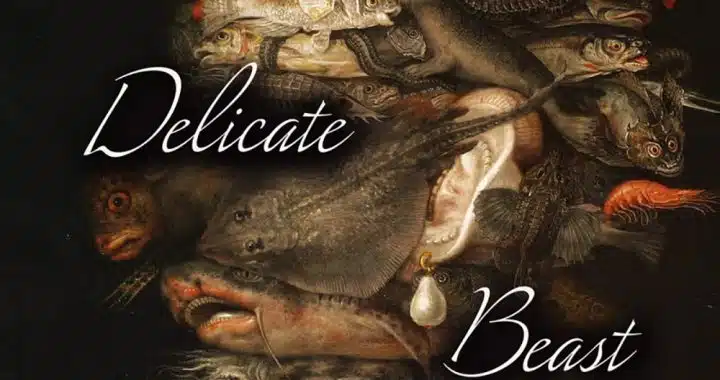
Prolific writer Roger Célestin presents in his debut novel, The Delicate Beast a timely tale of how autocracy will devour you once the process has begun.

There is no guilty pleasure in reading Lynn Stegner’s The Half-Life of Guilt. There is only pleasure.

While navigating many odd circumstances, Lindsey Drager’s The Avian Hourglass provides a continuous stream of consciousness; scientific, literary, and philosophical.

In Norman Lock’s The Caricaturist, the characters find themselves in a fraught time of war fever just as one century dies and a new one is born.

The narrative in Colin Barrett’s debut novel Wild Houses unfolds predictably, without much in the way of plot twists or surprises.