
We tend to think of Wynton Marsalis as a jazz classicist, a musician dedicated to performing and recording the music of Louis Armstrong, Duke Ellington, and others—focused on keeping the jazz tradition alive for new generations of players and listeners, as well as composing new material within that tradition. His brother Branford Marsalis, originally a member of Wynton’s quintet who famously left to play in Sting’s first solo project, is considered the family rebel.
However, that’s not quite right. Branford, too, keeps the tradition alive. Like Wynton, he is attached to a long-running band, his own quartet, which performed (and released a CD and DVD of) a version of John Coltrane‘s A Love Supreme in 2003. Just last year, the band recorded their own version of Belonging, the classic album from 1974 by Keith Jarrett‘s European quartet.
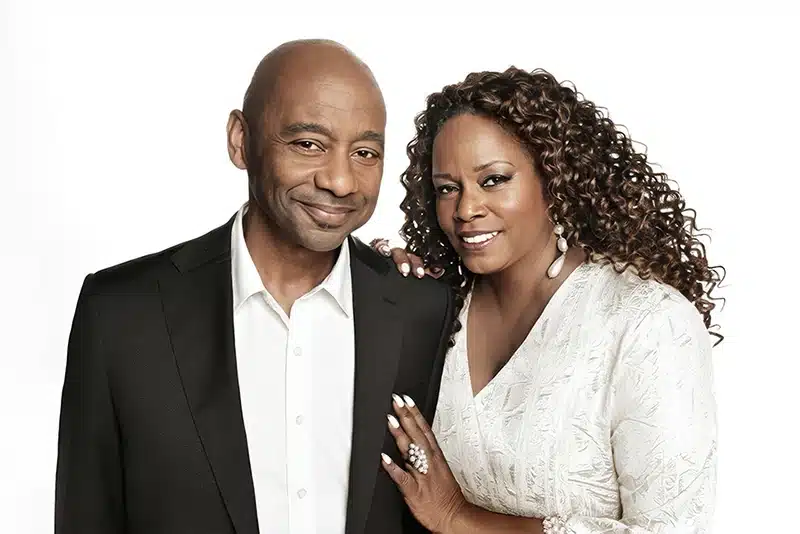
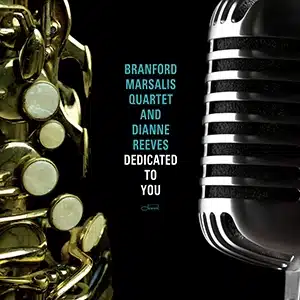
Now the Branford Marsalis Quartet have released another tribute to Coltrane in his centennial year. Dedicated to You includes all six of the tracks that were on Coltrane’s only album with a singer, 1963’s John Coltrane and Johnny Hartman, as well as several other songs from the Coltrane repertoire. In 2009, the vocalist Kurt Elling released a similar project (with Ernie Watts on tenor saxophone) on the Concord label. Here, Marsalis changes things up by using a female vocalist on the Hartman tunes: Dianne Reeves.
The vocal tracks are impeccable and different enough from the original to cheer any fan who loves jazz balladry. John Coltrane and Johnny Hartman is both an unlikely and a perfect recording. When it was recorded in March of 1963, Coltrane and his “classic quartet” were in the midst of reinventing post-bebop jazz: less than a year shy of the brilliant Live at Birdland recording. In less than two more years, the band would record Crescent and A Love Supreme, both documents that seem a great distance from a set of vintage Tin Pan Alley romantic ballads.
As “out” as Coltrane flew between 1963 and 1967 (when he suddenly died of liver disease at only 40), he never really left behind his reverence for beautiful playing, and the six performances with Hartman are indisputably sumptuous. The story goes that Hartman did not consider himself a “jazz” singer and was, therefore, unsure about the collaboration. It came together quickly and was completed in very few takes.
Reeves certainly is a jazz singer, and she flows through her six tracks with mature artistry. Branford Marsalis and his band don’t worry much about hewing to the original interpretations, though at least one moment at the start of “They Say It’s Wonderful” has the saxophonist’s obbligato around Reeves’ melody echo Coltrane closely. Indeed, two of the outstanding tracks depart from the original through subtraction.
The new version of Billy Strayhorn’s “Lush Life” omits Eric Revis’ bass and Justin Faulkner’s drums, leaving the accompaniment to Joey Calderazzo’s piano and Marsalis’ soprano saxophone. Calderazzo never leans too hard on the style of Coltrane’s pianist, McCoy Tyner, giving this version a more mysterious harmonic grounding and unspooling a patient, brooding solo at the center of the keyboard.
“My One and Only Love” is taken strictly as a piano/voice duet, a notable contrast to the original, where Coltrane took a full chorus on tenor saxophone before Hartman came in with very little improvisation beyond embellishment. Reeves and Calderazzo take much freer liberties with the interpretation. The tempo is slow and conversational, each musician taking subtle liberties with melody and counter-melody. They move through the song just once, and as they get to its last phrase, Calderazzo finds a couple of fresh chords that bend the performance a tiny bit. Reeves curls the melody with blues phrases and shadings of timbre, but she never shows off. It is, frankly, a masterpiece.
As on the original, “Autumn Serenade” gets a slinky Latin flavor. Faulkner works his kit with his hands, and Branford Marsalis plays one of his hippest solos, frequently paraphrasing the melody before Reeves reenters with the lyrics. “They Say It’s Wonderful” uses the full band as well, setting up in a mid-tempo with Faulkner’s brushes under the vocal, which shifts into a skipping double-time for the tenor saxophone solo. Calderazzo juices it too, and we hear the quartet in a joyful mood that transfers to yet another hip piano solo.
“Dedicated to You” and “You Are Too Beautiful,” among the vocal/quartet tracks, get the most modern readings. In both, Marsalis plays tenor saxophone, and the interaction between Reeves and the band is the most plastic, with each reacting to the other with great care. The latter, one of the great Rogers & Hart songs, could have been written in the last 30 years by Herbie Hancock for a singer like Gretchen Parlato. Calderazzo and Revis set up chiming chords that suspend or ride over pedal points, making all those Rogers ii-V-I patterns sound more modal. Gorgeous.
In addition to the vocal tracks, the quartet plays a set of Coltrane tunes. “26-2” is from a 1960 session, a spikey melody over Trane’s take on the Charlie Parker chord changes for “Confirmation”. The group play it assertively, and Marsalis’ solo begins with just bass and drums before the piano lifts it higher. “Big Nick” features the soprano saxophone again in a loping groove, allowing Marsalis to play glorious, looping strings of notes that dip generously into blues tones.
“Central Park West”, the moving ballad also recorded in 1960, is played as a duet for Marsalis’ soprano and the piano. Branford Marsalis is simply a great saxophonist, one we probably take for granted a bit. His elegance is always balanced with a mite of recklessness here; he’s simply too good to play it safe all the time.
Two tracks from 1963’s Ballads are included as bonus tracks: “Say It (Over and Over Again)” and “Nancy (With the Laughing Face)”, both of which find Marsalis high in the range of his tenor, sounding liquid and expressive. There is also a second bonus version of “Big Nick” with Calderazzo laying out. Revis fills the harmonic space and takes a huge-toned solo.
A fair critique of Dedicated to You is that we have the original music, so why do we need another quartet (and singer) playing it with this much verisimilitude? The Kurt Elling version from 2009 (also titled Dedicated to You) has more varied instrumentation (with strings in addition to a jazz quartet) and even a spoken-word story about the original session.
What Branford Marsalis has done here is harder and required more magic. Diane Reeves turns each vocal performance by more than a few degrees, discovering new bits of phrasing and fresh melodic angles. The band match their respect for the original with their own personality, communication, and fresh harmonic shades that make these classic songs sound fresh. Of all the John Coltrane tributes we’ll likely hear in 2026, this one will be the most heartfelt and authentic. Any listener will not only love the music but realize that it is still alive and well and growing.
- The Branford Marsalis Quartet Deliver a Winter Warmer at SFJazz Center
- Branford Marsalis Quartet Deliver Timeless Tone Science in Sonoma
- Branford Marsalis: In My Solitude: Live at Grace Cathedral
- The Branford Marsalis Quartet: 9 May 2014 – Aliso Viejo, CA
- Branford Marsalis Quartet: Four MFs Playin’ Tunes
- Branford Marsalis: Braggtown
- Branford Marsalis: Romare Bearden Revealed