
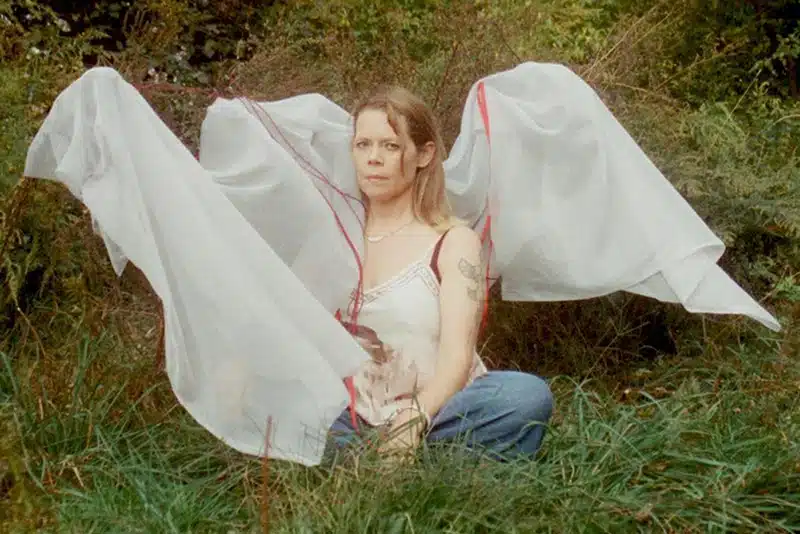

Listening to Fallows, the latest release from acclaimed jazz saxophonist Caroline Davis, is like entering a portal into another dimension. That sounds like a cliché, but it’s accurate. The sounds she conjures on her alto saxophone, aided by a processing mechanism called an organelle, form a unique and often mesmerizing combination. When accompanied by odd field recordings, they form the ultimate mix of organic and mechanical, fusing sounds and genres.
Davis has been releasing music with accompanying musicians and as an accompanist for other artists for the last couple of decades, but Fallows is her first solo album in the literal sense. Along with nature sounds from the artist residency in Ucross, Wyoming, where the album was recorded, her saxophone and organelle are the only sounds you hear. “I made everything you hear on this recording in a zone where I forgot myself and the expectations placed on me,” she explains. “It all felt like a dream, four weeks of support to create, I had the privilege of weaving myself in with the snow, flowers, birds, water, and saw Mars with my naked eye in the night’s sky.”
An insistent beat opens the first track, “Springtails”, and the saxophone meshes with the processed sounds in a way that sounds alien, unfamiliar, but warm and welcoming. In a way, it’s the ultimate gateway to this strange, hypnotic album, but it goes in many different directions as the record progresses. “Mars”, no doubt inspired by her aforementioned witnessing of the distant planet, takes on characteristics of a ballad, a synthetic soundscape simmering under Davis’ elegant, impassioned sax soloing.
Voice samples add a new dimension on two other songs: the sparse, jittery “She Know She Is Water” features the words of the late Vietnamese monk and peace activist Thich Nhat Hanh, and the gorgeous, majestic “Cloudburst” concludes with a brief passage from the voice of late jazz pianist Connie Crothers, likely a heartfelt tribute to the woman Davis has mentioned as an artist who influenced her tone and sound.
Among the more understated songs are ones that make a beautifully unholy racket. “Holocene Rhythms” includes stomping synthetic percussion mixed with unhinged melodies. The mysterious field recordings on “Underground” create a stark, unsettling atmosphere. The wild “Lacy Steve” (likely a nod to another influence, saxophonist Steve Lacy) features saxophones playing off one another, joined by blasts of electronic static and chest-vibrating low-end bass. Davis is not only a brilliant musician and composer, but she’s also never boring.
Ultimately, the overall sound on Fallows is – if you want to boil it down to a simple phrase – “experimental jazz”, a subgenre used to describe excellent recent releases by the likes of Josh Johnson, Jameszoo and Amir ElSaffar. However, Caroline Davis is certainly travelling along a path that sets her apart from many of her peers, with a mission to create unique solo sounds that can’t be easily compared. The word “fallow” means uncultivated land, and like that land, this music is filled with endless possibilities.