
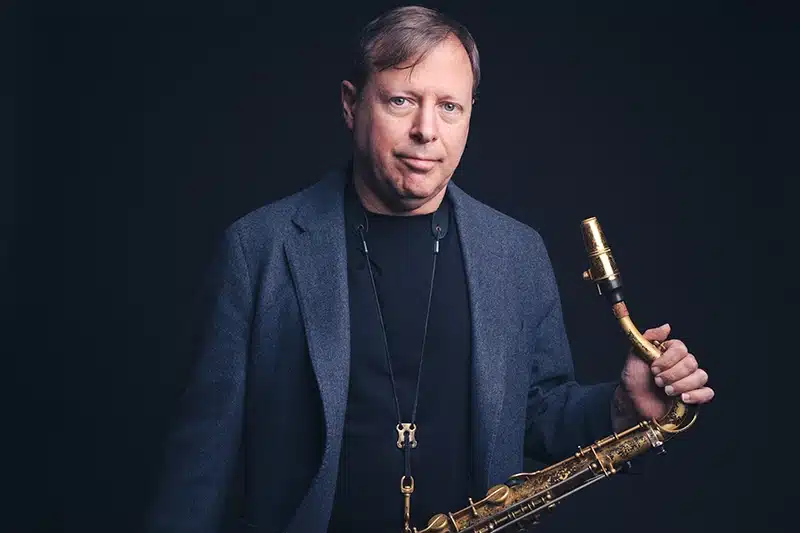
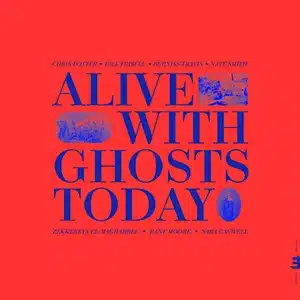
Saxophonist Chris Potter constructed his new album, Alive with Ghosts Today, to reflect the story of John Brown, the abolitionist who famously raided the armory at Harper’s Ferry, West Virginia in 1859. It was an attempt to initiate a revolt by enslaved people in the American South. His ensemble is built around the sound of Bill Frisell‘s guitar and a small, unusual group of clarinet, violin, and trombone, along with the leader’s tenor and soprano saxophones.
It is never easy for me to draw a straight line from the title or inspiration of an instrumental performance to the music itself. Still, the group here suggests a certain rag-tag Americana. Frisell’s resonant electric guitar has been doing this kind of evocative music for decades.
Hence, as he enters on “Osawatomie Brown”, over a simple bass line by Burniss Travis and Nate Smith’s backbeat, we are immediately placed in an open, frontier space. Potter plays a slinky theme with Zekkereya El-magharbel’s trombone in low, wide-interval harmony, and when Rane Moore (clarinet) and Sara Caswell (violin) add more color, the larger ambitions of the project flower outward. Though Potter solos robustly over some hip chord changes, the rhythm section keeps it all earthy, with the ensemble eventually adding body and then a second theme before a guitar solo in a 10/8 feel.
The additional horns/fiddle add even more color in the second half of “Mine Eyes” (presumably titled from the line in “Battle Hymn of the Republic”, written in 1861 by an abolitionist from the folk theme “John Brown’s Body”). The previously grooving modern jazz of the main theme climaxes and collapses into a rubato passage: tremolo from the rhythm section sets up a trombone solo that grows from primordial mud, over which the other horns weave layers of free improvisation, preparing a gentle composed/improvised section that sounds less like modern jazz than like the terrain that flows around the conjunction of the Potomac and Shenandoah Rivers. Harper’s Ferry for the ears.
“This Earth Would Have No Charms for Me” (a line from an 1859 letter by the enslaved Harriet Newby to her husband) feels even more closely connected to the thematic concerns of Alive with Ghosts Today. It is a slow 6/8 theme that uses the ensemble’s voices with throaty elegance. Each instrument pops out of the melody in different places, and Caswell takes a deeply felt, improvised violin solo before Frisell plays over the full band, sounding mournful and hopeful at once.
Potter’s bright yet varied tone on tenor saxophone, which always seems to have a human side, remains the main voice. He and Frisell set the tone, for example, at the start of “Heavens in Scarlet”, even as the whole band gets in on the action. The duet is an ideal match, spare and clear, inviting fiddle, clarinet, and trombone to step in before Potter gets atop the full band to lead an affecting melody that ultimately pulses with soul. As Potter improvises, his tone is particularly well matched by Travis’s electric bass, which fills the center of the band’s sound.
Potter introduces “Into Africa” with a solo saxophone cadenza in the Sonny Rollins vein, playing a dazzling set of rippling lines that establish a harmonic range and then begin a catchy bass lick for Travis. The song, with leaping intervals throughout the arrangement, reflects Chris Potter’s nimble articulation. It’s no surprise, then, when he plays his most malleable solo of the session here, varying his pacing and placing tonal color just where it feels best.
This tune also showcases Frisell, as his strings resonate in dialogue with the bass line, often doubled by bass clarinet. His guitar sound on this track (and on most but not all of Ghosts) is clean and undistorted by effects. He plays interconnected ideas in single-note lines and double-stops, and he works in the ensemble passages as well. The catchiest and sunniest track, “Sister Annie”, is positively built on Travis’ irrepressible bass line, which carries the whole tune and every solo on its back. Frisell interlocks with it like he is Nile Rodgers grooving on a Chic track, and drummer Nate Smith does his thing: never overwhelming the band but using his accents and syncopations to lock down the feeling of joy.
The album begins with the two-part suite that gives the album its title. The opening theme does sound like an overture, putting all the pieces of the ensemble into conversation, after which the group lets all its voices improvise together, sounding just enough like John Coltrane‘s 1960s bands, which were also trying to convey heavy ideas about history and oppression.
Perhaps what is best about Alive with Ghosts Today is that it effectively balances the heavy elements of its theme with bursts of creative joy like those that infuse “Sister Annie”. It’s the richness that is embedded in Chris Potter’s sound as a saxophonist. He wrestles with the dark tones of his influences but also plays with life’s vibrant force. His apprenticeship in Red Rodney’s band in the early 1990s connected him to a grand tradition of creativity and resilience — Rodney famously played trumpet in Charlie Parker’s band. Also, he returned to jazz in his 50s and 60s after time in jail.
Chris Potter always plays jazz with a combination of respect for its traditions and an urge to push the sound forward. It is an audible balance on this new recording.