
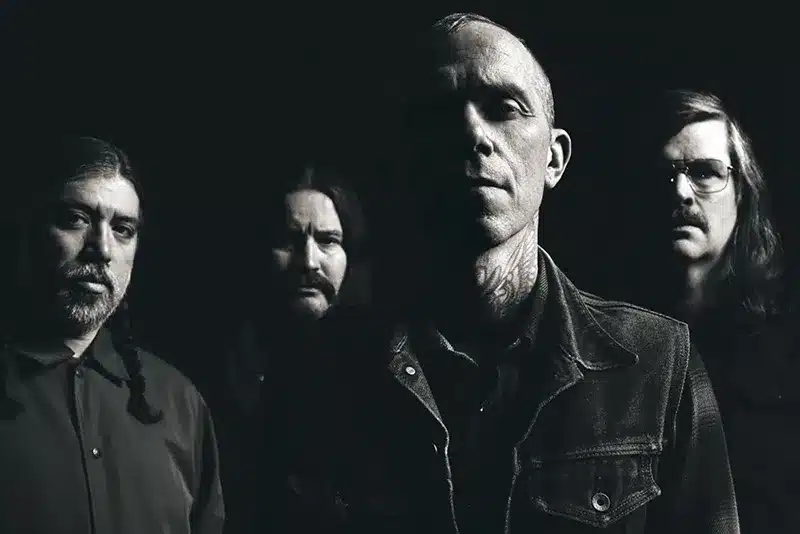

Converge have waited so long to issue a proper communiqué from the blast zone that the space between albums now reads as almost theological, as if the absence itself were part of the text. The Salem, Massachusetts quartet—vocalist Jacob Bannon, guitarist Kurt Ballou, bassist Nate Newton, and drummer Ben Koller—have, over the course of 36 years, become stewards of an unwashed aggression, habitually leaving the listener bruised, marked by the blunt, purple truth of the encounter.
Still, they have not released a Converge-only record in nine years. In scenes like theirs, time keeps receipts—though Converge, canonized now in a way few of their peers are, can afford the silence without forfeiting the room. There was the 2021 collaboration with Chelsea Wolfe, Bloodmoon: I, which received applause, yes, but was regarded by some fans as a side road, a quiet detour that carried a faint but persistent anxiety about where the band were headed. Just shy of five years have passed since that experiment in atmosphere and shadow, and nearly a decade since the band’s last document alone, four men in a room, translating abrasion into form.
If Love Is Not Enough announces anything, it’s a return to the stark architecture. No conceptual fog. No gothic chiaroscuro. Just the blunt-force grammar they helped codify. The new record recalls a particular American adolescence, the one forged in the 1980s and 1990s, when kids siphoned thrash from MTV’s Headbangers Ball and crossbred it with the hardcore they encountered in the porous pages of Thrasher. Converge were among the most articulate of those children, and they remain fluent in that dialect of hybrid vigor.
You can hear the lineage across the new record if you listen without nostalgia clouding the ear: Slayer‘s technical shudder, Neurosis‘ tectonic dread, Napalm Death‘s eviscerating blur. These are not citations so much as inheritance. The intention lives in the synchronized 16th notes of guitar, bass, and Koller’s double-kick collapsing onto the same pinprick of time, three arguments resolving into a single blow, less like technique than chaos taught to stand up straight.
To call them “working-class artists” suggests a sentimentality that their actual, sweat-stained lives have no time for. To sustain the group, they sustain second jobs, third obligations, parallel careers. They never mistook devotion for a pension plan. To hand yourself over to a strain of musical invention that prefers blunt force to sterile glop is to invite a slow hollowing-out, one that extracts its due over the long haul and then, with unnerving calm, asks what else you have left to give. That path can blunt a person into habit or hone him into clarity. This record sounds honed.
The album arrives at a moment when public dread and democratic erosion feel less like circumstance than as something inhaled daily. One has the sense of living inside a pressure chamber of our own design, history leaning in to see exactly what we can withstand. The record does not comment from a distance, but enters the room already braced. Many of the songs barely cross the two-minute mark. They flare and vanish. The band could have elaborated, lingered over another verse or bridge, but instead they speak and withdraw, as if aware that excess might dilute the charge.
The title track makes its thesis plain: “Love Is Not Enough”. Faith without works is dead; feeling without action is indulgence. What the songs call for, without sermonizing, is a composite of virtues we are often encouraged to separate. Empathy, but also anger; tenderness alongside refusal. Song titles like “Distract and Divide”, “Bad Faith”, and “Gilded Cage” gesture toward systems that thrive on fracture, institutions that prosper when we mistake one another for the enemy.
“Amon Amok” is the kind of song that startles even the faithful. Those who come to Converge for the usual velocity may find themselves taken aback. The track does not sprint, but presses forward with the gait of a colossus stomping across a scorched field, each step felt in the sternum. The title reaches back into folklore— Amon, a demon of life. The song feels diagnostic. The demons have run amok. There is, the song implies, no sanctuary untouched by the distortions of power, no belief system immune to rot. The stomp becomes a reckoning.
Love Is Not Enough closes with “We Were Never the Same”, a song that feels written in the afterlight of catastrophe. The lyrics, drafted in a funeral home parking lot, carry something almost vestigial in their accounting of eroded connection, of isolation mistaken for autonomy. Nothing gained, much misplaced. Yet grief, the band suggests, can clarify, can pare away illusion. If the record has circled an atmosphere of civic rancor, here it names the cost.
Converge don’t pretend to cure what they expose. Instead, they insist. Look closely, they seem to say. Listen harder. The noise is not an escape from the world but a way of confronting it. Once confronted, the burden shifts. Decide what you will do.