
“I had to fight really hard for what I wanted.” Amy Lee of Evanescence said in a 2025 interview, looking back on her career. “There was lots I did not know… But I knew what I wanted as an artist. And I knew that it was good, and I think that the thing is to not start second guessing yourself when you know what sounds good to your own ear and what feels right to your own heart. When you’re telling your story and making your music, and it’s not like something else because you didn’t rip it off—it’s real, it’s from your heart… You fight for that because nobody knows like you, you know, who you are and who you are as an artist and what it should be like.”
At this point, it’s no secret that Evanescence had some issues with its label, Wind-up Records. It’s not an uncommon phenomenon for artists and labels to clash, either: art versus business. These disagreements began before they released The Open Door in 2006 and continued well after, eventually leading to a lawsuit. Of course, this was likely exacerbated by the fact that Lee was a young woman in a very male-dominated music business—and a very male-dominated genre. She signed with the label at just 19 and has always emphasized the integrity of her music over outside demands.
Even before the release of their hugely successful Fallen in 2003, Wind-up Records and Evanescence were at odds. At the time, there was a question as to whether a female-fronted rock band could break into the charts. There were certainly other women in rock—Lacuna Coil emerged on the US scene in 2002 with their record Comalies, but they weren’t the norm. After Evanescence signed with the label, they were asked to hire a full-time male vocalist to include on their songs for Fallen. The thought was that it would make the material more marketable; it should be noted that “Heaven’s a Lie”, Lacuna Coil’s break-in single, had male vocals on it.
Ultimately, Lee and Ben Moody said no, but the label pushed back. Their funding was pulled, they were released from their contract, and they drove home to Little Rock, Arkansas. Fortunately, Wind-Up changed their mind and offered a compromise: Add a male vocalist to the lead single, “Bring Me to Life”. Lee was opposed to it, but the band conceded. The song was pitched for the fight-scene soundtrack of Mark Steven Johnson’s 2003 superhero movie, Daredevil. Lee went on to write the lyrics, and Paul McCoy stepped in to fill the role.
Amy Lee explained that she feared fans would hear this first single, the band’s first impression of sorts, and think that the entire project was similar, which it isn’t. She feared it would come across as a trick, with the lead single not representative of the album as a whole. While this was likely true for some, their second single, “Going Under”, also performed well, and Fallen went on to sell over 17 million copies.
Evanescence Fell Upward
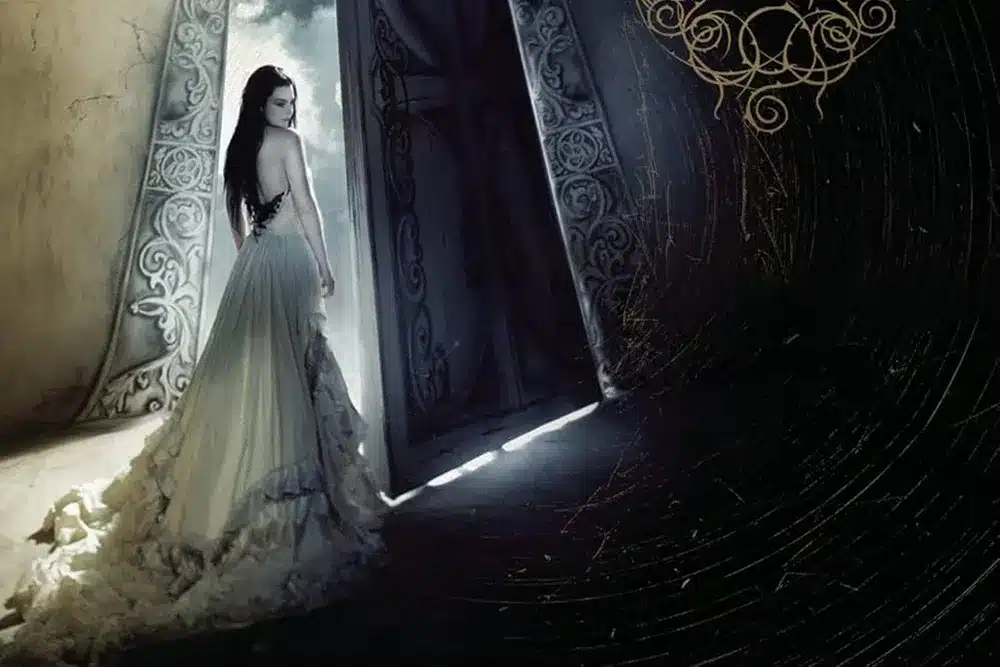
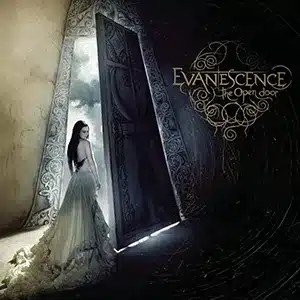
After the success of Fallen and some of the internal turmoil that followed, there were high expectations for the follow-up record. As before, this issue of art versus business came to a head. This time, however, Evanescence was fully Lee’s band; she had total creative control and made the album she wanted. The resulting The Open Door shows the evolution of Evanescence, leaning more towards classical with homemade sounds and more experimentation. This also meant, to the ears of label executives, that it was less radio-friendly than the Grammy-winning Fallen.
Lee’s father, John Lee, wrote in his article, “Waiting for the Door to Open”:
They recorded about seventeen tracks (If I remember right) and then had to fly to New York for the big meeting around the conference table with the higher-ups at Wind-up Records. This is where the executives hear the ‘product’ for the first time. Naturally, they are only looking at it as a ‘potential’ marketable product. It’s such an uncomfortable gathering. Try to imagine that it’s 1970 and you are sitting at the dinner table playing your new Led Zepplin album for your parents at high volume levels in an effort to get them to like it.
Now, here’s a 24-year-old young lady in a room filled with middle-aged folks who are going to ‘critique’ a Rock album and decide which cuts to include. Terry Balsamo went along with Lee to that meeting to lend moral support. The initial meeting turned out badly. Lee called home and was very disappointed. Wind-up did not like the new material. They didn’t hear the ‘hit’ and they were considering scrapping the whole thing and making the band start over.
This was certainly not the news an artist wants to hear. It would appear that Wind-Up’s greatest reservation about The Open Door was its lack of radio singles, with no “Bring Me to Life” 2.0 to capitalize on. In the same article, John Lee writes of a response to one of the songs, “When I heard a very early, simple version of ‘Call Me When You’re Sober’, I said to Amy, ‘There’s your Radio hit’, and she thought so, too.”
Of course, label executives thought otherwise. John Lee also states that the song was never really intended for the record, though, based on other interviews, that is not an isolated incident. “Lost in Paradise” was not originally intended for the self-titled LP, either. Fortunately for the fans, Lee believed in what she created and fought for it. Her father continues in his article:
I asked, ‘Are you guys happy with the songs?.’ Amy was adamant! She said it was a wonderful piece of art and she was very pleased with it. She liked it even better than the first one. I suggested that she fight for the album. Middle-aged New Yorkers don’t know a damn thing about what’s a hit and what’s not. If they did, all of their acts would be successful. If I was the executive sitting across the table from two young artists who think like many of today’s young people, who just sold millions of albums, earned multiple Grammy awards, and made me a ton of money, I’d defer to them. How they (the band) felt about it would be much more important than my opinion. But, we are talking about big bucks here. Everyone has an opinion. I recommended that she remind the head honcho that she wasn’t writing the album for him, but for a younger demographic. So, back she went to New York. This time she would not be denied. She was very passionate during that meeting and said that she had tears in her eyes when she stood up and boldly let them know that they (the older execs) weren’t supposed to ‘get it.’ She said, ‘It’s not written for you and if you can’t relate to it, then that’s perfect. You aren’t supposed to relate to it!’ Apparently, she was pretty persuasive. They gave the green-light to move forward with the album. What a great feeling for the band.
It was a great feeling for the fans, too, though it wasn’t talked about much at the time—and understandably so. Evanescence was under a three-album contract with Wind-up Records and still had another album to record with them. It makes sense that Lee wouldn’t want to speak ill of the suits publicly, since she would have to continue working with them on the next project.
The Open Door did deliver, debuting at number 1 on the Billboard 200 in its first week. “Call Me When You’re Sober”, released as the first single, peaked at number 10 on the Billboard Hot 100, and sold over six million copies. While not Fallen numbers, they’re certainly nothing to scoff at.
After the commercial success of both Fallen and The Open Door, all while holding to Amy Lee’s artistic vision (particularly on The Open Door, where she maintained full creative control), one would think that she would have earned the label’s trust. The numbers would indicate that people enjoyed listening—and buying—the music she makes. Unfortunately, this was not the case.
Moving forward, tensions seemed to rise. First, there was the break. Presumably, the label would have wanted an Evanescence record every couple of years; however, after touring wrapped up for The Open Door at the end of 2007, Lee stepped away to take some time for herself. She also got married that year.
Amy Lee’s Artistry Forged in the Ruins
What happened next is purely speculative. In September of 2008, Lee released a cover of “Sally’s Song” for the Nightmare Revisited project, which featured new recordings of the soundtrack to Henry Selick’s 1993 stop-motion animation film, The Nightmare Before Christmas, covered by various artists. In an interview with Spin the following month, she spoke of new songs and a potential solo album:
“I need to show that I’m more than a one-trick pony. I’m writing here at the house by myself, and it’s been really good. But I’d really like to do something different next. [The new songs] are definitely different. I feel like I’m going back to my really old roots. They have more of my folky and Celtic influence than ever before. And it’s not all sad — it’s nothing I would categorize as Evanescence.”
In the same interview, she spoke of wanting to score films. This came up again in an interview with The Gauntlet later that month, when asked about what music was coming next, a solo project or Evanescence: “I don’t know what is happening. I am at a point where I don’t know what is next: a solo project or a film.” Later in the same interview, she was asked if the crediting of “Sally’s Song” (Amy Lee instead of Evanescence) was a way to launch her solo career.
It wasn’t that. I don’t know if I am going to do that. It is a possibility in my life that it might go that way. It is kind of natural with the way everything has gone with the band. It wasn’t to make a statement though. It was all me. It is hard to say what Evanescence is per se. It is Terry and Tim now but the other guys have changed so recently. They knew it was a gig on the road and they knew they had to get another gig when it was over. Terry is having a blast playing in a band with the bass player from Limp Bizkit.
In a lot of ways, it is the same as the last time. Between Fallen and The Open Door everybody went their separate ways. Then Terry and I wrote the record, pulled the band back together and made the record and toured. It isn’t like we all live in a house together and write all the time and play video games. This song came to me and it was something I was passionate about. I did the arrangement and the instruments and it wasn’t in anyway an Evanescence collaboration. I didn’t want it to be false. I didn’t want to call it Evanescence and capitalize on that because everyone knows that name.
Lee seems to waffle between the possibilities, perhaps unsure of what was to come. As for Wind-up Records’ take on the matter, the last line of the quote above says it all. Evanescence has name recognition—Evanescence sells records. The label would hardly be thrilled to have the next Evanescence record put on hold while its members pursue solo projects.
Perhaps that was communicated, pressure was applied, or maybe Amy Lee simply changed course. Whatever the case, there was a shift. In a string of interviews in late 2009, coinciding with a festival Evanescence was playing at in Brazil, she spoke about the next Evanescence record. “The sound of the new tracks is a little more electronic, with several beats and programming and less guitars.”
She gave more interviews in late February and March of 2010, confirming that the new album would be more electro-pop, drawing inspiration from Massive Attack, Björk, and Portishead. Much of the new album was written with Will “Science” Hunt, with additional writing from Terry Balsamo and Tim McCord. Steve Lillywhite was the producer; he reached out to Wind-up expressing an interest in working with Lee and Evanescence, and the two hit it off. There was also a confirmation that the folky, Celtic-inspired songs were not being used; this was a new project.
Things seemed to be proceeding well—with the exception of a studio fire, where Hunt disregarded fire safety protocols by running back in to save a hard drive. However, on 19 April 2010, Lee posted the following for Evanescence fans:
I wanted to let you guys know that we’ve decided to take a little time out of the studio to work more on the music. There is more that I want to do and I want to make this album the best it can possibly be, so I’m not going to rush it. It means too much to me. Taking a breath, digging deeper into myself, and moving forward with even more strength than before. Like I’ve always said, good things take time! 😉
I’ll keep you posted, talk to you soon…
A few months later, Amy Lee announced that the band was no longer in the studio. In February 2011, she announced that Evanescence was back together and working on a new album—the previous project had been scrapped. Lillywhite was out; Nick Raskulinecz was in. The messaging going forward was that it would not be a “techno album” but a band effort, and the few songs from the Lillywhite sessions that ended up on the self-titled album were reworked.
So, what happened? Snippets were released on social media during the Lillywhite sessions, and fans were excited about the direction of the new material. Hunt sat for a few interviews and said:
Honestly, I think it’s amazing. I think she’s taken some real big risks. As artists, I think it’s important that we challenge ourselves to find new ground. If you look at any band in history who’s done really well, they continue to reinvent themselves and be relevant. It’s always going to sound like Evanescence, ‘cause it’s Amy Lee singing, but the vehicle for that voice can be different and still be Evanescence. I think people are gonna be pleasantly surprised, because all the really cool elements, the things people love about the Evanescence of the past are still there. But there are new colors in the pattern. There’s a lot of cool new things going on, both electronically and futuristically. I think she’s doing something that’s very special and hasn’t been done before. I’m a supporter, I think it’s killer. It’s really good.
Lee also expressed her excitement about the new material and Evanescence’s evolving sound, saying she never wanted “to make the same album twice”. The latter bit was likely directly at the band’s disagreements with the label, and it seems that the “real big risks” were too much for Wind-up. At the time, Lee stated that it was her decision to pull the plug. “It wasn’t coming together right,” and “Steve wasn’t the right fit.” In the same interview, she expressed her concerns as to whether another Evanescence record would even happen—and perhaps it wouldn’t have, if not for the band pulling together. She said:
I’ve never felt so supported by my band members. We’ve really relied on each other. And everyone being a part of this album, from the ground up, is an entirely new approach for us. There’s nobody that’s just coming in to play guitar. Everybody’s invested. We’re more truly a band now than ever before.
Evanescence’s third, self-titled album really was a band effort, and it was released—not without drama, but more on that later. Shortly after its release in November of 2011, Balsamo gave an interview, saying of the switch, “the label wanted the full-on regular Evanescence album”. Later, in 2013, Steve expanded, “What happened was a few people lost their nerve. I don’t even think it was [Amy]. It was people at the record company who really had no other band. They were thinking more in terms of the commerce rather than the art.”
After the self-titled release and Evanescence’s departure from Wind-up Records, more came to light; there was no reason to hide the truth of what happened. Of the executives at Wind-up, Lee said to Loudwire in 2015, “the suits had a change of heart during a frustrating recording process, and I was told that none of the songs I’d been pouring my heart into for a year, in any form, were good enough — time to start over.”
It seems this time, unlike with The Open Door, Amy Lee was unable to persuade them. The electropop, Björk-inspired record was dead, much to the dismay of fans like myself. That’s not even to say that the self-titled album is bad—it’s a solid album, certainly their heaviest rock record, definitely the angriest, with good reason—and carries one of my all-time favorite songs, “Lost in Paradise”. That is to say, Lee was not able to release the album she wanted to. Lee, the artist who had made millions of dollars for the label by this point, with a proven track record of writing good music that fans loved and bought, touring the world, and winning Grammys, was unable to continue growing and evolving her sound in the direction she wanted.
Amy Lee prioritizes her art. With Fallen, there were some compromises on the lead single, but Evanescence otherwise held their ground. In the case of The Open Door, Lee fought for her art, and the label likely took what it assumed was a risk—one that paid off. With the third, self-titled record, it seems the label was far less concerned with the artistry, and Lee was forced to make something new and beautiful out of a devastating situation.
Works Cited
Baccigaluppi, J. “Steve Lillywhite: U2, Peter Gabriel, XTC”. Tape On. 2013.
Boyd, S. A., & McCammon, S. “Amy Lee, Co-Founder of Evanescence, Is Ready To Tell Her ‘Bitter Truth'”. NPR. 2021.
Childers, C. “Watch Amy Lee Cover Chris Isaak’s ‘Baby Did A Bad, Bad Thing'”. Loudwire. (n.d.)
“Exclusive: Evanescence Vocalist Amy Lee Talks About Shows in Brazil and Reveals Details About the Group’s Next Album”. Virgula. 2009.
Fisher, J. “Evanescence Interview”. The Guantlet. 2008.
Florino, R. “Evanescence is Back”. Artist Direct. 2010.
Goodman, W. “Evanescence’s Amy Lee: ‘It’s Not All Sad'”. Spin. 2008.
Goodman, W. “Exclusive: Amy Lee on the New Evanescence Album”. Spin. 2010.
Goodman, W. “Amy Lee Talks Evanescence’s Comeback LP”. Spin. 2011.
Lee, A. Amy’s new blog on EvClub. EvClub. 20 April 2010.
Lee, A. “What’s up”. EvThreads. 21 June 2010.
Lee, A. “Update!” EvThreads. 26 February 2011.
Lee, A. 2011. EvThreads. 4 April 2011.
Lee, J. “Daddy Lee’s Evanescence article”. 6 December 2006.
Montgomery, J.. “Evanescence’s ‘Lost In Paradise’: Hear A Preview Now!” MTV News. 2011.
O’Donnell, K. “Evanescence Reveal Details of Risky New Album”. Spin. 2010.
Phil, M. “Evanfadead of Mayhem Society. Et cætera”. Radio Metal. 2010.
Semon, C. S. “Evanescence’s queen of young rockers spellbinding at Palladium”. Telegram & Gazette. 2011.
Titus, C. “Amy Lee: New Evanescence Album Is ‘Much More of a Band Collaboration'”. Billboard. 2011.