
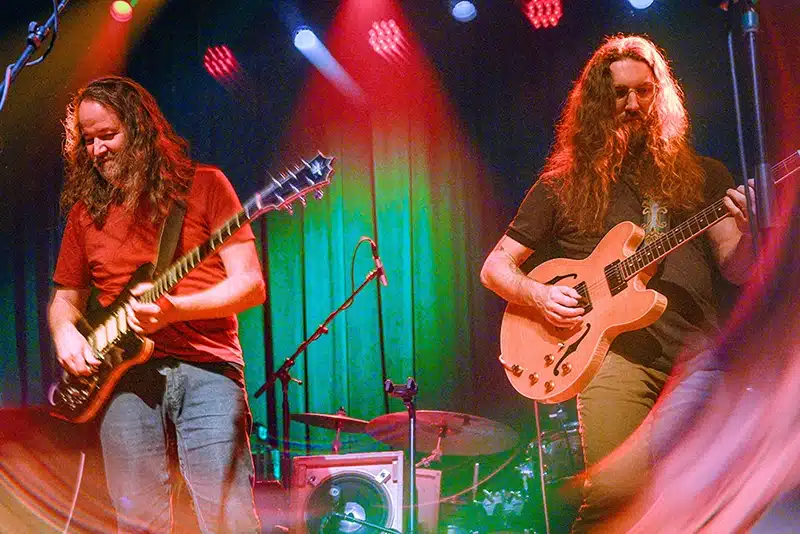
It’s the third night of a spring equinox weekend run for Grahame Lesh & Friends at the fabled Fillmore Auditorium in San Francisco on 22 March, and the room is packed just like the last few times Phil Lesh & Friends played here in 2023-2024. Billed as “Unbroken Chain: A Celebration of the Life and Music of Phil Lesh”, the shows find son Grahame Lesh putting together a series of varying all-star band lineups just like his dad used to do to keep things fresh.
Phil’s last Fillmore show on Valentine’s Day of 2024 was a special occasion that became even more revered in retrospect, after the legendary bass wizard passed on from this dimension in October of 2024 at age 84. There was a cloud of doubt about how the music would survive without Phil, which grew even cloudier when Bobby Weir passed away at age 78 this past January. 39–year-old guitarist Grahame Lesh has seized the torch, however, using all he learned playing countless shows with his dad since 2012 or so to ensure that the music never stops.
Grahame Lesh seemed to evolve before the community’s eyes last summer when he sat in with Dead & Company in Golden Gate Park at the 60th anniversary celebration of Grateful Dead music that turned out to be Weir’s last shows. Seeing Grahame come out on vocals and Phil’s “Big Brown” bass from the early 1970s to lead the group through “Box of Rain” was all the feels, a truly historic moment that indicated the family chain will remain strong.
This weekend’s Fillmore shows conclude an eight-show run that started with four nights at the Capitol Theatre in New York the previous weekend to commemorate Phil’s birthday on 15 March. There was also an extra show at the Junction in Mill Valley, across the Golden Gate Bridge, on 19 March, where fans could earn free admission by donating blood (continuing a blood drive tradition Phil started in December 2000, after receiving a liver transplant two years earlier). Holding these shows at the Fillmore invokes a special connection across time and space, as the room was one of the Dead’s early labs for forging their influential psychedelic rock sound and the counterculture that grew around the music.

“The fervent belief we shared then, and that perseveres today, is that the energy liberated by this combination of music and ecstatic dancing is somehow making the world a better place, or at least holding the line against the depredations of entropy and ignorance,” Phil Lesh wrote in 2005’s autobiography Searching for the Sound, reflecting on how the band members became akin to shamans channeling transcendence at the famed Acid Tests and early Fillmore shows. “We felt, all of us – band, Pranksters, participants – privileged to be at the arrow’s point of human evolution, and from that standpoint, everything was possible.”
Those early days when most of the band lived together at 710 Ashbury Street in San Francisco also included a handful of impromptu free shows on a flatbed truck in the nearby “panhandle” section of Golden Gate Park. Grahame Lesh & Friends also gloriously revived this tradition two weeks earlier, playing their own free show on a flatbed truck dubbed “Hard to Handle in the Panhandle” on 8 March and drawing 5,000 fans for a rocking Sunday funday.

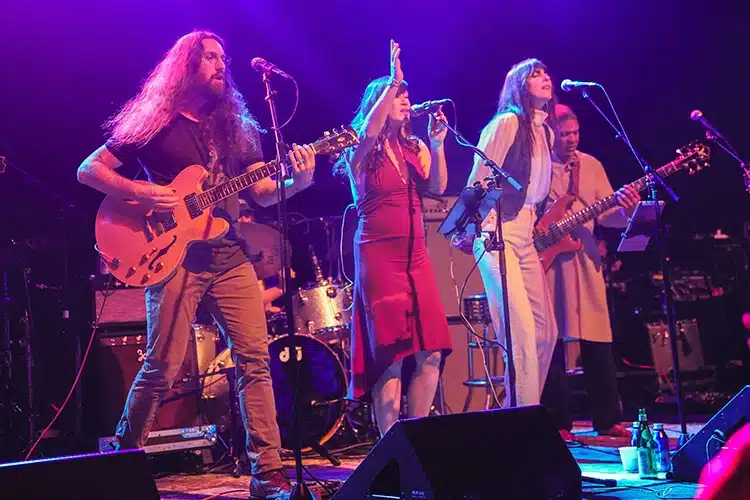
Tonight’s lineup is an all-star affair with Grahame being joined by Eric Krasno and Stu Allen on guitars, Oteil Burbridge on bass, Rob Barraco and Holly Bowling on keyboards, Karl Denson on sax and flute, Alex Koford on drums, plus Elliott Peck and Nicki Bluhm on vocals. Extra guests include guitarists Ross James and Scott Law, as the lineup blends “Terrapin Allstars” from the Lesh family’s Terrapin Crossroads era with a few extra ringers in Burbridge, Denson, and Barraco. The Saturday night show’s setlist looks like an instant classic. It has fans raving, highlighting a big night for rock in the Bay Area that also featured The Third Mind at The Chapel, Jesse Welles at the UC Theatre, and The Barr Brothers at the Great American Music Hall.
Opening with “Viola Lee Blues” is a bold move, a bluesy jam vehicle from the Dead’s eponymous debut album in 1967 that Phil said was the only song on the album that actually captured what the band sounded like in concert back then. There’s a vibrant sound from the start with Burbridge throwing down a heavy low end, Denson adding accents on sax, and Peck and Bluhm singing rich harmonies. A rollicking “Cumberland Blues” keeps the energy flowing before the group mixes it up with the funky “That’s What Love Will Make You Do”, a staple from the Jerry Garcia Band with lead vocal from Krasno and hot sax from Denson.

The rare “New Potato Caboose” from 1969’s Aoxomoxoa ups the ante as a mystical deep cut with Grahame on lead vocal. The song takes off when Burbridge pumps up the groove, setting up Denson to add sublime jazz flute melodies that lead playfully back into “Viola Lee Blues” with a groovy syncopation. Burbridge takes the lead vocal on a poignant rendition of “Comes a Time”, another number that benefits from a jazzy Denson sax solo. An upbeat “Dire Wolf” features Barraco on vocals with sweet pedal steel guitar from Ross James, before Nicki Bluhm shines in the spotlight with her sassy vocal on the bluesy “Easy Wind”. The fan fave also rocked at the Fillmore two weeks earlier in a great performance from Margo Price).
It’s a festive first set with a cohesive sound that doesn’t necessarily come easily with so many moving parts, a testament to what a skilled bandleader Grahame Lesh has become. Yet the second set holds even greater promise for deeper jams toward the transcendent. Karl Denson stars yet again when he takes the lead vocal on “Here Comes Sunshine” to open the set, before adding more dazzling jazz flute over a flowing groove as few others in rock are capable (musical genius Stu MacKenzie from King Gizzard & the Lizard Wizard comes to mind).
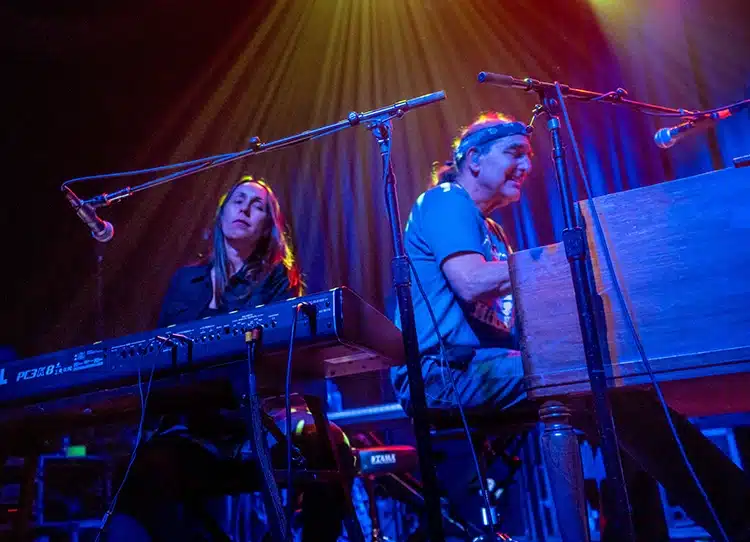
The seminal psychedelia of “The Other One” cranks the energy even higher, triggering a cosmic journey that resonates so vibrantly here at the Fillmore. Lesh takes over on bass in the middle of the song, with Burbridge moving to a second drum kit. It’s another special moment to witness Grahame Lesh embrace the challenge of filling his father’s metaphysical shoes, leading the group through a passage that gives way to the ultimate psychedelia of “Dark Star”. It’s one of the evening’s peak jams as nimble guitar lines and piano melodies weave together for a wild ride, before eventually giving way to the sweet melodic sound of “Uncle John’s Band”.
Lesh passes the bass back to Burbridge, and the group soon soars again with five-part harmonies from Lesh, Allen, Peck, Bluhm and Burbridge. The “Ain’t no time to hate” line resonates deep here in these turbulent times for America, and the whole room seems to clap in unison on the outro section in an affirmation of how dialed in the group is.
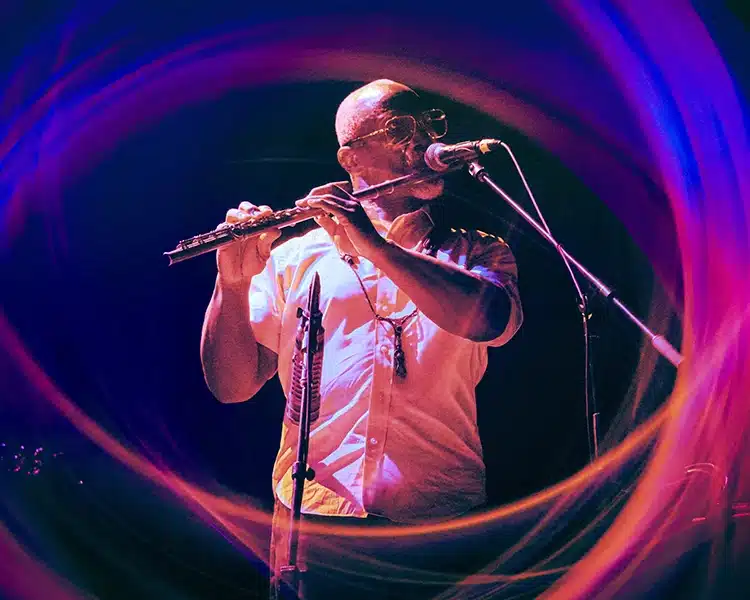
Allen takes the lead vocal on the anthemic “Terrapin Station”, then Peck takes a verse. They harmonize on the timeless tale of the storyteller’s journey, made even more poetic here with Denson’s flute in the mix. When Allen sings out during the outro crescendo to say, “I can’t figure out, Is it the end or beginning?” there’s a powerful sense that this certainly is not the end of the line. Bob Weir spoke of envisioning the Grateful Dead’s music enduring for 300 years, which seems plausible given how vibrant the music remains 60-plus years in, with the original band’s front line now departed.
The crowd is clapping in unison again from the first beats of “Not Fade Away” as the ensemble brings the lengthy set to an energetic conclusion, with Bowling and Barraco crushing the keyboards. When Grahame Lesh returns for the encore, he speaks of how he got an extra 25 years with his dad, thanks to a now-legendary organ donor named Cody. He continues Phil’s tradition of encouraging everyone to become organ donors. Also, he notes that the shows are charity benefits for both the Sweet Relief Musicians’ Fund and the Canal Alliance in San Rafael (where Terrapin Crossroads was based in Marin County).

It’s already after midnight, but this doesn’t prevent Grahame Lesh & Friends from throwing down a big encore as Grahame leads the group into Phil’s signature song, “Unbroken Chain”. When he sings out the classic line of “Listening for the secret, searching for the sound,” there’s a sense of a timeless thread that can further power the music into the future. The song ignites with a soaring jam section as the guitars, piano, and sax jam over the tight groove. It was a song the Dead left on the shelf for more than 20 years before dusting it off in 1995, though it was jammed out countless times in glorious fashion by Phil over those extra 25 years he got after his life-saving liver transplant.
The hot jam gives way to the song’s melancholy outro. Still, Grahame Lesh pulls yet another ace from his sleeve by leading the group into the upbeat arrangement of “Ripple” that the Lesh family schemed up and perfected in the bar at Terrapin Crossroads. The acoustic-oriented classic from 1970’s American Beauty album takes on a more triumphant tone with a Neil Young & Crazy Horse type of sound in this format, showing how malleable these songs can be. It’s a perfect way to honor Phil’s passing while also expressing hope for the future, and giving the audience a chance to dance it out at the end of a long evening of music.
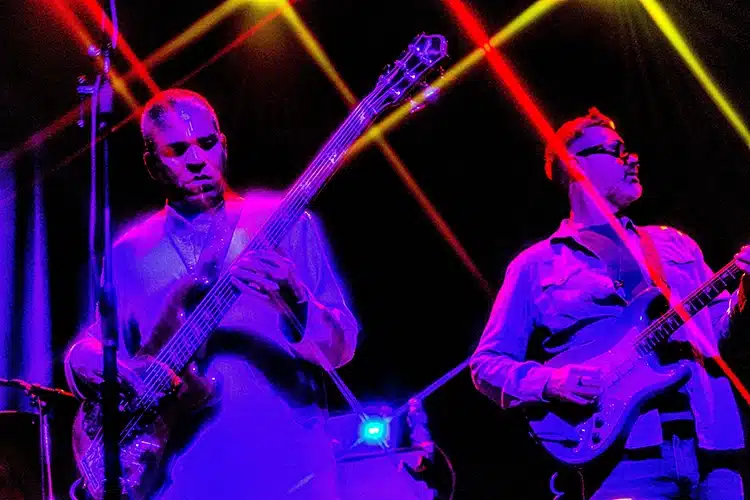
Grahame Lesh, the only child of the Grateful Dead band members, has pursued an active career in the music business, and it’s downright heartwarming to witness how far he’s grown as a guitarist and bandleader over the past 15 years. No weak link in the chain here, as Grahame Lesh & Friends are now poised to carry the torch forward. Dad has to be smiling from the heavens.