
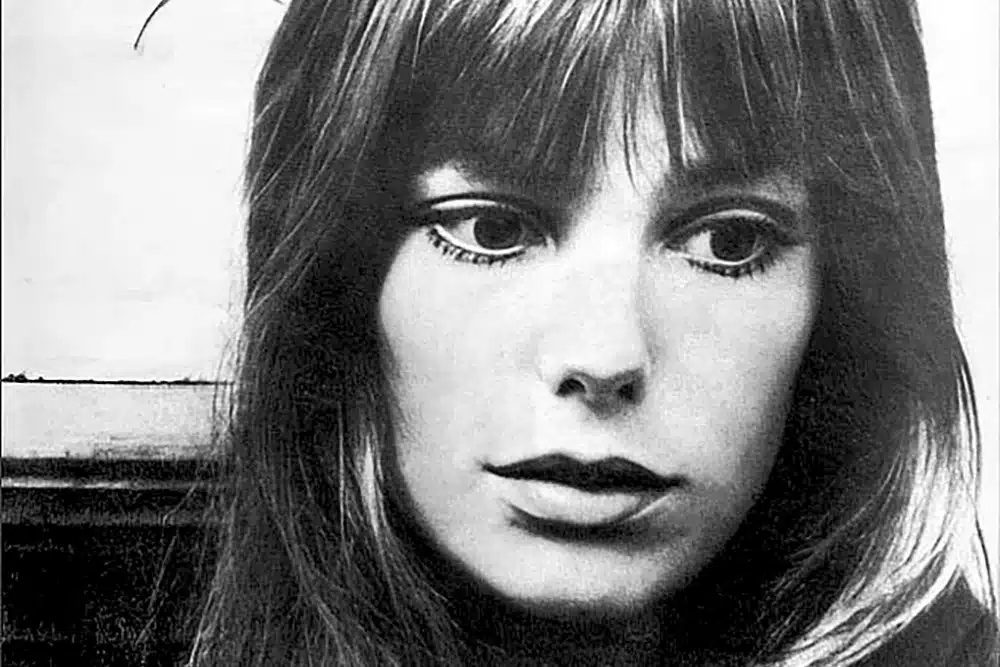

If there ever was a woman who personified 1960s cool, it was this willowy British transplant who became the unlikely archetype of the “quintessential French woman”. Jane Birkin was a teenage model who would go on to become a revered actress featured in more than 70 films and a musician whose most famous song was banned by the Vatican for its lasciviousness.
She also raised three famous daughters and was the muse and romantic partner of four creative powerhouses, including the rascally musician/provocateur Serge Gainsbourg. Along the way, Birkin even became the inspiration for one of the world’s most exclusive and pricey fashion accessories, Hermès’ coveted Birkin handbag.
Now, Jane Birkin is the subject of a biography that delves into all these areas and many more complex, sometimes tragic corners of her rich life. In the introduction to It Girl: The Life and Legacy of Jane Birkin, author Marisa Meltzer demonstrates the parallels in her own life that inspired her to take on this task. She crafts the first comprehensive biography of not only Birkin’s life events but also her still-reverberating cultural impact.
Meltzer was born on Bastille Day and, like Birkin, moved to Paris in her youth to study and indulge her love of all things French – from New Wave films to café society to her delicious addiction to Écolier chocolate cookies. When discussing Jane Birkin, people often dwell only on the surface – her remarkable beauty, much-imitated sense of style, and, of course, the tabloid-worthy romances. Meltzer’s mission, however, is more profound. She writes: “The Birkin I aim to capture is someone more fully realized than the fantasy that surrounded her… Being a gorgeous young thing is part of her legacy, but far from the whole picture.” Putting the accent on the depth of this profoundly talented woman and her life is something Meltzer does extremely well.
Jane Birkin was born into a family that was both well-to-do and cultured. Her father’s family founded the Birkin Lace Company in 1835, a concern that produced curtains for the British royal family. Her mother, Judy Campbell, was an acclaimed stage actress who served as muse to Noel Coward. Jane was primarily raised in a large Victorian home in the effete Chelsea section of London and at a summer retreat on the Isle of Wight. Her beautiful mother would step back from her career to raise Jane and her siblings and stimulate her interest in culture by exposing her to the best in theater, films, fiction, poetry, and art.
At 16, Jane would be shipped off to Paris to a “finishing school” run by Madame P. Here she would learn to cook, visit museums to gain an appreciation of art, master continental etiquette, and, to a degree, the French language (her heavily-accented ‘Franglish” would remain throughout her life). This effort was designed to produce a cultured young woman of substance, someone who would then return to her native country to be shopped to prospective husbands of means at a “coming out” party.
But life, as they say, had other plans…
In Paris, Jane Birkin cut an arresting figure. With her slim figure, incredibly short miniskirts, and fringed hair, she was often mistaken for France’s reigning pop diva of the moment, Françoise Hardy. At 17, she decided to try her hand at acting. She won a small role in Graham Greene’s play Carving a Statue, followed shortly by roles in films like Jack Smight’s Kaleidoscope (1966), Joe Massot’s Wonderwall (1968) and Michelangelo Antonioni’s Blow-Up (1966), winner of the Palme d’Or at Cannes, for which she gained notoriety for a nude frolic with another actress and the film’s star, David Hemmings.
Marisa Meltzer delves into the first of Jane Birkin’s sometimes fraught relationships with great empathy, her sole formal marriage to philandering film composer John Barry. She would first experience sex with the composer and bear her first child, the ill-fated photographer Kate Barry. Her only husband was a remote character who would not even notify her in person when he decided to divorce her.
At an audition for Pierre Grimblat’s Slogan (1969), she would meet her most famous paramour, Serge Gainsbourg. Naturally, a significant chunk of Meltzer’s It Girl chronicles their fruitfully creative, yet emotionally up-and-down 12-year union.
Serge Gainsbourg would consider Jane Birkin his creation. He would launch her music career with a song written for an earlier love, the movie sex symbol, Brigitte Bardot. It was the steamy, 1969 duet, “Je’taime…moi non plus” (“I love you… me neither”), which the BBC and the Vatican both banned for the simulated sex sounds in its coda. Birkin would call the Pope “our best publicist”. Her musical work with Gainsbourg, which would outlast their marriage, is chronicled in great detail in albums like History of Melody Nelson (1971), her debut solo “Di Doo Dah” (1973), and Baby Alone in Babylone (1983)
Gainsbourg and Birkin were addicted to the nightlife, and the author provides a sensational blow-by-blow to their many alcohol-fueled adventures at legendary Parisian haunts like Regine’s, Maxim’s, Los Calvados, and the drag club, Madame Arthur. With the birth of their daughter, the now-famous actress and musician Charlotte Gainsbough in 1971, the duo would get the kids to bed, then head out to the clubs. They would return just in time to get them off to school in the morning, then take a post-disco nap.
Gainsbourg and Birkin would part because of his excessive drinking and periodic physical violence. Her next relationship was with film director Jacques Doillon. In their 13-year union, she would experience her first taste of acclaim for her acting in The Prodigal Daughter (1981) and La Pirate (1984), as well as in the conceptually groundbreaking documentary Jane B. by Agnes V. (1988), made with director Agnes Varda. In 2021, Birking would be featured in another documentary made with her daughter, Jane by Charlotte.
With Marisa Meltzer’s experience as a fashion and culture writer, some of the most enjoyable parts of It Girl relate to her critique of Jane Birkin’s fashion choices and their lasting impact. We learn about how she shocked the paparazzi by wearing a see-through crocheted mini skirt backwards to Cannes in 1969, revealing her chest and belly, also about her love of the most mini of miniskirts, fitted blue jeans, man-tailored shirts, and white tees.
When she is together with Gainsbourg, she tells him he looks best with eight days of stubble and that he should also forgo wearing both socks and underwear. Birkin herself will forego undergarments and, with her boyish figure, never don a bra. Of course, we also get the story of the creation of the famous Birkin bag. It transpired during a chance meeting in 1983 on an airplane with Hermès’s CEO. This pricey accessory is really just a high-end version of the vast Portuguese straw basket she had toted about for years.
One of the most interesting parts of It Girl is Meltzer’s descriptions of this lioness in winter; how she gracefully and honestly coped with physical aging, illness, and her support of progressive causes, from the HIV/AIDS crisis to Amnesty International and the plight of refugees, the latter of which put her at odds with many powerful corners of her adopted country. While Meltzer did not interview Birkin during her lifetime, this biography benefits significantly from the author’s access to her diaries, which are quoted liberally throughout.
My one criticism lies not in the book’s writing, but in its marketing.
It’s the sole “shout out” on the book’s front cover, which comes from Candace Bushnell, the author of Sex and the City, from 1996. Meltzer’s is a first-rate biography that chronicles a rich and deeply impactful life. Unfortunately, the blurb from Bushnell puts it not in the company of top-flight biographers like Megan Marshall or Robert Caro, but in the frothy ghetto of lightweight “chick lit”. While I can understand this move from a sales perspective, I think there may have been a far better choice to champion it.