

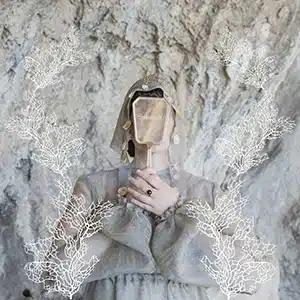
Jolanda Moletta has been described as a “one-woman electronic choir”, creating wordless compositions or “sonic and visual spells”, as described on her Bandcamp, through extended vocal techniques. On her two previous albums, Night Caves (2025) and Nine Spells (2022), she created gorgeous, cavernous worlds with layers of impeccable singing. On her third release, Oceanine, she expands her vocal universe through collaboration, with each track featuring a different female vocalist. At the same time, the foundational elements are generated entirely by her own voice.
Moletta’s Bandcamp page describes the record as “representing a musical practice that is distinctly feminist”. The album harkens back to an earlier age, “when the altars were to goddesses and women were centered as powerful beings representing the earth’s cycles of regeneration and renewal”. While the entire album is built solely from processed and layered human voice, the additional vocalists contribute what Moletta refers to as “a raw stem: a short, unedited melodic fragment of just a few seconds, inspired by Oceanine‘s themes”. These stems became the foundation of each track, with a surrounding “orchestra” created from Moletta’s layered vocals.
“Sea Ceremony”, which opens the record, features vocals by Karen Vogt and sets the overall feel with ethereal, luminous beauty. It eases the listener into the record with grace and subtlety. “Coral and Bones” has a more exotic flavor by incorporating Eastern themes into the vocals. The track, featuring Italo-Congolese singer, composer, producer, and DJ Laryssa Kim, seems aligned with Moletta’s inspiration of sirens, water nymphs, and what she refers to as “the timeless call of the sea”, specifically her lifelong connection to the Mediterranean Sea.
That certainly accounts for songs titled “Their Voices Rise Above the Waves” (featuring Yellow Belly and multitracked vocal textures that almost resemble synthesizer patches) and “For All the Sea-girls”, where Moletta collaborates with Nadine Khouri in a composition that is almost hymn-like in its beautiful simplicity. Oceanine closes with the mysterious “Coda”, its vocal processing thick with mystery and myth.
Jolanda Moletta’s previous albums are gorgeous, spiked with unique creativity and a singular vision, but Oceanine is where the artist truly shines, allowing other deeply talented artists to collaborate on the process. It’s warm, enchanting and dreamlike. In her artist statement, Moletta calls it “a reclamation, a spell, and a call from the depths”.