
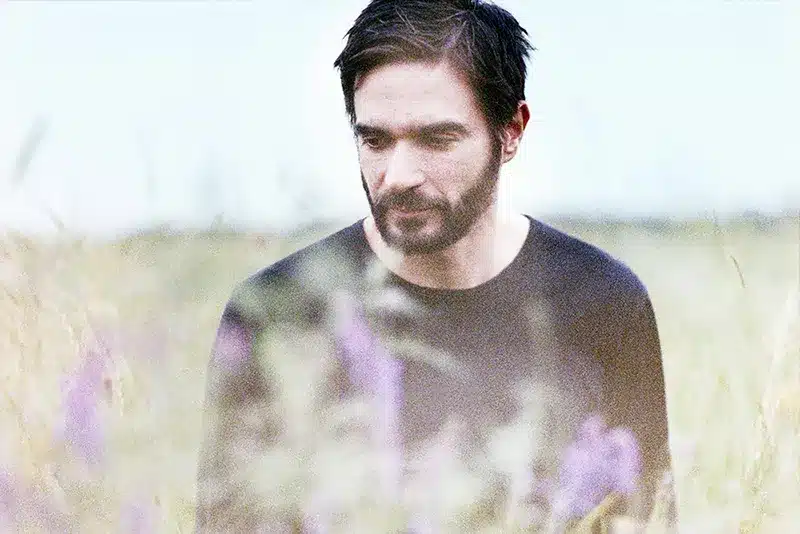

The Wilding soundtrack was produced in partnership by the English electronic musician Jon Hopkins and Icelandic soundtrack composer Biggi Hilmars. Hopkins‘ contributions mix electronically generated and/or processed sound effects, while Hilmars tends to emphasise orchestral textures, with both occasionally collaborating and blending their sounds. Wilding’s 13 short tracks form the ambient soundtrack to a 2024 documentary film of the same name, which tells the story of the wilding of 3,500 acres of English farmland, letting land that was once intensively farmed be recolonised by its flora and fauna.
I have not seen the film, but I have read the original book authored by Isabella Tree, one-half of the partnership responsible for the farming and the rewilding at the Knepp estate in Southeast England. It is an upbeat memoir, one in which various weird, wonderful, ancient breeds, many that are progenitors of modern domesticated livestock, become the lead characters. There are several antagonists, some human, some not, who provoked tense encounters at regular intervals throughout the project, which continued from 1999 and beyond the book’s publication in 2018.
In the six-minute-long album opening “Wilding Theme”, Hopkins electronically processes his voice to sound “like a strange kind of ancient woodwind instrument”, “old and constant”, like “something long held in the land that is finally coming back to life”. I am not a connoisseur of ambient music, so what came quickest to mind was a yogic mantra. I listened during an urban woodland walk, with birdsong and the lapping of streams cascading gently over the harmonically static electronic drones.
A key theme of the book is openness – the unlocking of the soil and the forest canopy to sunlight and biodiversity through the natural cycle of herbivory and predation; receptivity to the illumination and abundance of new ideas. While I would expect a filmic adaptation of the book to amplify a sense of achievement and the potential of the wilding project, I would want its soundtrack to evoke this openness.
In “Butterflies”, Hilmars uses sprightly, cyclical string motifs familiar from wildlife documentaries as a theme of optimism, renewal, and vitality, as in the emergence of spring, and also alludes to the rejuvenation of the landscape through wilding. In “Back to Farm”, the strings are terse and irregular, evoking the gradual, tentative return of wild plant and animal life. This tension could also be a reaction to a bureaucratic hitch in the rewilding plan, although the music is more exciting than a municipal meeting.
In “Worms” and “Networks”, Hilmars and Hopkins mingle their organic and electronic textures together. Hopkins generates sounds reminiscent of bells and chimes. The titles of these two pieces suggest a concern with the effects of wilding underground, hidden from sight. Still, the sounds combine to create sparkling, shimmering effects which evoke the combination of rain and shine that nourish the world beneath the surface.
The Wilding album artwork features a head-on portrait of a grand stag from the Petworth estate, described in the book as “having a bloodline stretching back five centuries”, and “wide, flat antlers that can weigh eight or nine pounds and span three feet across”, that give him “a stately and prepossessing air”. My copy of the book includes an illustration of a turtle dove, whose cooings could “relieve the mind by calling up soothing and pleasing thoughts not easily described”.
Most tracks last around two minutes, preventing the album from unfolding as a long-form ambient trip. Instead, it sounds very familiar from film, television and video game soundtracks. At times, this familiarity lends accessibility; at others, it limits transcendence. The music rarely risks abstraction beyond what its documentary function requires.
Yet that restraint is the point. Like the rewilding project itself, the soundtrack is less about spectacle than about attunement. It does not overwhelm; it invites. In its gentler moments, when electronic and orchestral textures dissolve into one another, it succeeds in evoking that openness the book so passionately advocates.
As I listened, I called up the soothing and pleasing song of the turtle dove: not dramatic, not grand, but quietly restorative. In that sense, Wilding achieves something modest but meaningful — music that makes space for the land to breathe.