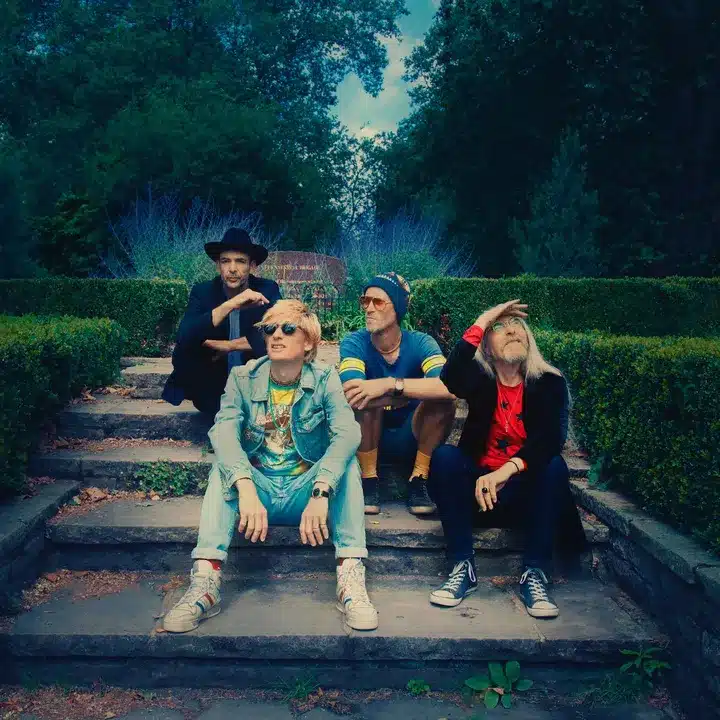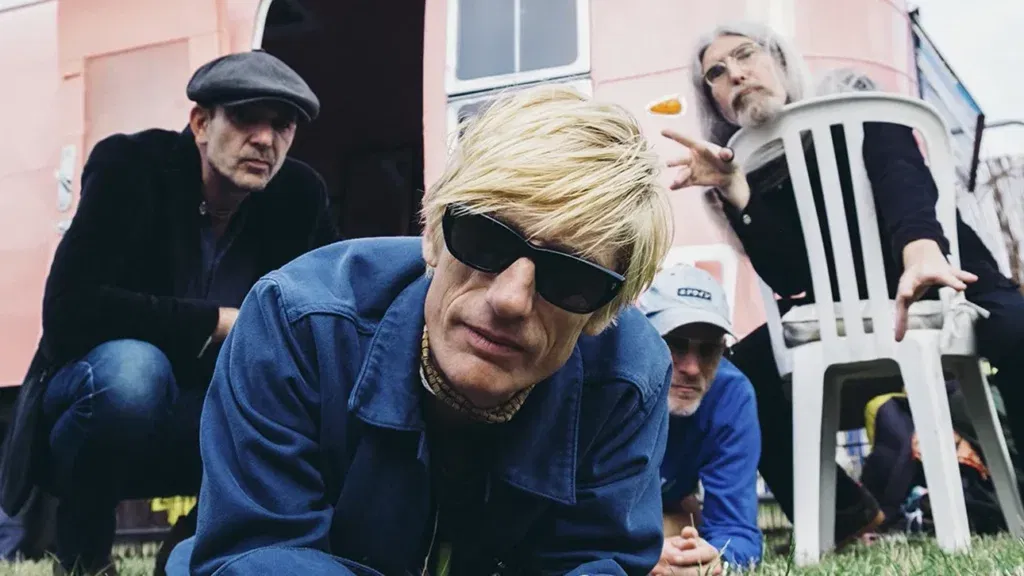

Kula Shaker formed in the 1990s and came to prominence during the Britpop era. The group’s debut K was released to the music-buying public in 1996, followed by Peasants, Pigs & Astronauts. Fronted by guitarist/frontman Crispian Mills, Kula Shaker similarly comprised Paul Winter-Hart and Alonso Bevan on rhythm, not forgetting keyboardist Jay Darlington, who toured with Oasis during the early 21st century.
Following a hiatus, Kula Shaker reformed in time to make Strangefolk and Pilgrims Progress, and in 2022, Darlington rejoined the unit. Mills and Winter-Hart spoke to PopMatters about their career.
“Usually, I’m at the kit learning stuff,” percussionist Paul Winter-Hart admits, “but I’ve got some notes, and I’m practicing some specific stuff.” The Kula Shaker drummer, who was the first to appear on the Zoom call, perks up when he notices that guitarist Crispian Mills has joined. “Is he coming in? I thought it was you and me, Eoghan.” Winter-hart smiles: “He’s gate-crashing.”
Mills chuckles: “Eoghan, that’s a nice name.” Querying the ancestry of the name, Mills is pleased to hear it’s Irish, given that Kula Shaker enjoyed playing there. One of the supposed fans who enjoyed Kula Shaker was Beatles guitarist George Harrison. “I don’t know,” Mills shakes his head. “But he was very generous. He allowed us a co-write for a piece of music he’d written with [Eric] Clapton for the Wonderwall soundtrack. We were playing this riff, and turned it into a song. Everyone said we wouldn’t get permission because it was hallowed ground. We wrote to him, and he said: ‘Yeah, it’s cool. It’s Eric’s riff anyway.’ We got it, and were thrilled. We have got a co-write with George, which is awesome.”
1990’s rocker “Gokula” is suffused with barrelling guitars, thriving organs and energetic drum fills, keenly re-imagining Harrison’s instrumental. “I heard the Beatles late,” Winter-Hart confesses. “I grew up in more of a jazz and classical environment as a kid. When I got to about 11, I started loving Simon & Garfunkel and the Mamas and the Papas; the American stuff, really. In Somerset or Glastonbury in the 1980s, the Beatles weren’t as big a thing as Rush and Yes, so I didn’t hear the Beatles properly until I was in the band. But it would be impossible to play in Kula Shaker without being influenced by the Beatles.”
The shadows of Black Sabbath can be heard on the record they’ve finalised, Wormslayer. “Even Black Sabbath,” Winter-hart throws his hands up. “I’m just a late starter on everything. I don’t think I got into them properly in my late 20s, early 30s. Zeppelin I got into early.” Winter-hart admits he doesn’t know “what contemporary means anymore”, although Kula Shaker got over the “retro thing, and to find a sound we were happy with.” They’ve become more “jam-oriented”: “We are what we are.”
“The main thrust of the writing came out of 18 months with Jay,” the guitar-player says; “..the reunited original lineup. A lot of ideas came from the gigs, and I moved to Cornwall, locked myself away with some of the ideas in mind. We were organised, went into the studio and went for it. We did a session of about two weeks in Belgium.” The duo giggle at the working title they had for the project: A Barn in Devon and a Barn in Belgium. Instead, they chose to name the record after a track. “We were thinking of playing this ambient track,” Mills says. “And it turned into this sort of Sabbath riff.” Given the tune’s origins from 1999 rocker “Timeworm”, the outfit felt confident in christening the new one “Wormslayer”.
The songwriting guitarist muses on the “different incarnations” people go through in his life. “The song spoke to the quest in us,” Mills elaborates about the title song. How is their knowledge of Sanskrit? “I’ve learnt it, but I can’t speak it,” Mills admits. “I tried some Sanskrit pronunciation with my daughter and wife, and they just took the mickey out of me,” the drummer laughs. “I’m self-conscious about it. Crispian has better linguistic skills.” Mills learnt it “under a great master”, as to learn it alone in a library “is like an impenetrable forest.”
Returning to George Harrison, Mills says the erstwhile Beatle sang the “Gāyatrī Mantra”: “It’s the pronunciation and the metre that you have to get right, but it’s very meditative that chanting, as each word has layers of meaning. The wonderful thing they have in the East is to understand the power of sound and how it can elevate your state of being. That’s what the whole mantra is: freeing the mind and connecting to a higher reality.”
Kula Shaker, Mills feels, are still on the “spiritual path and mystical adventure”. “It doesn’t matter if you’re a Celt or from Northern India,” Mills says. “It’s a calling. Clearly, Tony Iommi is still on the quest. It doesn’t matter if you have one life or many, it’s what you’re seeking.” Both agree that Wormslayer is about decades of “enduring the music industry”.
“You have the advantage of the moment in the studio,” the drummer exclaims. “The moment can be repeated. Live, the moment is the moment, and I love the spontaneity of that. But you’ve got to be responsible for the song!” Mills had Regatta de Blanc “in the house”, and was chuffed that Sting “brought his family” to a Kula Shaker concert in Los Angeles. “He was grilling us about Sanskrit,” Mills laughs. “So, we were erudite. We were ready for Sting. He understood that Sanskrit chants and mantras affect you even if you don’t understand the words. Sting liked that we were doing it.”
Harrison and Sting are two people who enjoyed Kula Shaker; Donovan is a third. “I’ve worked with Donovan,” the guitarist smiles. “I had the good fortune of a songwriting session with him. He almost scuttled it by bringing a Tupperware of hashcakes his lovely Linda had made. He dedicated his guitar to her. It was a great honour to be in the same room as Donovan.”
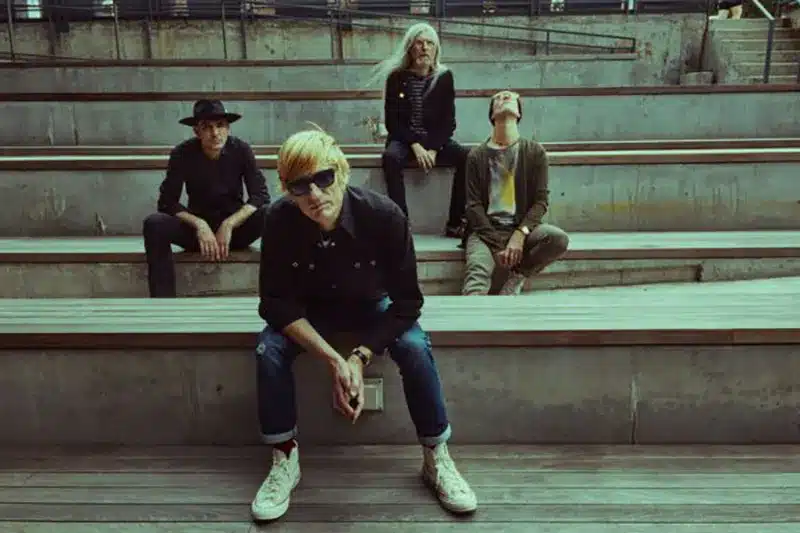
“Donovan was quite a pivotal character, and we talked about the Maharishi,” Mills continues. “He was there with the Beatles.” John Lennon, who espoused the virtues of meditation in 1967, fell out with the Maharishi as “Sexy Sadie” testifies. “Yeah, John went in a bit strong on that one,” Mills nods. “We don’t really know what happened there. Donovan told me a funny story where he found himself in a room with the Beatles. It was an awkward moment because John patted the Maharishi on the head, and said: ‘There’s a good guru’!”
2026 record Wormslayer fuses pop, rock, blues and jazz. “I wouldn’t have learned enough to play jazz,” Winter-Hart puts his hands up. “The only time I played anything jazzy was with a folky jazz artist. My eldest daughter was about two, and although I was playing tasteful, quiet music, she kept shouting: ‘Dad, dad!’ A very gentle set, and this kid yelling at her dad. I think I’m too much of a rock and roller to play jazz.”
Many jazz drummers wound up performing rock instead. “When Beware of Mr. Baker came out, I was intrigued. People said he was terrible, but I said, ‘He’s just a musician.’ We played with Ginger Baker, Jack Bruce and Gary Moore when we were about nineteen. Our manager had contacts with the people, so we did the show. We weren’t allowed to make eye contact with him; a hangover from the 1960s rock ‘Emperor Era’.”
“Are they all gone?” Winter-Hart asks. “We were allowed to feast our eyes on Aerosmith when we toured with them. I got to have a conversation with Steve Tyler. We had a conversation down a microphone in a hockey stadium. He’s definitely funny.” The pair have travelled far together. “Recording your first album can be pretty nerve-wracking,” Mills elaborates. “Half the job of a producer is to make a young band feel confident, exhilarated and excited. I think all bands struggle with that, and we certainly struggled with the chaos. How to make a live sound sound good in the studio.”
Wormslayer proved to be a return to tape, partially because “the drums sound better”. “There’s nothing like seeing tape-machines going round to make you focus, because you only have a finite time to get it right,” Mills boasts. “Tape costs money, so you need to knuckle down. It helps bring out the best in you.”
“We are planning to tour with this album,” Mills says. “Ireland is on the cards. We’ve just got back from a tour with Dandy Warhols, and we’ve got some radio support in the United States.”
The pair have travelled far together. Like Radiohead, Kula Shaker collaborated with John Leckie. “He was a tape operator, so he was there forAll Things Must Pass and Plastic Ono Band,” the guitarist chimes in. “He also did the Stone Roses and Dukes of Stratosphear. John was very good at getting the big, ambient aspect of what we did, but we struggled with the live performance because he didn’t quite know how to communicate with us. The crazy stuff we ended up doing on a B-side session, stuff like ‘303’. But you learn something from everyone you work with, and even if it doesn’t work, you assimilate something.” Leckie co-produced the group’s debut K in 1996.
Mills points to a clip of Jerry Garcia “feverishly” playing six months before his death. “We’re 30 years into our career,” Mills claims, “and we’re just getting the hang of this now.” Keyboardist Jay Darlington, Winter-hart feels, is “very funny”. “He’s got an encyclopedic knowledge of 1960s music, sounds and vibes. Jay is a great person to have there, and comes up with amazing parts.”
Mills goes further with the description: “There’s the push-and-pull of guitar and drums, with the lead bass going on. The sound Jay makes fills in the gaps; it’s a combination of all that put together. So much of the band is about chemistries put together. When a band plays, the first people you play to are each other.” The guitar player senses my confusion: “If you want to talk about the Beatles, John was trying to outdo Paul, and Paul to outdo John. It wasn’t just competition; it was ‘check this out!’ That initial audience shapes what you do. When Jay came back, it was a completely different room and audience. Jay works in the shadows, a wizard working his way with his massive organ.”
Darlington contributed to the Oasis single “Falling Down”. The keyboardist toured with Oasis, but rejoined Kula Shaker in 2022. Bassist Alonso Bevan worked as one of the producers on Wormslayer. Does Bevan approach production differently than his bass playing?” Good question,” the drummer states. “He has a general idea about an aesthetic, linked to his playing and production values. Crispian might come with a finished pop song, and Alonso will think of a way to make it more fuzzy; more messed up. Alonso might take a folk song and put a cello on it. So, he will dress things up in a way you won’t expect.”
Winter-hart says he can be difficult in that he chops things up, “but he’s not the only producer to do that.” “Alonso can get very granular,” Mills agrees. “But he and I have similar tastes. What we’re always trying to get is to get the song to feel live and natural, because that’s where music has got really lost in the last few years. It stopped becoming a living creature and became a genetically modified creature.”
“All audiences are different,” Mills admits, “and all cities are different, but I don’t treat them differently. I don’t treat a London audience differently from a Glasgow one. Some places have a reputation, as Ulster Hall in Belfast has that. If you have a good night at Ulster Hall, it’s going to kick off.” Mills namechecks New Orleans and New York as special places: “You want to make it a night to remember.”