
In his essay “People and Language” (“Peuple et langage”), Martinican poet and philosopher Édouard Glissant (as translated by J. Michael Dash in the anthology Caribbean Discourse) writes of multilingualism as “the passionate desire to accept and understand our neighbor’s language and to confront the massive leveling force of language continuously imposed by the West” (1989, 249). Language is a thing layered with significance. In the Caribbean and the Americas more broadly, questions of which languages are institutionally accepted or declared national are directly related to colonial histories and present-day social structures. These are phenomena fundamental to the formation of individual and national identities.
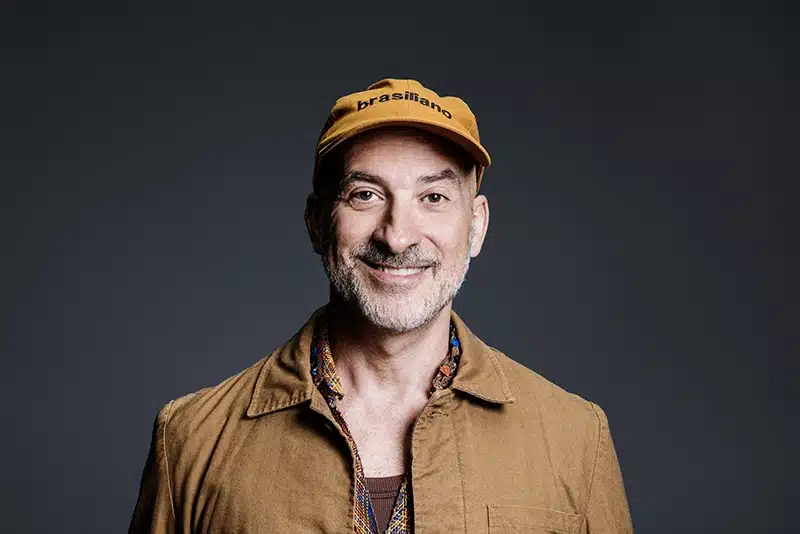
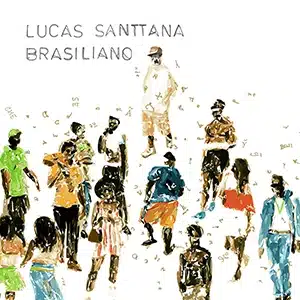
It’s this understanding of the inherent politics of language that is at the heart of singer-songwriter and guitarist Lucas Santtana’s Brasiliano. With guest appearances by artists from Mali, France, Italy, England, Guinea-Bissau, and (of course) Brazil–and whose experiences are not so easily defined by such borders–it’s a thoughtful rejection of Western hegemony and isolationist nationalism in the form of a very enjoyable MPB album.
With that framing in mind, it seems only natural that the first guest to accompany Santtana is Gilberto Gil, one of the most significant Brazilian musical revolutionaries of the 20th century. “A história da nossa língua” traces the ongoing history of language in Brazil from Latin onward, underscoring not only European roots but also the importance of Indigenous languages in contemporary Brazilian Portuguese. It’s a sweeping introduction to the album’s themes, with lush pop instrumentation that sets the stage for both a fraught and captivating experience.
“Línguas gerais” lands us firmly in the present. Accompanied by Santtana, singer Tainara Takua opens the track with a melodic verse in the Tupi-Guarani language indigenous to South America. From there, Santtana and Malian-French rapper Oxmo Puccino lay down kinetic beats and lines that needle far-right nationalist philosophies in majority languages, all over Santtana’s lilting acoustic guitar.
Santtana’s explorations of multilingualism continue to connect Brazil to a wider world as the album progresses. Occitan duo Cocanha join him with warm vocals and medieval string drum on “Liga.” Maternal themes permeate the sweet sounds of “Strati di tempo”, a slow duet with Italian singer Dimartino. Flavia Coelho lends a relaxed voice to the sensual love song “Dans le sud”.
So it goes on, with featured guests Chico César, Rachel Reis, and Os Paralamas do Sucesso offering distinct slices of the vast diversity of Brazilian popular styles; English singer-songwriter Piers Faccini giving “Battre des ailes” a melancholy flair; and, at the end of it all, Bissau-Guinean singer Karyna Gomes alongside Santtana advocating for a recognition of Brazilian language as its own phenomenon rather than one secondary to European tongues.
Politically and philosophically, Brasiliano demonstrates wondrous clarity of purpose. It also boasts consummate musicianship from start to finish. As always, Santtana comes across as an artist with true vision, but also one who understands the value of collaboration, especially in a work that champions dynamic and diverse conceptions of language and cultural expression as Brasiliano does so well. On the surface alone, this is great music. A deeper listen, though, reveals it to be an absolute gem, with sincere investment in people, language, and a passionate desire for understanding.