
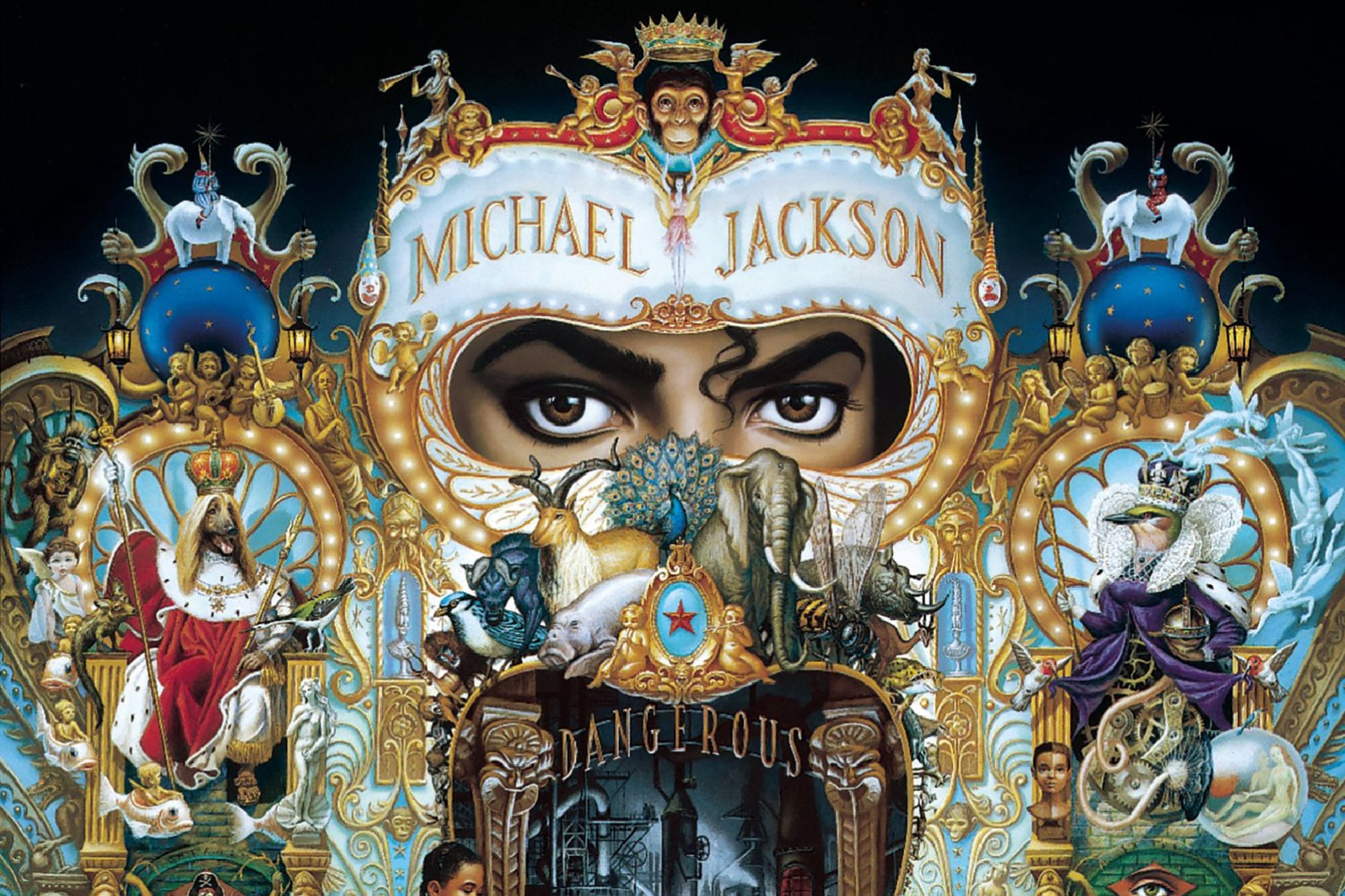

As the traditional narrative has it, Michael Jackson‘s Dangerous album represented the end of an era: the death of pop and the rise, in its wake, of grunge, alt-rock, and hip-hop. Most critics point to the moment Nirvana’s Nevermind knocked Dangerous out of the #1 spot on the Billboard Charts as the symbolic turning point. Within months, muted flannel had smothered all trace of ’80s excess and flamboyance.
Cultural transformations, of course, are never quite that simple. Several months after Nevermind reached the #1 spot, Nirvana shared the stage at MTV’s Video Music Awards with stadium rockers like Def Leppard, Van Halen, Metallica, and what remained the biggest band in America — Guns N’ Roses. Indeed, if one were forced to pin down a cultural turning point, the 1992 VMAs wouldn’t be a bad choice. Watching Nirvana’s subversive performance (which began with a few bars of the banned “Rape Me” before relenting into the moody “Lithium”) shortly after Def Leppard’s cartoonish “Let’s Get Rocked” not only made ’80s rock look ridiculous, but it soon made it nearly obsolete. Even the mighty Guns N’ Roses, who closed the show with a spectacular performance of “November Rain”, were openly mocked by Nirvana as “corporate rock” and “packaged rebellion”. If ever there was a public changing of the guard, this was the night.
- How the New Jack Swing Movement Redefined an Era - PopMatters
- Prince and Michael Jackson: The Rivalry and the Revolution ...
- Does Michael Jackson's Work Contain the Stuff of Genius ...
- Michael Jackson: Invincible - PopMatters
- Michael Jackson Forever - PopMatters
- Michael Jackson: Xscape - PopMatters
- Long Live the King: Remembering Michael Jackson - PopMatters
- Mythologizing Michael Jackson - PopMatters
- Michael Jackson and the Death of Monoculture - PopMatters