
The idea of colour as an act of protest lingered in my head all day on Saturday at the 19th annual Osheaga Festival in Montreal. Attending a pop music festival on a gloriously sunny afternoon on the first day of August, I would much rather have been distracted by whatever tunes were being cranked out at one of the fest’s six stages spread across Parc Jean-Drapeau. As I strolled the grounds amid thousands of young women dressed and styled like that night’s headliner, Tate McRae, at a festival that normally prefers vibrant, gender-fluid fashions to neutral uniformity, it pulled me back into ruminating on late-stage capitalism and its influence on popular culture.
It’s not exactly the sexiest way to kick off another annual recap of this gem of a summer festival, but when you find yourself listening to the latest nepo baby perform in front of thousands of kids clutching their phones, waiting to record the one viral line in the one viral hit they came to hear, the mind tends to wander.
In summer 2026, with Pax Americana dead and gone, the world has become unstable, unaffordable, and increasingly authoritarian. In the design world, that shift to fascism is reflected in the colours chosen to reflect the mood: stark whites, blacks, innumerable greiges, and if you’re a loyal part of a particular American subset, gold accents, and plenty of them. Things start looking sanitized, mirroring the cost-cutting, risk aversion, and mass-market efficiency that strips physical products, architecture, and branding of their character.
When times are optimistic, you get warm, vivid themes such as the ubiquitous Global Village Coffeehouse aesthetic of the 1990s. When times are bleak, colour disappears. You don’t want something like a knitted pink hat to anger up the public’s blood, after all.

Middle-of-the-road, mainstream, hetero American pop culture reflects the mood, too, and dance prodigy-turned-singer Tate McRae was ready to seize the moment to become that demographic’s new standard-bearer as she stepped out in front of 50,000 eager fans at Osheaga. The latest blonde bombshell to captivate America, the Canadian transplant has a Sydney Sweeney-esque, detached persona that draws aspiring alpha males like flies. Her athletic dance moves are astonishing, her poise flawless. Her music is clean and efficient; her pouty, Britney-esque purring sounds impressively strong live. What her music lacks in explosive hooks is aggressively compensated by her crisp choreography. At times it was extremely impressive.
Dressed in a sleek, all-white wardrobe designed by Ludovic de Saint Sernin and featuring monochromatically clad dancers, the stage design for her first major appearance after her recent rebrand was stark to the point of imposing: towering, faux-marble columns and porticos, topped with detailed capitals resembling an ancient Parthenon. At the conclusion of her climactic set closer, the 2024 single “Sports Car”, McRae dipped herself in gold paint and struck a taut, sculptural pose, accentuating her highly toned, statuesque physique. The ultimate feminine ideal to 77.3 million voting Americans, in literal trophy form.
Tech and finance bros, wealthy athletes, and celebrities in the VIP area talked ostentatiously through the spectacle in comfort with their tall, thin companions, flaunting their expensive cocktails and personal table service. Meanwhile, thousands of young girls sweated in the massive general admission section after waiting as long as nine hours, desperate for a photo, a video, any possible interaction with their idol, no matter the cost. It was the 2026 class divide on full, performative display, two extremes clamouring for the attention of the latest golden goddess.

As much as McRae’s team wanted to come away with the definitive viral moment of Osheaga, by Sunday night the gold paint stunt was a distant memory, her clinical, monochromatic efficiency swiftly overshadowed by a diverse array of musical talent that charmed festivalgoers with no shortage of musicianship, humanity, and most importantly, colour.
The real fun started a day earlier. Friday got off to a roaring start thanks to two of the best British rock bands working today. Riding the resilient success of 2025’s The Clearing, Wolf Alice commanded the Mountain Stage with such art rock-oriented standouts as “Bloom Baby Bloom”, “White Horses”, and “The Sofa”. Singer Ellie Rowsell brought the set to a searing culmination with “Yuk Foo”, “Play the Greatest Hits”, and the scathing “Smile” (complete with bullhorn) before launching into a huge singalong of their signature song “Don’t Delete the Kisses”.

Led by non-binary icon Rhian Teasdale, Wet Leg are similarly enjoying North American success thanks to last year’s brilliant Moisturizer album, which shows no signs of going away. With her pink hair, angel wings, Timberlands, and neon green acrylic guitar, Teasdale has quickly become a magnetic frontperson. She turned on the charisma for 45 minutes while the rest of the band put their heads down and locked into some ferocious post-punk grooves on “Catch These Fists”, “CPR”, and “Pillow Talk”. Older faves like “Chaise Longue”, “Wet Dream”, and “Angelica” were well received, but the biggest pop was saved for “Mangetout”, which, since its use on the series Heated Rivalry, has become part of pop culture.
Elsewhere, Dev Hynes played a brooding, subtly layered set of Blood Orange material, while Leon Bridges brought his energetic retro-soul and R&B to the Valley Stage. Millennials took over the Mountain Stage as they awaited the long-overdue return of the beloved the xx, and were treated to a gorgeous late-afternoon set that showcased the always stunning vocals of singer/guitarist Romy. If there was a fault to the xx’s hour-plus set, it was that the sunlight stripped the music of its mystique. It would have been more fitting to witness this performance in darkness, but that was reserved for the incomprehensibly popular Friday headliner Twenty One Pilots.

Outside of Tate McRae, Saturday’s lineup had plenty of variety. Wolf Parade played a wonderful, painfully short set that climaxed with another big Heated Rivalry tune, the 2005 classic “I’ll Believe in Anything”. The algorithm pop/rock artists were in full, bland force, including billionaire Stella Lefty, Malcolm Todd, Mt. Joy, and actor/musician Finn Wolfhard of Stranger Things notoriety.
UK rapper Little Simz won over the Osheaga crowd at the Valley Stage. Although it took them a good half hour to build momentum, the affable Viagra Boys cranked out saxophone-accentuated grooves that echoed classic Killing Joke.
The lanky, cheekboned dreamboat Sombr valiantly put his all into his sunset performance in front of a massive throng of fans, but he has yet to prove he can do much more than crank out safe, vanilla mush that doesn’t know if it wants to be chillwave, teen pop, or alt rock. He’s young and talented, so hopefully it’ll be a matter of time before he finds his voice, but on this night Sombr was dwarfed by the supreme talents of veteran post-punks Franz Ferdinand and Empire of the Sun’s garish art-pop spectacle.

It’s not every day a francophone Quebecois artist gets a chance to play the main stage, but locals got a big treat Saturday morning when it was revealed that viral math rock sensation Angine de Poitrine would take to the Mountain stage just before 5 PM. While the microtonal music by the papier-mâché-masked duo has connected with listeners worldwide, it’s another story in Quebec, where they are household names. The province has been quick to embrace Angine de Poitrine, bemused by the band’s unfathomable Stateside success, to the point where an estimated 70,000 people flooded Montreal’s Place Des Festivals to catch their performance at the Montreal Jazz Festival back in June.
For 60 glorious minutes, the McRae fans camping out at Osheaga’s Mountain stage weathered an invasion of polka-dotted fans of all ages as well as many curious onlookers, many of whom were from the northeastern American states wondering what all the fuss was about. Well, they quickly found out, as erect-nosed guitarist Khn and flaccid-nosed drummer Klek launched into an unrelenting barrage of loops and grooves that got people dancing.
Tracks like “Fabienk”, “Sarniez”, and “Yor Zarad”, already part of Quebec’s cultural fabric, drew enthusiastic responses from the thousands who flocked to the sun-drenched stage. As for the McRae fans, confused expressions abounded, especially for the first two to 15 minutes, but before long the fashionably dressed young women were dancing ebulliently with everyone else.
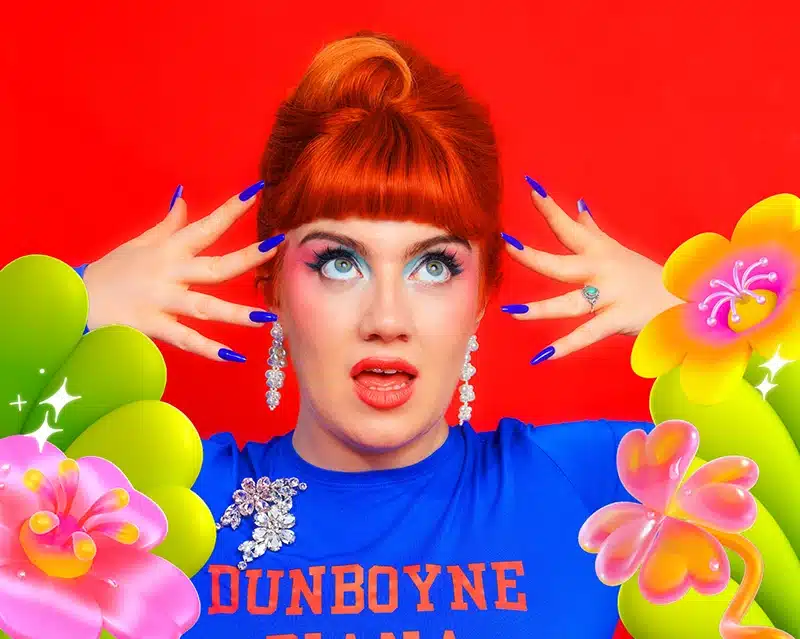
For those craving a more substantial palate-cleanser after Saturday night’s headliner, Sunday delivered it in spades. The ever-charming CMAT kicked things off early in the afternoon with a raucous, memorable set. Late to Montreal, minus a keyboard player who’d fallen ill, and missing most of her band’s gear, the pint-sized country rock firecracker overcame her morning from hell with a knockout performance featuring “The Jamie Oliver Petrol Station”, “Take a Sexy Picture of Me”, and the iconic “When a Good Man Cries”. As her final song “Stay For Something” concluded, the sassy “Dunboyne Diana” parted the growing crowd (who could resist this woman?) and charged right through it, high-fiving as many people as she could.
Hailing from Saddle Creek Cree Nation in central Alberta, Tia Wood put an intoxicating Indigenous twist on R&B, her single “Stimulated” showing enormous potential. As French experimental pop artist Oklou charmed the afternoon crowd over at the Valley Stage, the Electronic Stage was rapidly filling to overflowing as drag superstar and DJ Trixie Mattel led her dancers through a raucous hour of glittery, high-energy dance tracks. The only thing more contagious than her clever mash-ups was Trixie’s charisma, and the big crowd ate it up as the rain started to fall.
Not to be beaten, anthropomorphic weirdo HorsegiirL lit up the same stage an hour later to an even bigger crowd that was hungry for her deliriously fun mix of hyperpop, donk, and happy pop. Two years after playing a memorable set to a couple hundred kids on the same grounds, the equine-masked DJ-slash-diva cranked out frenetic highlights from her debut album Nature is Healing, turning the forested area into a spontaneous rave as the growing crowd reciprocated the music’s joy tenfold.

It doesn’t feel right to call Zara Larsson a “Swedish pop sensation” when she’s been one of the hardest-working pop artists of the last decade. Still, there’s no denying she’s finally having her moment this summer, thanks to her 2025 album Midnight Sun and the even better expanded version Girls Trip, which came out this past May. Having recently admitted that she’s not making any money during this summer victory lap, Larsson has poured everything she can into her Lisa Frank fever dream of a stage set-up, which has in turn built a groundswell of word-of-mouth, viral clips, and positive press.
Backdropped by a vivid LED screen, the colourful, multi-tiered stage featured an exceptionally tight all-women backing band and a group of backing dancers. Still, Larsson is so skilled, athletic, and charismatic that she hardly needs any help. She’s an absolute force, her strong upper-register voice piercing through the arrangements, her smile ever-present, and her dancing skills frankly astonishing. The total package, a consummate pro. If that wasn’t enough, she brought a nervous little girl to do the viral “Lush Life” dance onstage with her, with triumphant results. There wasn’t a dry eye anywhere.
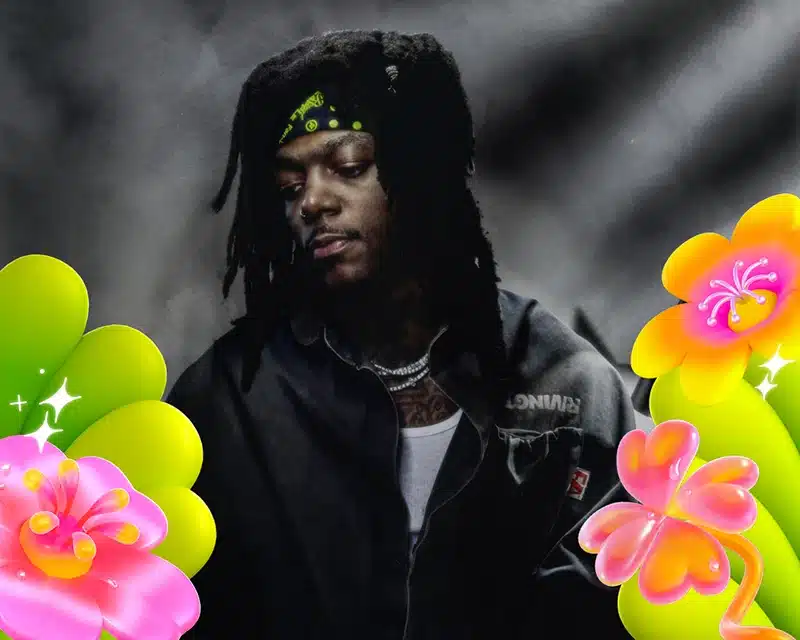
Although hip-hop has taken a backseat to pop at Osheaga in recent years, several performances were well worth noting. Accompanied by his DJ/collaborator Christo, Atlanta MC JID played a fast-paced, almost virtuosic set featuring material from his well-received albums God Does Like Ugly and The Forever Story. With his rapid-fire delivery, sharp social commentary, and the thudding musical backdrop, JID left a lasting impression on the big late-night turnout.
Virginia icons Clipse played a rainy set under the gloomy skies, with the young crowd erupting as soon as Pusha T and Malice kicked into their staple “Grindin'”. Later that afternoon, Gunna tore up the main stage with a blazing set that tore through a bevvy of his standouts, including “Drip or Drown” and “Fukyoumean”. His throttling, dark, bass-rich beats and thrumming bass were actually a fitting lead-up to the Sunday headliner, who wound up stealing the entire festival.
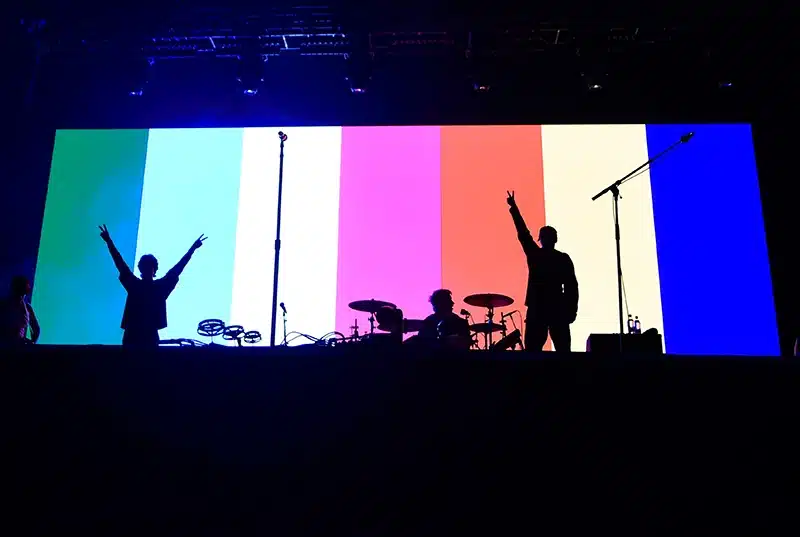
While Twenty One Pilots and the Neighborhood played their plastic, algorithm-pandering slop over at the main stages over the weekend, two of the best American rock bands working today made an indelible impression on passionate fans over at the smaller stages on the other side of the park. Baltimore hardcore heroes Turnstile have captured the imagination of a sizeable chunk of Gen Alpha, and their first Montreal performance in well over a decade drew a big, enthusiastic, multigenerational crowd ready to dance, mosh, crowdsurf, and smile.
Vocalist Brendan Yates led the way with his Perry Farrell-esque vocal melodies as the rest of the band showed plenty of muscle, moving from such diverse tracks as the new wavey “I Care”, the d-beat assault of “T.L.C.”, and the towering “Birds”, which always generates one of the biggest concert pops you will ever witness.
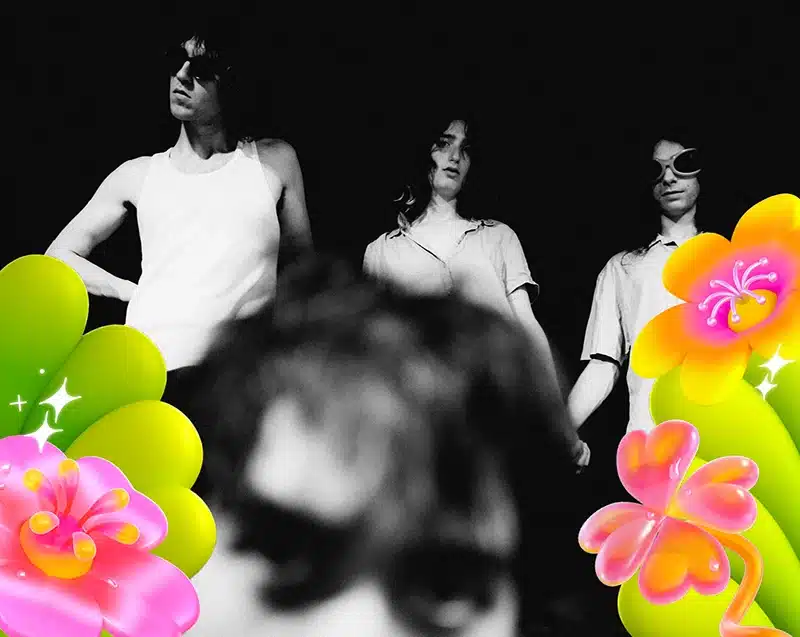
Over the past year, Geese have been proving to anyone and everyone who’ll listen that they’re a lot more than rich Brooklyn kids cosplaying as bohemians. I was as skeptical as anyone. However, when I heard Cameron Winter’s powerful bellow at the beginning of “Husbands”, I was transfixed. More than an affectation, that nasal warble has genuine power live, and backed by an astonishingly talented group of bandmates, Winter and Geese alternated between Radiohead-style experimentation, sunnier Phish-derived jams, and moments where you’d think they were out to top Led Zeppelin‘s thunderous grooves.
“Crusades”, “Au Pays du Cocaine”, and the explosive “Trinidad” were big highlights. Still, it was a mesmerizing set front to back, even when the band realized they were on for 75 minutes instead of 45 and hilariously scrambled to insert a couple more songs to pad out the set.

The biggest performance of Osheaga came last, and ran in direct contrast to the clinical performance the night before. With a set design featuring kinetic architecture, ladders, moving risers, selfie cameras, and even an EEG showing her heart rate as she performed, Lorde‘s set was deliberately intense, messy, and vulnerable. Ever since Pure Heroine a decade ago, the New Zealander has always connected lyrically with her fans, but that connection is greatly, greatly enhanced live.
I saw a 16-year-old Lorde wow a gigantic Osheaga crowd more than a decade ago, but today that nervous newcomer is gone, replaced by an energetic, passionate, generous artist who easily commands a throng of 50,000. She was riveting from the start.
The material from 2025’s Virgin went over huge (“Man of the Year”, “Broken Glass” especially) as did her earlier material. After a high-energy rendition of “Girl, So Confusing”, she launched into the classic “Green Light”, and when that song hit its climax (“I’m waiting for it, that green light, I want it!”) Parc Jean-Drapeau exploded in a collective burst of joy, tens of thousands jumping and dancing to the house beat in the pouring rain.
In 2026, people are starved for connection. Lorde came across as refreshingly human, and she, along with Zara Larsson, CMAT, Wet Leg, Geese, Little Simz, Turnstile, Wolf Alice, JID, and many more, left impressions that will long outlast any boardroom-conceived attempt at virality. No matter what era one lives in, colour and humanity will always trump oppressive, fascist rigidity.