

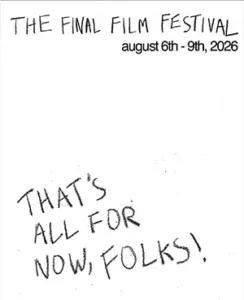
Director Bill Gunn and writer Ishmael Reed’s formidable Personal Problems (1980) has been re-released at select venues in London as part of The Final Film Festival, which showcases rare and radical films. It has elements of a canonical American indie film but falls short due to an anarchic approach to plotting and disordered narrative threads. If these had been streamlined, the film could have been a stronger document of African-American working-class life, but its shortcomings can be explained by the story of its creation.
Initially planned as a two-part television show, Personal Problems was rejected by broadcasters. It then found viewers through small screenings until recent efforts, including a restoration and DVD release by Kino Lorber, have allowed it to find a new audience. Though Personal Problems eludes classification, it has been described as a “legendary meta soap-opera”, which is accurate in a sense. Its plot is melodramatic, with a close focus on a few select characters, and it is meta in that the film starts with an interview with its lead, Johnnie Mae Brown (Vertamae Smart-Grosvenor in a spectacular performance for a non-professional). After this initial meta-introduction, there is very little more interview.
It would have been interesting to see this aspect developed, with continuous interviews breaking up the narrative to, in Peter Watkins‘ style, dissect the action; or, in the mould of Phoebe Waller-Bridge’s series, Fleabag (2016-19), Johnnie Mae broke the fourth wall. Still, Personal Problems goes beyond a traditional soap in its bold attempt at recreating life as it is.
Despite a documentary tone that permeates the film, elements of fictional stylisation establish themselves in frequent montage sequences set to music. Moreover, the story eschews the sort of over-explanatory tendencies of a soap in favour of ellipses centred around simply letting the action speak for itself.
Indeed, through its characters, Personal Problems expresses the rhythm and flow of real life. Gunn and Reed choose to craft their set pieces around the everyday occurrences of a specifically black, urban, female life – the bureaucracies and politics of a state-run workplace, a man expressing inappropriate overtures to a teenage girl, a loudmouth social justice warrior at a party – and by focusing on the “small things” we slowly gain a look at the bigger picture: what drives these people, what forces shape their existence, what complicates their inner lives and most crucially, what gives them meaning.
Shot on newly introduced video technology, the coverage approach is minimalistic, with a “get whatever we can” attitude. Yet this method, shorn of the sleek artificiality of contemporary film formats, yields powerful results by conveying a lucid sense of the reality before us. At the stage of its initial conception, the hope was that video technology might democratise filmmaking and bring down the vast costs associated with production, a promise that was later fulfilled by the advent of digital cameras and, after that, smartphones.
We can see in Personal Problems a fully realised approach to video technology as a motion picture form in and of itself, an approach shared by Jean-Luc Godard in works such as Eloge De L’Amour (2000) and Rise and Fall of a Small Film Company (1986). With a rough framing style, shaky handheld shots, and the use of available light, the film anticipates the documentary aesthetic of 21st-century vérité-lite TV shows such as The Office UK (2001-03) or The Thick of It (2005-12).
Personal Problems can be viewed as an indie film, in an era which – composed of titles such as John Cassavetes’ Faces (1968) and Charles Burnett’s Killer of Sheep (1978) – first saw American independent filmmaking establish itself as a maverick force. Whether Bill Gunn and Ishmael Reed were influenced by these projects, or by their outlook on filmmaking, is hard to tell, for Personal Problems contains neither the hyper-realist complexity of a Cassavetes film nor the jazz-like spontaneity of Killer of Sheep.
Nevertheless, Personal Problems is a frank and humane film with a clear vision.