
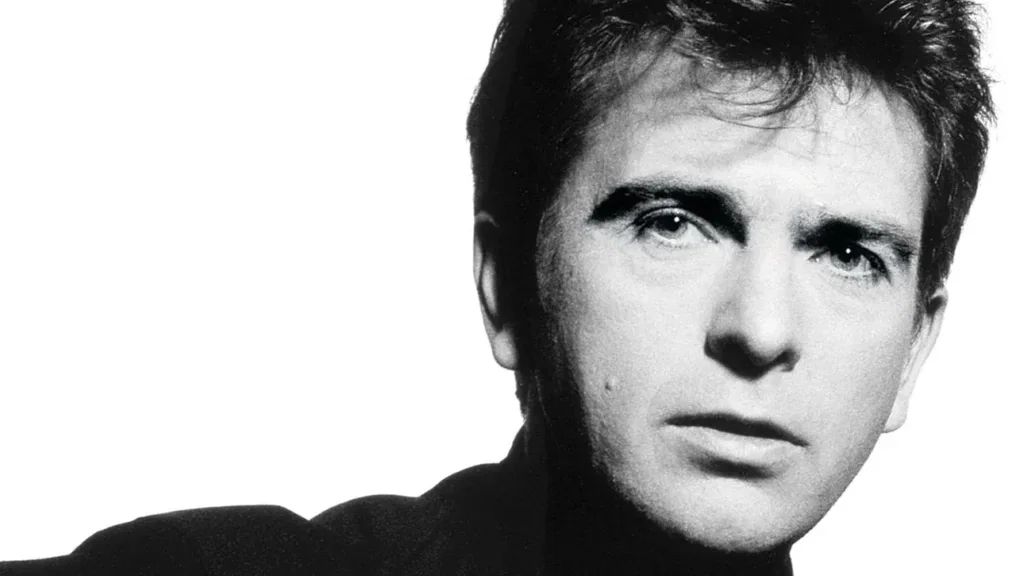
Peter Gabriel’s engagement with indigenous cultures and music became a defining moment in both his artistic trajectory and the broader musical landscape of the 1980s. Rooted within a more political and experimental approach, this fascination matured into a refined peak in So (1986), where diverse global influences were stylized and seamlessly integrated into a sophisticated pop framework. Beyond its status as a fan-favorite hit and a wedding-playlist staple for decades, “In Your Eyes” is one of the few love songs that have retained their significance due to their masterfully designed musical architecture.
As the song approaches its 40th anniversary, what warrants closer attention is not just Peter Gabriel‘s well-known interest in indigenous music and culture, but also how he used this inspiration within the song’s ingeniously crafted technical and emotional layers. Read through Joseph Campbell’s The Hero with a Thousand Faces; “In Your Eyes” reveals a path that speaks not only to myth, but to the psychodynamics of love itself.
Peter Gabriel Gets “In Your Eyes”
Love Is a Cyclical Narrative
Across many Indigenous traditions, circular forms and repetitive structures are an important part of their visual and sonic systems, particularly in their rituals. Yet they are not merely decorative, but foundational. As John Miller Chernoff established in his landmark study, African Rhythm and African Sensibility, the individual sheds their profane self and transforms into a transcendental identity through the cyclical repetitions during ritual. Reflecting a cyclical understanding of time, this process intertwines the past, present, and future. It is essential for psychological survival, where the act of return is inseparable from transformation.
From a psychoanalytic perspective, this aligns with the concept of repetition as a fundamental psychological mechanism. Freud’s concept of repetition compulsion theorizes the unconscious tendency to revisit and rework early emotional experiences to resolve them. He suggests that the subject’s subconscious and fantasy do not progress cleanly forward; it returns, revisits, and reworks trauma.
This is not far from what Joseph Campbell identifies as the central movement of myth in The Hero with a Thousand Faces. He writes that what appears as a singular, unpredictable adventure in myth ultimately reveals itself as “a series of transformations common to the human spirit”: departure, initiation, and return. This structure draws parallels with the human psyche as the foundational structure of myths.
Peter Gabriel’s “In Your Eyes” takes a similar approach to love, treating it within a cyclical narrative that masterfully dismantles the Western, linear conception of time, in which progress is usually imagined as a strictly forward-moving trajectory. Instead, he is shifting the focus toward a transcendental state of consciousness. Both the song’s sonic and thematic loops reflect this compulsion, an attempt to return to and transform an originary emotional moment through cyclical movement.
First, it is supported by the song’s technical design, with David Rhodes’ guitar ostinato acting as a counter-melody, consistently diverging from the primary vocal line to create a non-linear progression. Then, it is further accompanied by the lyrical gestures, most notably the persistent repetition of “in your eyes” throughout the chorus and outro. Here, Gabriel ingeniously used circular patterns that perfectly echo this compulsion to repeat, enhancing the feeling of revisiting an originary emotional moment over and over again.
The sense of repetition and inevitable return is also present in the lyrics of the first verse: “…but whichever way I go, I come back to the place you are”. This way, the act of return becomes inseparable from the inherent logic of love and its attendant suffering.
The ritual-like live performances of the song open and close with nearly identical lyrics, which mark the peak of this idea: “Accepting all I’ve done and said, I want to stand and stare again, till there’s nothing left out, it remains there in your eyes, whatever comes and goes, I will hear your silent call. I will touch this tender wall, till I know I’m home again”. This is framing what will be sung in between as a story of Campbellian transformation, thereby elevating the emotions and effort expressed in the piece. After departing for his journey, “getting lost”, “working so hard” for the “survival” of love, experiencing many “fruitless searches”, the hero eventually finds himself in the same place again, “accepting all he’s done and said”, willing to turn back to the start, yet renewed.
Reality Is a Collective Negotiation
The call-and-response pattern, rooted in various African musical traditions, introduces a relational dynamic at the heart of “In Your Eyes”. In indigenous rituals, this tradition does not merely reconstruct the interdependence of the participants through a rhythmic dialogue, but, as Chernoff observes, it also ensures that knowledge is socially validated through communal “response”, validating reality itself as a collective negotiation.
Within a Campbellian framework, this ritualistic exchange reveals the pivotal presence of the herald figure, “the benign, protecting power of destiny” that accompanies the hero through transformation. He/she announces the call to adventure, marking a moment when the ordinary world is disrupted, and transformation becomes inevitable, an initiating force to make the hero “work on the survival of love” and myth. Whether appearing as a voice, a figure, or an event, the herald initiates the journey, affirming a process that unfolds beyond their control.
We find reflections of the same dynamic in the psychoanalytic understanding of love. Love itself is the subject’s primary call to the Other, to fulfil the fantasy of wholeness. “Oh, I wanna be that complete” with Gabriel’s words. In Lacanian theory, desire is born from an original sense of loss, the traumatic break from the infant’s original state of unity with the mother. As the subject enters the Symbolic Order of language and social rules, that initial fantasy of wholeness is permanently lost.
We spend our lives pursuing to satisfy this desire. Yet, the nature of it remains unfulfilled; it puts the subject into an infinite loop of call to catch it and seek the phantasmatic satisfaction of wholeness.
In that sense, one of the song’s most distinctive features is its vocal structure, ingeniously integrating ritualistic qualities into the concept of love and desire. This is achieved through the complex interplay between Peter Gabriel, the deep bass presence of Ronnie Bright, the ethereal backing vocals of the Call’s Michael Been and Simple Minds‘ Jim Kerr, and finally, the Senegalese artist Youssou N’Dour. The sonic contrast between Bright’s deep bass register and the ethereal falsetto harmonies of Kerr and Been, as they repeat “in your eyes”, significantly reinforces this ritualistic call-and-response pattern.
Above all, it is Youssou N’Dour who heralds, in his native Wolof, that Peter Gabriel will find “the light” and “the heat” in her eyes. Gabriel welcomed him with profound respect and interest upon his arrival from Dakar to record “In Your Eyes”. In the chapter “The Tremble on the Hips: So” from his biography Without Frontiers, Darryl Easlea captures Gabriel’s immediate, almost spiritual reaction to Youssou N’Dour: “It blew my mind, his voice was like liquid gold pouring from the sky”.
N’Dour’s vocals, taking center stage during the extended coda in his native tongue, are much more than a stylistic musical contribution; they function as a guiding presence, echoing and initiating a call. N’Dour’s profound vocal invocation, which Western listeners experience through feeling rather than literal comprehension, and his interaction with the other vocalists are rooted firmly in this indigenous heritage. This ritualistic call-and-response dynamic helps produce an inescapable cycle of desire, inviting the hero to continue his journey to keep the desire “awake and alive”.
The album recording of the Fairlight CMI-generated textures, together with live performances that often incorporate instruments such as the duduk and whistles, deepen the underlying call-and-response effect. The diversification of Manu Katché’s drumming further contributes to this ritualistic structure. Within a love song, these are not merely stylistic devices, but a precise aesthetic choice that links affect to the most archaic proto-linguistic forms of communication, bringing the pre-linguistic dimension of desire itself to the surface.
Love, Religion, and Sublimation
In a 1986 interview with Armando Gallo, Peter Gabriel pointed to an African tradition that deeply intrigued him: the practice of writing love songs that function on two levels, addressed simultaneously to the divine and romantic love. As Gabriel mentioned back then, the line “in your eyes, I see the doorway to a thousand churches” gestures toward another vital source of this spiritual inspiration: his encounter with Antoni Gaudí’s Sagrada Família in Barcelona, which at first was meant to be the song’s title. The deployment of such a grand structure in a love song, extending notions of the sacred and the sublime, foregrounds the relationship between love and sublimation.
In Freudian psychoanalysis, sublimation means redirecting raw primal drives (the Id) toward a higher, culturally or spiritually “noble” purpose. This way, the ego of the suffering subject does not dissolve, but is instead reconstituted through its absorption into this sublime purpose. Both in love and in belief, when the subject encounters the Other, it retreats to a similar narcissistic position, where the ego gives way to a higher purpose and the boundary between internal desire and the external world blurs.
Ingeniously, Gabriel crafted both the song’s emotion and technique. Producer Daniel Lanois consciously engineered a melodic lack of definition by layering David Rhodes’ textural guitar motifs with the Fairlight CMI’s ambient washes. N’Dour’s rising vocals in the song’s extended coda, interacting with the other vocal layers, further intensify this effect.
This intentional blurring of sonic boundaries melts the distinction between organic and electronic sources, bass and treble, or English and Wolof; it serves as a profound metaphor for the dissolution of the Ego. Much like the core experience of love, ritual, and religious devotion, it thins the veil between reality and fantasy, the self and the other, and the romantic and the divine.
There is far more to the song’s title than meets the eye, as it turns the lover’s eyes into a dwelling of belief. According to Lacanian psychoanalysis, alongside sound, the gaze is one of the few truly unrepresentable phenomena and, therefore, the only thing that perpetuates the fantasy that endlessly sustains desire, thus positioning the subject in relation to their desire. While describable characteristics such as the colour of a lover’s eyes can be fixed and categorized, what resides in the gaze resists full representation.
By refusing to define the eyes through physical traits, “In Your Eyes” creates a productive, fruitful void. This absence reveals the important role of the eyes/gaze in belief, opening a space into which the listener can project their own memory and fantasy.
Yet in many indigenous traditions, the gaze is a spiritual conduit. Totems and ritual masks often feature hollowed or exaggerated eyes to signify a portal through which the divine or ancestral spirits can observe the mundane world. These eyes, among many other roles, are also designed for cosmic connection.
From a Campbellian framework, rituals exist to help us cross the threshold from our mundane reality into a sacred, timeless experience. By leaving the eyes undefined, Peter Gabriel forces the listener to cross that very threshold, to “touch this tender wall” with his own expression, as articulated in the lyrics of the song’s live performances. The lover’s gaze is no longer a mere physical feature, but a spiritual dwelling, a “doorway to a thousand churches” of internal myth, ritualistic belief, and love.
Peter Gabriel’s Psychodynamic Continuum
Gabriel’s long-standing engagement with the unconscious provides an important context for understanding “In Your Eyes” in relation to its indigenous inspirational background. From his earlier work in Genesis like 1974’s The Lamb Lies Down on Broadway to explicitly Jungian “The Rhythm of the Heat”, from the introspective excavation of “Digging in the Dirt”, to the anima/animus dynamics in “Blood of Eden”, and to many more, his work pushes the limits of subconscious material which is sublimated to artistic expression through the help of meticulously crafted technique.
Thus, Gabriel’s simultaneous engagement with emerging studio technologies and non-Western musical traditions can be evaluated as a common search for forms capable of exploring and expressing the depths of the human mind, rather than as separate musical interests or eras in his career. So was undoubtedly the moment when these restless investigations found their ultimate stylization.
If, as Karl Abraham suggests, dreams are the personal unconscious while myths are its collective counterpart, if “Red Rain” exemplifies the former, then “In Your Eyes”, with its entire technical and emotional framework, functions as a mythical masterpiece. Drawing on elements from rituals, it conveys the essence of love so well that it feels fundamentally real; thus, applying Phil Sutcliffe’s description of “Biko” as “so honest you might even risk calling it truth” to “In Your Eyes” would not be an overstatement.
Campbell draws a parallel between the disappearance of mythic narratives in modern societies and the struggle of today’s hero, the (post)modern individual, to lead a life where spiritual transformation can truly unfold. Gabriel’s meticulous contributions to the musical world seek and reveal the hero’s journey as an artist profoundly interested in the human subconscious and self-exploration. Viewed from this lens, the song’s ritualistic qualities, like its repetitive motives, its vocal exchanges, and lyrical expression, do not merely follow a ritual aesthetic; they initiate a journey where these structures function to construct love itself as a process of sublime transformation.
Forty years on, what “remains there” is not only a musical sophistication but an exceptional transitional space through which love, independent from its time and geography, can be experienced over and over again.
“Oh, it’s in your eyes”…
References
Campbell, J. The Hero with a Thousand Faces. (3rd ed.). Princeton University Press. 2008.
Chernoff, J. M. African Rhythm and African Sensibility: Aesthetics and Social Action in African Musical Idioms. University of Chicago Press. 1979.
Easlea, D. Without Frontiers: The Life and Music of Peter Gabriel. Omnibus Press. 2018.
Freud, S. Three Essays on the Theory of Sexuality. In J. Strachey (Ed. & Trans.), The Standard Edition of the Complete Psychological Works of Sigmund Freud (Vol. 7). Hogarth Press. 1953.
Freud, S. Beyond the Pleasure Principle. In The Standard Edition (Vol. 18). Hogarth Press. 1955.
Lacan, J. The Four Fundamental Concepts of Psycho-Analysis. (A. Sheridan, Trans.). W. W. Norton & Company. 1977.
Sutcliffe, P. “The Invisible Man.” Q Magazine, Issue 1. 1986.