

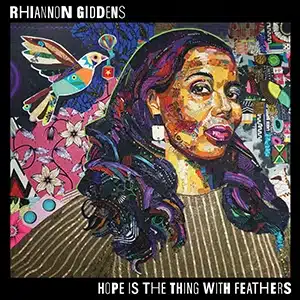
The title of Rhiannon Giddens’ latest release, Hope Is the Thing with Feathers, says a lot about its content. The Emily Dickinson poem of the same name, which Giddens adapted into the album’s enchanting second track, speaks to the pervasiveness of faith and fortitude, a spirit echoed in Giddens’ blend of new compositions and classics passed down through generations.
The poem’s glimmer of resilience is a fitting analogy for Giddens’ approach to music, especially musical traditions rooted in the American South. The North Carolina native’s work embodies a timelessness and oozes the soul of her Appalachian roots and the folklore that formed the backbone of modern art. Most importantly, it intertwines these reimagined folk and gospel tracks with originals structured around a cultural shift toward progress.
Giddens’ two-decade career has earned her accolades and accomplishments, including Grammys and a Pulitzer Prize, but that would be meaningless without her uncanny ability to latch onto the stories and heart behind the traditions. Her bare-bones delivery, particularly evident in the live recording of Hope Is the Thing with Feathers, draws stunning attention to her words, rhythms, and pristine vocal arrangement.
While she is a master at reinterpreting classics, the handful of new tracks reflect Rhiannon Giddens’ passion for dissecting history, culture, and human connection while dismantling the adjacent constraints and conventionalities. “Wish in Vain” is a poignant take on immigration and global injustice. This mournful tune captures the ache of helplessness as calamities unfold in the distance, delivered with a simplicity that proves sometimes less is more.
“Carolina Rain”, on the other hand, celebrates nature, community, and the impenetrability of human connection even in the 21st century. It is not only a jubilant reminder of the importance of being present; it also refutes stereotypes by conjuring an image of an idyllic South that can coexist with progress and reform.
The album’s greatest strength is arguably “Step Away Blues”, which showcases Giddens’ vocal range and the cutting fiddle of co-producer Dirk Powell. This fiery, searing track chooses its words carefully, but it speaks volumes through lines like “I’m tired of taking off my skin / So you can see my heart.” “Step Away Blues” may not yet have the weight of history behind it, but it’s easy to imagine Giddens’ rendition as merely the first among many to come.
These originals pack a greater punch when paired alongside reimagined folk classics like Ola Belle Reed’s “Freight Train” and Elizabeth Cotten’s “High on a Mountain”, which is just as fitting now as it was over a century ago. The gospel hymn “Walk with Me” is the perfect platform for an a cappella duet featuring Giddens’ sister, Lalenja Harrington. Other collaborators on the record’s ten tracks include Jason Sypher, Niwel Tsumbu, Justin Robinson, and Francesco Turrisi.
It can take several listens to fully appreciate the nuances in Rhiannon Giddens’ performance, but at only 37 minutes, it’s worth putting Hope Is the Thing with Feathers on repeat until its brilliance sinks in. The finished product is a testament to the troubled waters through which generations have tread, the tenacity that led them to the other side, and the spirit of preservation that somehow persists untarnished.