
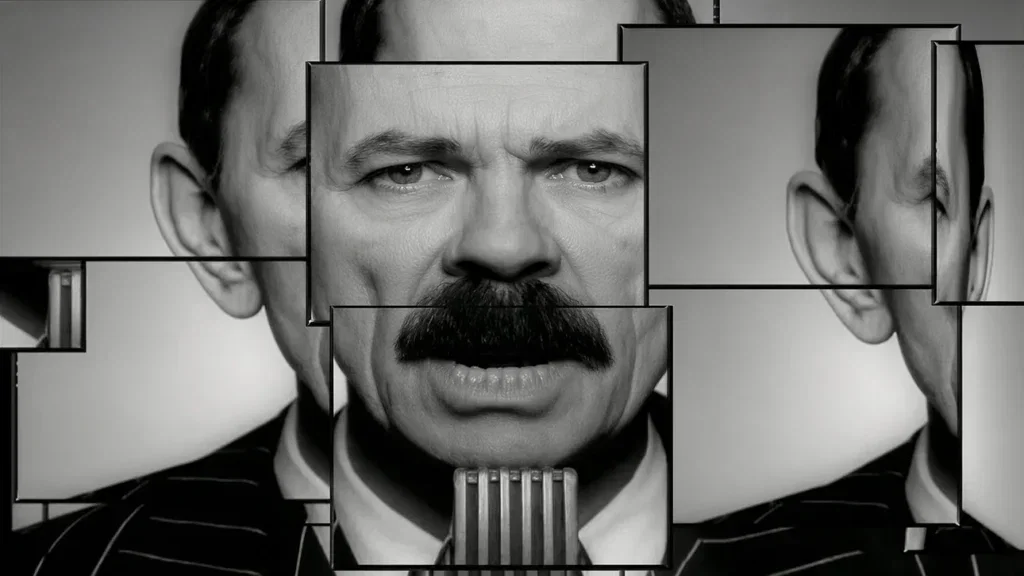


The year was 1995, the peak of Eurodance’s golden era, before the genre’s dazzling run started to fade. Amid the many songs dominating radio, TV, and clubs, one particularly stood out, and you don’t need a great memory to recall it. “Scatman” was the title, and it was massive in both Europe and Japan. Unlike other tunes of that same mould, it wasn’t delivered by high-pitched female singers or flashy-looking rappers: the performer was an unlikely star, a charming gentleman in his 50s, John Larkin, aka Scatman John.
He was instantly recognizable by the ever-present fedora hat perched on his head and a moustache that would have made The Simpsons Ned Flanders proud. Over a backing track carefully crafted to blend in with the biggest dancefloor hits of the time, he delivered rapid-fire tongue twisters in a scat-singing style. Fittingly, he introduced himself with that self-explanatory name: Scatman John.
He made millions with a catchy refrain that, to most people, sounded like “be bo-bo bo-bo boh”, but if you happened to have the 12″ or the CD single, you would read on the label that the actual syllables were “ski-ba-bop-ba-dop-bop”. The track was paired with motivational lyrics (“Don’t let nothin’ hold you back / If the Scatman can do it, so can you”), which revealed how that unique vocal style – one he embraced after being mesmerized by Louis Armstrong and Ella Fitzgerald – had helped him, a lifelong stutterer, come to terms with the speech issue that had plagued him for years.
That issue, combined with childhood trauma, had even pushed him to the brink: “I had so much shame behind stuttering that I nearly destroyed myself with drugs and alcohol,” he confessed in a 1995 interview with the Advance for Speech Pathologists Magazine. That same year, giving an acceptance speech at the National Stuttering’s Project convention in San Diego, he was even more candid while struggling to pull the words out of his mouth: “You are looking at a walking, talking miracle. Because I should be dead.”
Indeed, Scatman John survived at least one nearly fatal heroin overdose in the early 1980s. His addictions escalated to such an extent that, to feed them, he and his first wife, who was also battling the same demons, resorted to drug dealing (Waggott, 2026).
Safe Behind the Piano
Before starting fresh in Europe and becoming Scatman John, John Larkin spent many years performing in his native California as a jazz pianist. The instrument was another way to cope with the turmoil: “I hid behind the piano. I thought I could express more of my emotions through the piano rather than with words,” he explained in an interview with Konrad Schäfers of BVSS, the German National Association for Stutterers’ Self-Help.
Larkin had worked the West Coast jazz scene since the 1960s, sometimes adapting to more commercial styles to keep the gigs coming, including cruise ship residencies, but his fierce playing was hard to restrain. His performances could be intense and volatile, with wild screams over dissonant chords that would scare audiences away. Interestingly, his biggest self-professed influence wasn’t a pianist at all, but John Coltrane, especially his late-period work.
During those years of struggle, Scatman John’s path crossed with an interesting cast of characters. At the end of the ’60s, the pianist shared an apartment with legendary drummer Freddie Gruber, who played with Charlie Parker before relocating to the West Coast while battling his own addictions. It didn’t take long before things got out of hand and the household descended into a spiral of arguments and substance abuse (Waggott, 2026).
Later, he joined a jazz group led by saxophonist Sam Phipps, best known as a member of the new wave band Oingo Boingo. Phipps’ 1981 album Animal Sounds marked Larkin’s first officially released recording, but the collaboration ended abruptly the following year, when he walked out mid-live radio session after his bandmate asked him to tone down the intensity of his piano banging.
Scatman John’s Cupboard Stash
At the height of his Eurodance fame, it emerged that Larkin had recorded a mysterious self-titled jazz album in the mid-1980s; during a VIVA TV special, he recalled still having many copies of it stashed in a cupboard at home. At the time, the record was elusive, virtually impossible to track down, so the first real glimpse of his jazz years arrived only in 2001, when the collection Listen to the Scatman was released on CD by Danish label Stunt Records: it included highlights from a 1990 demo session of highly energetic vocal jazz standards, plus a couple of numbers lifted from his ’80s record.
The actual album, basically a private pressing released in 1986 through Larkin’s imprint Transition (a label name he symbolically bought for one dollar from a friend of his wife), had only local circulation, mostly given out to friends and family (Waggott, 2026). To my knowledge, the first thoroughly documented copy was recovered by Jason, a collector based in Los Angeles who used to run a blog devoted to digitising out-of-print albums. He happened to find a few more in the area, and through him I managed to snag one of the earliest known copies to surface.
Putting the Scatman on Wax
The recording stemmed from the meeting of the future Scatman and another vice-ravaged outcast: Joe Farrell, a saxophonist with an impressive résumé that spanned the fusion of Return to Forever and Billy Cobham, collaborations with legends like Elvin Jones and Andrew Hill, and even a forgotten hero like Jaki Byard, not to mention an exciting and multifaceted output as a leader. Lost in his addiction, Farrell moved to Los Angeles in 1983, where he spent the final stretch of his career. There, he introduced Larkin to a rhythm section made up of Clark Woodard (drums) and Bob Harrison (bass), and a quartet was born.
Recorded over two separate dates between 1984 and 1985, with studio time financed by the proceeds from the Larkins’ illicit activities, Listen to the Scatman sounds as wild and unpredictable as its performers, with its sessions haunted by breaks and delays stemming from the drug problems that plagued both Larkin and Farrell (Waggott, 2026). Summing it up as avant-jazz might be convenient, but it wouldn’t be entirely accurate. Generally speaking, the piano work draws on influences as diverse as Lennie Tristano, McCoy Tyner, Cecil Taylor and the aforementioned Andrew Hill, conveyed in a broad and surprising range of settings.
As the album opens with “The Misfit”, you might wonder whether John is actually talking about himself. It’s a hard, neurotic piece, spasmodically fast, with a relentless bass throbbing like there’s no tomorrow and Farrell’s tenor at its most menacing, even more so than on his challenging masterpiece Outback. When the pace finally slows, Larkin’s eerie vocals—part spoken word, part Tom Waits—kick in, adding an even darker edge to the mood:
“Somebody asked, ‘What’s the meaning of jazz?’ / And I said we’re the misfits / And all I can tell ya’ / Is while you’re still sleeping / The saints are still weeping / ‘Cause things you call dead / Haven’t yet had the chance / To be born.” The rest is possibly more disorienting. “Last Night I Dreamed” is a wonderfully crafted vocal jazz tune, a very melodic one, while “Love Cry”, after a striking piano intro, picks up where “The Misfit” left off, gradually nodding toward soundscapes close to free jazz; a subgenre the quartet fully embraces in the nine-minute-long “Angel’s Flight”.
If you think they already have too many balls in the air, think again, because we haven’t yet mentioned a track called, believe it or not, “John Coltrane”. “I sing a song of love for you, John Coltrane,” Larkin chants, before delivering three and a half minutes of scat-style vocals backed by increasingly dissonant instruments, culminating in an almost cacophonous coda where the vocals turn into feral screams. “Softly as in a Morning Sunrise”, the programme’s only standard (all other tracks bear Larkin’s signature), changes course again. It’s arguably one of the grooviest versions ever heard of this classic, morphed here into an incredibly energetic hard bop.
How the Misfit Became a Professor
The album is dedicated to saxophonist Joe Farrell, who died of cancer in January 1986, before its release. Farrell’s passing was one of the catalysts that motivated Larkin to pick up the pieces and rebuild his life in full sobriety with a newfound love, Judy McHugh, also a recovering alcoholic and later to become his wife. She encouraged him to return to music, despite his fear that doing so might trigger a relapse (Waggott, 2026).
Larkin’s voice didn’t appear on another record until a decade later, when Scatman John began his brief but sensational rise to international fame. In an unexpected, highly symbolic closure, the uplifting lyrics of his biggest hit directly quoted the opening verses of his forgotten jazz album. The misfit had become a reassuring professor: “I hear you all ask ’bout the meaning of scat / Well, I’m the professor and all I can tell you / Is while you’re still sleeping, the saints are still weeping / ‘Cause things you call dead haven’t yet had the chance to be born.”
John Larkin’s Jazz Legacy Reassessed
More than 30 years after his surprising exploit in the pop charts, John Larkin’s jazz legacy is slowly being reassessed, not least thanks to the invaluable work of biographer Gina Waggott, whose book Scatman John: The Remarkable Story of the World’s Unlikeliest Popstar sheds light on many facts and recording sessions. The author also played an instrumental role in the production of Before Scatman, a 10″ vinyl released by Iceberg Records (the label behind his ’90s hits) in 2026, with the earliest publicly known jazz tunes from Larkin, dating back to 1978 and including an early version of “Love Cry”. It’s not the only recording to have surfaced recently: a blistering 15 min-long free jazz trio improvisation, captured in North Hollywood in 1993, was released in 2025 via the now-defunct platform Nina Protocol.
According to representatives of Iceberg Records, a reissue of the 1986 album is not expected in the short term, though the possibility remains open: “Although we don’t currently have any concrete plans to re-release the John Larkin album, it is under consideration, along with other unreleased John Larkin/Scatman material.” Rips of the original vinyl are easily available online, while some of the tracks (along with alternate versions and interesting outtakes from the same sessions) can be found in an unofficial, eponymous CD strangely credited to Clark Woodard & Joe Farrell (2006, BCS Records), perhaps in an attempt to circumvent legal issues.
Regret lingers that Larkin never achieved the recognition in jazz he undoubtedly deserved in his lifetime. You can’t help but wonder—had illness not claimed him so soon in late 1999—whether he might have returned to it more fully. Yet, in his own eyes, Scatman John never represented a complete departure from jazz, but the unlikely route that let him keep playing it when no record labels were interested in his straight-ahead output. As he was quick to point out to the French magazine Entrevue: “Playing as Scatman lets me play the piano again. The world has betrayed real, pure jazz. Not me” (Waggott, 2026).
Works Cited
Phipps, Sam. Liner notes to Animal Sounds. Wondercrap Records. 2007.
Waggott, Gina. Scatman John: The Remarkable Story of the World’s Unlikeliest Popstar. Bloomsbury, 2026.