

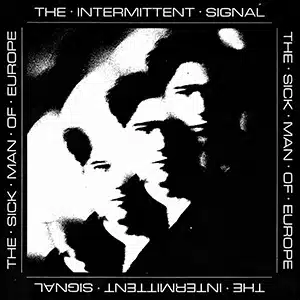
In 1956, literary critic Harold Rosenberg posited consumerism as a “process of depersonalization and passivity.” Seventy years later, the attention economy is built upon passivity. With a few TikTok videos of a talking dog, we can forget workers’ alienation and exploitation. Yes, let’s be happy or depressed idiots together; worse, participate in false consciousness. Yet the Sick Man of Europe’s music is a pail of cold water to wake us up in the age of complicity.
Of course, passivity precedes capitalism. For instance, when referring to the government, the Roman satirist Juvenal wrote panem et circenses, or “bread and circuses”. In other words, Roman government representatives only had to cater to the public’s basic needs—food and entertainment—to shut them up. Therefore, the next time we masticate on popcorn while watching a blockbuster sequel, please remember that we could be in Ancient Rome, though they didn’t have Chris Hemsworth. Maybe Russell Crowe.
What would Theodor W. Adorno and Max Horkheimer have made of TikTok? They haven’t answered me yet. In any case, they coined the term culture industry, which postulates culture as a commodity: entertainment numbs the masses, prevents them from asking political questions, and thwarts personal autonomy. In the 21st century, we don’t even need mass-produced entertainment, Hollywood, to distract us from asking questions thanks to the tech bros of Silicon Valley.
Isn’t this a review of the Sick Man of Europe‘s sophomore album, The Intermittent Signal? Thus, why are you rambling about the Frankfurt School? Blame ChatGPT. Perhaps we shouldn’t be facetious. The Sick Man of Europe aren’t, not when the digital age pivots around algorithms and performance metrics, making you so docile you don’t even question what day it is.
On their self-titled debut album, the Sick Man of Europe were refreshing to hear: a clever political collective who neither preached to the converted nor tried to sound like Baudrillard fronting Gang of Four. Instead, you thought Ian Curtis had a previous career in 1970s New York City, fronting the synth-duo Suicide, only that the emphasis wasn’t on nihilism but on the digital age.
This is to say that the Sick Man of Europe croon over propulsive synths and motorik drumbeats, a phlegmatic baritone voice delivering news as if it were inevitable, a pre-written script, a voice that knows too much and, thus, has to say little when imparting the bleak news. Still, it jolts you out of your inertia, like slamming on the brakes suddenly.
The Sick Man of Europe were the voice of false consciousness, spouting off workplace jargon as if they bought into the bullshit, a voice trapped within itself, which cannot speak, let alone preach—a capitulation of the Self personified. Moreover, it showed the danger of political apathy transitioning into belief. The Sick Man of Europe sang in paradoxes and fragmented sentences, shot through with Dadaist nonsense and Letterist International détournement, as well as Symbolist vulgarity—think Arthur Rimbaud.
The Sick Man of Europe’s monochrome aesthetic inverts the digital age of hyper-fixation on image and labelling, which remains for The Intermittent Signal. Unlike their first album, they have shifted into a traditional protest group, rallying against the attention economy. Due to the inescapability of capitalism, he becomes, like everybody else, a commodity, a point of view to exploit or sell. His debut, in which he subverted capitalism by becoming its mouthpiece, is far more intellectually and emotionally rewarding than The Intermittent Signal. The same reason why the Mekons are more politically intriguing than Billy Bragg.
The Sick Man of Europe’s adversary is exactly what capitalism wants: competition. The record is direct political reportage with no irony or contradiction, dislocations or discontinuations within the voice. On their first album, they offered neither solutions nor solidarity, but hope came from the narrator unknowingly voicing his political condition.
Despite the unimaginative lyrical point of view, the music of The Intermittent Signal is a breath of fresh air, where you feel as if you’re in a chiaroscuro world, more dead than alive, alive than dead, an echo within an echo, standing in a Gothic graveyard with a view to nothing but shadows. Here, rolling synths pile on like sorrow or snow; punchy drum machines produce sonic oddities; jagged guitars leap out at you like a cat. Furthermore, repetitive synth lines from the first record give way to undulating rhythms, suggesting a way out of the interminable bureaucracy as if it were an open door.
Undoubtedly, the LP has greater hooks and larger choruses than the debut, showing the band’s evolution: from the Depeche Mode-influenced “Chromophobia” to the Krautrock, synth-driven “Apathy”, through to the melodic “The Cadogan Gate” and the pounding beat of “Eyeless/Mindless”.
The Sick Man of Europe are one of the most important political groups of the current zeitgeist, offering real substance, though, ironically, he loses it when he becomes a straightforward, oppositional voice. Effective political art makes you question without resorting to drawing up stalwart support. Why? There is no argument to make when listeners already agree. This is why, in political art, many well-meaning messages fall flat, ring hollow, or, worse, lose signal.