

On Mishima, and Feeling That One Exists
Mishima: A Life in Four Chapters is a singular portrait of an artist's life lived so fiercely as to have left an indelible mark on an alienated world seeking affirmation for its own existence.
Mishima: A Life in Four Chapters is a singular portrait of an artist's life lived so fiercely as to have left an indelible mark on an alienated world seeking affirmation for its own existence.

Director Joel Edgerton's well-intentioned drama about gay conversion therapy fails to deliver any new insight or even a good cry.

The tragedy of conversion therapy is confronted in Boy Erased, a well-meaning but perfectly conventional message movie.

Actor-director Joel Edgerton details the sensitive process of making Boy Erased and how the film could act as a lifeline for families who have experienced gay conversion therapy.

Our work on this Earth, Rogers insists, is Tikkun Olam (repairing the world). So why does Morgan Neville shut down the possibility of queerness in his documentary?

By serving as a midwife to artists, the "Dean of the Harlem Renaissance" Alain Locke would help foster an art that would stand as a midwife to a better future.

Loo Hui Phang emphasizes the nature of image-making from the first panel: an upside landscape as viewed through the inverting lens of the protagonist's camera.

Julie Mahor's hand is deft in so many ways, producing a visually and emotionally complex tale of coming-of-age love uniquely grounded in the comics form.

Beach Rats captures the tumultuous divide between one's mind and feelings, as well as the duality of one's nature.

By picking up his subject after the most infamous event in Wilde's life, Frankel is able to rebuild the narrative of Wilde's post-prison life from the detritus of his public undoing.
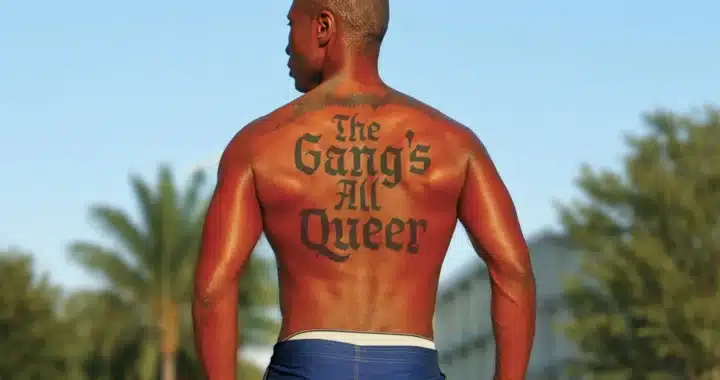
With The Gang’s All Queer, Vanessa Panfil complicates the popular narratives surrounding gang members and the hypermasculine, hyper-heterosexual lives they lead.