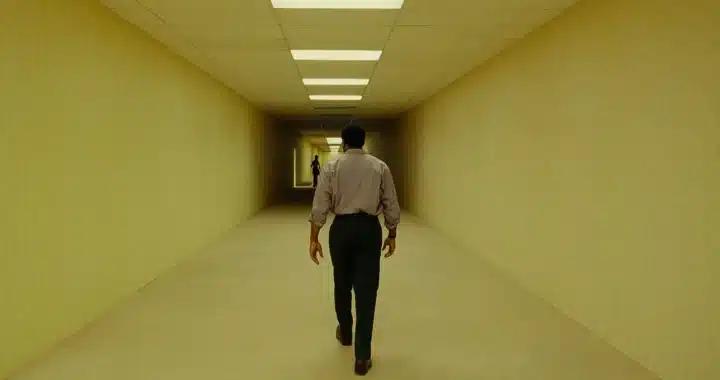
‘Backrooms’ Is Horror Cinema’s ‘Lost’
Kane Parsons’ uncanny creeper Backrooms is a Borgesian labyrinth of thrilling yet ultimately disappointing potential. Not that there’s anything wrong with that.

Kane Parsons’ uncanny creeper Backrooms is a Borgesian labyrinth of thrilling yet ultimately disappointing potential. Not that there’s anything wrong with that.

In Basic Instinct‘s interrogation scene, Sharon Stone’s body becomes both lure and barrier, asserting agency while destabilizing authority.

Karim Aïnouz’s films portray characters in states of displacement. In Motel Destino, that displacement becomes spatially literal.

By satirizing Brat’s success, The Moment argues that Charli XCX is ambivalent to the accolades she cannot help but chase.

Joker provides a keen understanding of the deleterious effects of American neoliberalism, which the authors dismantle in Send in the Clowns with a mordant deadpan wit.

Sci-fi philosophy, shocking history, and metafictional puzzles dominate these unsettling yet weirdly intriguing TV shows.

While The Talented Mr. Ripley acknowledges that 1950s-era gay men lived in hiding, Ripley uses his perceived status as a privileged male shrewdly.

Fusing mystery with mysticism, Navajo Nation psychological thriller Dark Winds conjures memory and monsters at Monument Valley.
Filmed under a cool glass of calm and enwrapped in an airy atmosphere, La Cérémonie makes judicious use of its setting to starkly contrast its warring classes.
More than just corporate propaganda, the subversive artworks in Severance hold a strange place in Lumon Industries’ ideological fabric.
Today’s Kurosawa 101 explores two of the greatest films in Kurosawa’s catalog, Rashomon — the film that made Kurosawa and Japanese cinema known throughout the world — and Ikiru — perhaps the greatest film ever made about impending death.

Kamal's psychological thriller, No Going Back, utilizes crime-noir tropes but with purposeful deviations.