
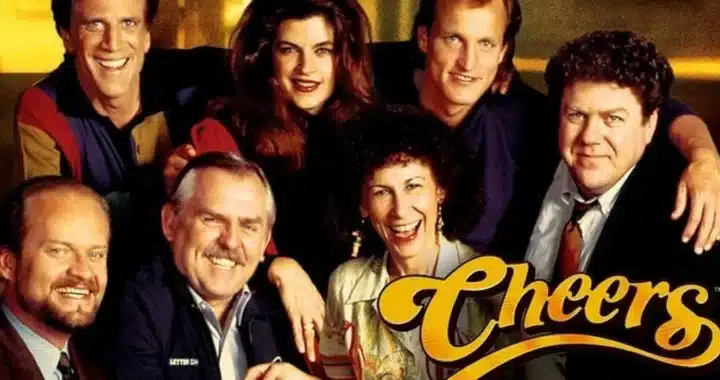
‘Cheers’, Cosiness and the Illusion of Companionship
Cheers‘ characters float side-by-side as if suspended in a mug of amber-colored beer, going nowhere and befriending no one, least of all one another.
Cheers‘ characters float side-by-side as if suspended in a mug of amber-colored beer, going nowhere and befriending no one, least of all one another.

This is the story of television’s first funny families and how they pioneered America’s most enduring form of entertainment, the sitcom, only to watch it slip through their fingers like sand.

The sitcom is a creation of spare parts salvaged from dying vaudeville and thriving radio welded together by performers who understood the power of physical shtick and the intimacy of invisible theatre.

Sitcoms Corner Gas and Trailer Park Boys form a double helix of Canadian self-image: the mask and the mirror.

America is a more polarized political and social landscape since the original Frasier aired. Since it was never a socially conscious comedy like many of today’s sitcoms, who is this reboot for?

The I Love Lucy cast insisted that the show didn’t intend to take on world-changing progressive issues, but it was far more subversive than they let on.
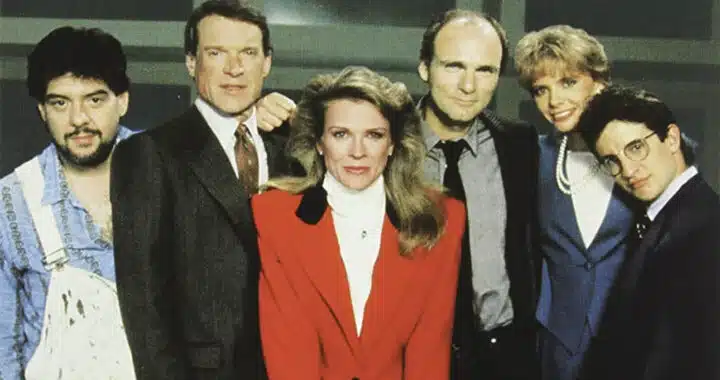
Would the Murphy Brown “Uh Oh” episodes, which addressed abortion, withstand the Texas Heart Beat act and America’s current right-wing cultural climate?

Under the aegis of fluidity, Quinlan Miller advances a trans-conscious viewpoint in Camp TV that happily takes a pick-ax to more basic gender studies approaches to pop media.

Kelsey Miller's I'll Be There for You, on the production and cultural legacy of Friends, is a must-read for fans and anyone interested in understanding TV culture over the past 20 years.

Season 4 brings a thorough and heartening reinvigoration of the rom-com format, revealing the big heart that beats beneath the clown costume.

