

Had Styles P not hurled a chair at Sean “Puffy” Combs, there’s no telling how the LOX would’ve settled their contractual dispute. However, this was the summer of 1999, and the Yonkers trio—composed of Jadakiss, Styles P, and Sheek Louch—had exhausted almost every resource at their disposal to get out of Bad Boy Entertainment, the winningest recording label of the 1990s. It was much easier for them when the Notorious B.I.G. was around. As the centripetal force of the hit label, Big helped to buffer the group from their grating disdain with Bad Boy’s Combsian state.
However, with his sudden passing, they were left with no one to turn to. Willing to risk anything to get back to their roots, even if it meant leaving the hip-hop equivalent of the 1990s-era Chicago Bulls, the LOX sought out an exit plan. They spoke to lawyers. They sat through meetings and conference calls. Nothing. When playing it by the book fell on deaf ears, the group pulled out another—this one, much more familiar.
On the night of 25 June 1999, the LOX were scheduled to perform at Hot 97’s annual “Summer Jam” concert at the Meadowlands Arena in New Jersey. Before the performance, they flooded the concert grounds with a variety of branded merchandise—T-shirts, posters, and picket signs—all emblazoned with the words “Let the LOX Go” and “Free the LOX”.
By the time they hit the stage, the message spread like wildfire. Rocking the stage to a sea of messaging calling for their release, the LOX’s marketing tactic would overshadow the night. Taking a page from the Bad Boy marketing 101 playbook, the LOX created a buzz that quickly reached Combs, who happened to be in attendance that night, watching the group turn the hot crowd into their very own street team.
Hoping to reach a resolution, Puff sat with the LOX shortly after the Summer Jam stunt. However, by then, the tension had already ratcheted up past the sitting-down-as-men phase. So what happened next became the stuff of legend. “Styles threw the chair at Puff,” Jadakiss admitted years later in a 2020 interview. Styles, for his part, acknowledged the rash decision and credited it to “being really fucking angry and really fucking stupid”. Nevertheless, the tactic played in their favor. By August, the LOX were officially let go and signed to Ruff Ryders, who reportedly paid Bad Boy $3 million to secure the group’s release.
A Yonker’s Tale
As reckless a decision as it was, Styles’ response aligns with why the LOX matters. In the same way WWE’s famous “Stone Cold” Steve Austin vs. Mr. McMahon storyline, one driven by the blue-collar everyman taking it to the white-collar suit, was instrumental in galvanizing an audience, the LOX are the avatar of the angst fueled by society, authority, establishment, and corporate bosses. Remove the obvious bigger story that is the Bad Boy rift, and you have something pretty poetic. “We’re the first hip-hop group to go against the powers that be with the power of the people,” Styles P told the NY Daily News in 2000.
Way before they donned the shiny suits, redefined Benjamin Franklin’s claim to fame, and earned the respect of the late, great Notorious B.I.G., Jadakiss, Styles, and Sheek represented the voice of the underdog. Jadakiss, the baby-faced, gravel-voiced lyrical assassin; Styles P, the equal part sage and sinister lightning rod; Sheek Louch, the charismatic bully.
Rhyming together since high school, then known as “the Bomb Squad”, the scrappy spitters embodied the spirit of the underground. The best of their music, in all of its shiver-inducing menace, expressed the interiority of the socially invisible residents trying to make a way out of no way.
Despite how many times the group’s biting portraits of pain have been described over the years as “hardcore rap”, they are very much more than shoddy provocateurs. Before they signed their Bad Boy deal, the LOX were mouthpieces for communities defining normality amid the struggle. Far from militant acts like Public Enemy and even further from fist-in-the-air MC activism, what makes them stand out is their criminal-minded awareness, which adds a bit of moral complexity to the individuals living the life.
Beneath the grimy aura lies a poignant reflection on the labyrinth of life in the beast’s underbelly. Where Nas can lyrically pull listeners into his vision of inner-city chaos, and DMX can convey the frayed psyche shaped by these conditions, The LOX waterboards them in that bunker mentality to the highest degree. What emerges as unabashed, clear-eyed intent actually communicates the simmering angst of an environment where poverty, policing, and prisons create a suffocating reality. That the content is bleak simply mirrors the truths of residents forced to live off experience.
Shiny Suits Killed the MC
So when the LOX’s 1998 debut, Money, Power & Respect, arrived with desperate commercial grabs like the Rod Stewart-interpolated “If You Think I’m Jiggy”, it just didn’t make sense. Bad Boy’s signature formula of flipping oldies into pop goodies didn’t translate here as the way it had on previous albums. There are a few moments where it shines: the way they cook a low-key Dexter Wansel cut into the beautifully sinister title track, or flip an Issac Hayes standout into a pure revenge tale on “Bitches from Eastwick”.
However, more often, it dims: how the Jadakiss solo “All for the Love” morphs right into the clunky Cheryl Lynn interpolation on “So Right”, or how the title track pours into a plastic-thin remake of Lou Donaldson on “Get This $”—all of it is inexcusable. The result is the sound of a dominant team setting up for a slam dunk but awkwardly settling for a finger roll instead.
While the album went platinum, peaking at No. 3 on the Billboard 200, it failed to capture the group’s steel-tipped essence. The group was well aware of the grumblings, too. “When you hear us on mixtapes, then you hear Money, Power & Respect, you’re like, ‘Where is that other shit I was hearing?'” Sheek told The Source in the January 2000 issue. Thankfully, fans didn’t have to wait long for that answer.
As 1998 drew to a close, hip-hop’s jiggy express train had been derailed by a Molotov-cocktail blast of abrasive, street-tinged sound led by the likes of DMX, Jay-Z, and N.O.R.E., and the LOX were on all of those albums. From revered posse cuts on your favorite rapper’s albums to prime real estate on just about every DJ Clue mixtape, the trio cornered the market. “When that shit was going on, you had to call us for that,” Styles explained in a 2000 interview, “‘Cause they know we are the best.”
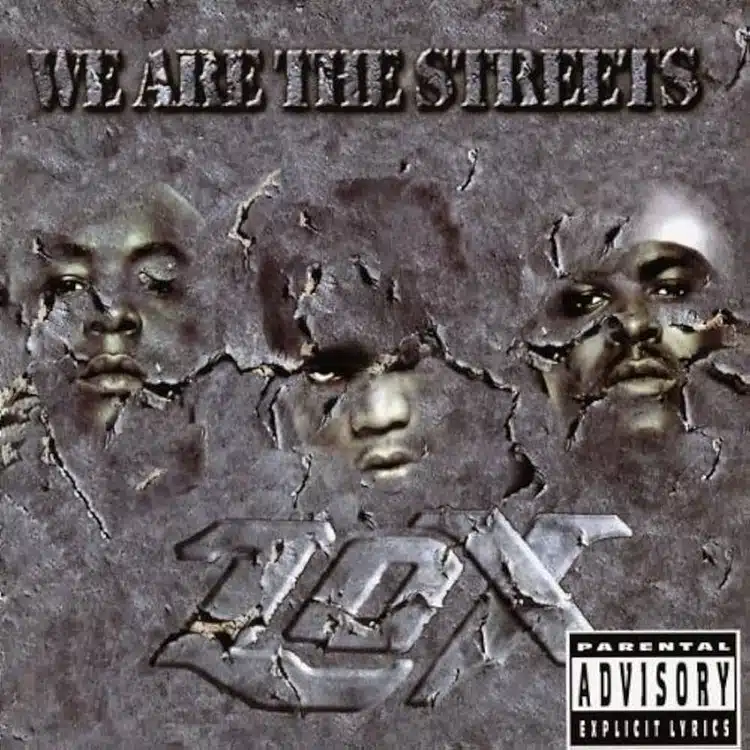
By the time it was announced that the LOX had signed with Ruff Ryders, after being managed by them for almost half the decade, the group left one heck of an impression on the label’s chart-topping compilation effort, Ryde or Die, Vol. 1. Their next album, We Are the Streets, had to be a proper reintroduction—or, as Jadakiss aptly referred to it in the opening seconds of “Dope Money” as: the “Real L-O-X.”
The Reintroduction of the LOX
There’s this brilliant trick the group pull off at the beginning of We Are the Streets that sets the tone for what’s to come. It opens with a self-deprecating skit in which a fake reporter conducts a series of street interviews in the rappers’ hometown of Yonkers. Considering it’s their stomping grounds, you expect to hear praise. Instead, you get a roast.
The fictional locals lambast everything—from the group’s reputation to how they “screwed up” that one Rod Stewart song. The entire skit is hysterical, but as quick as the jokes fly, so does the rug up under you when the next track kicks in: “Fuck You”. On an album supercharged by redemption, the transition feels like the aural equivalent of getting coldcocked for laughing too hard at the wrong joke.
That middle finger energy seeps through the album like wet snow. Much of it is raised at the LOX’s former label leader. At times, the group leans into sheer hilarity: on the wildly titled skit “Rape’n U Records”, they pull back the curtain and parody his infamous business practices. (There’s an added layer of grimace now, given the current attention surrounding the mogul.) In the opening seconds of “Scream L.O.X.”, they mock the hook to Puffy’s “P.E. 2000” single before adding, “As we proceed, to get rid of that bullshit.” Other times, the laughs harden into a menacing ice grill.
Check the title track, where all three members show absolutely no remorse: “I just wanna see how you gonna dance when your neck get broke,” raps Jada, while Styles slides in a more sordid blow: “I wish duke was still alive, and they killed your ass.” With the jump from Bad Boy to Ruff Ryders still only a few months fresh at the time, there’s an air of vehemence that hangs over these intense moments like marsh gas.
Everything about the LP, down to its GIMP 1.2-esque cover art, functions like a scuffed-up pair of Timberland boots stomping out the group’s 1998 time capsule. It’s a full-length affront to everything Bad Boy. Designer shades and shiny suits are replaced with Dickie suits and durags. Feel-good, dance-floor numbers are swapped with hard-nosed, chain-snatching records.
“Wild Out”, the first single, is a melee-inducing anthem that warrants a warning disclaimer; think anytime Limp Bizkit performs “Break Stuff”. The closest thing to a radio song is a sleazy, NSFW track where the trio seek out the glock-toting, credit card-scamming, and prepared-for-a-drive-by Bonnie to their Clyde (“You don’t like me as an artist? She gon’ body a fan,” raps Styles).
When the LOX aren’t occupied with airing their grievances, they spend the rest of the album enjoying the spoils of being unrestricted. With no obligation to appease hit-driven moguls and Top 40 radio programmers, the trio’s hostile style leads to the all-black Air Force-1 debauchery. Lyrics burst with enough violent deeds to rival an episode of The Wire or Squid Game. Sheek threatens to snuff out babysitters on “Breathe Easy”, while Jada is remorseless on his intent to “bleed” all the haters on “Blood Pressure”. From smacking nuns to turning toilets into crime scenes, the LOX’s level of hard-heartedness would have surely excited the steamrolling parents and parishioners of the early 1990s.
Streets treats Money, Power & Respect as its prelude EP, sans everything but the title track, “All for the Love” and “Livin’ the Life”. It’s the record they were always positioned to make. It just took a certain other Yonkers native to light the match. Every track has the texture of a rugged boot to the chest. Every member of the trio operates at their most bullish over a bevvy of tough-as-kevlar beats that bend to their intent. No record conveys this better than the album’s DJ Premier-produced centerpiece, “Recognize”.
According to the producer, it wasn’t until the trio sent him their vocals that he decided to add the now-famous “Ruff Ryder” scratch to the intro. Premier believed it would be a nice way to coronate the group’s move to Ruff Ryders sonically. The result is bar-for-bar magic.
They cruise over Premo’s woolly boom-bap with unflappable cool and King Kong-level confidence, waxing poetics about industry politics (“Too hard for MTV, not Black enough for BET, just let me be”), fractured innocence (“I been drunk most my life, don’t ask me why”), and why no one else is better (“Two is better than one, there’s three of the LOX”). It’s some of the best pure rapping in their collective catalogue.
As much as the album spotlights the mighty sum of the group’s parts, it also shines a light on each member’s gifts. Jadakiss, the colorful wordsmith. Inside his braggadocio, almost every reference is painted with the splashiest of hues: the “yellow” Lexus matches the Nike AF1s “with yellow checks”, the Audi TT is “the same color as fire”, the casual drop-top is “sticky green”. Styles P, the conscious live wire. In all of his red-eyed threats, he’s as pensive as he’s abrasive: balancing spirituality (“I pray to Allah”) and criminality (“but I’m too foul to go to the mosque”) in the same breath.
Sheek Louch, the unhinged mercenary. He’s practically like WWE Hall of Famer, and deathmatch wrestling aficionado, Mick Foley in that no matter what the occasion is, he finds a way to dole out Tarantino-level violence with MacGyver-like precision: bibles are weaponized (“I’mma put the Bible to your head and shoot through Matthew verse 10”), scuba diving skills are defied (“I’ll drown you with your snorkel on”), and meals are compromised (“I put something in them yams you keep thinking is sweet”). However, all of these appealing elements come together to illustrate why they are a mighty trinity: “the father, son, and Holy Ghost of rap.”
We Are the Streets peaked at No. 5 on the Billboard 200 with 152,000 units sold. While it would be easy to say it failed to surpass its predecessor, keep in mind the album reached this milestone without a hit single in an era defined by hit singles. “Wild Out” and “Ride or Die, Chick” didn’t crack the Top 20, yet the LOX still joined the likes of Celine Dion, Dr. Dre, Santana, and D’Angelo in the top five of the album chart. Most artists don’t get a second chance, let alone with their careers intact. The LOX made on theirs.
Scream LOX.
There’s a scene in Christopher Nolan’s 2008 film The Dark Knight, in which the face-painted antagonist Joker, played by the late Heath Ledger, burns a tower of stolen money in front of a cadre of goons looking to collect. As the heap of burning cash billows in the distance, he tells them, “It’s not about money, it’s about spreading a message: everything burns.” On their first album, the LOX expressed an insatiable urge to get “the money”, as if it were an Infinity Stone quest guiding them toward power and respect. (“When we get the money, it’s over,” they explain on “The Interview” skit from Money, Power & Respect.)
On We Are the Streets, the core message is much tighter. Money can’t buy artistic integrity, but it can provide an escape hatch from a bad deal. On an album made after living that experience, the LOX burn all mainstream social constructs, make no case for moral superiority to justify it, and attain the one thing that is most invaluable: respect.