
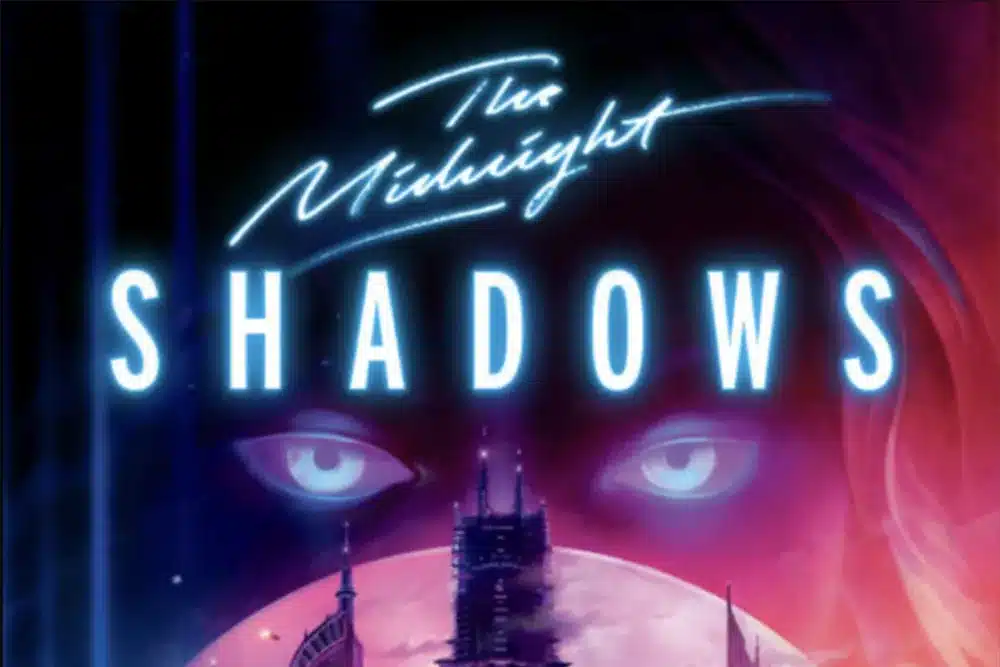

Dark Horse Comics’ graphic novel The Midnight: Shadows knows that nostalgia has many reputations: as bait, faulty lenses, and a hell of a drug. Nostalgia is the tarnished memories we reinterpret as golden or irretrievable innocence ossified in time.
“Back then”, kids were known to scuff their knees on sun-drenched sidewalks, undomesticated by algorithms and fluorescent halos. Friends gathered for Friday night outings soundtracked by music they’d pass between each other’s hands. “Before” wasn’t necessarily superior to now, but it could at least be touched instead of tapped through glass.
Synthwave duo the Midnight, composed of singer-songwriter Tyler Lyle and producer/songwriter Tim McEwan, have woven a distinct emotional identity around the narcotic effects of nostalgia. While their bright, synth-soaked pop melodies, electronic rock riffs, and saxophone solos nod endlessly to the 1980s, the Midnight’s music resonates with retrophiles of any persuasion.
For some listeners, nostalgia is as much a comfort and worldview as a passing daydream. Those who lose themselves in it to escape the real, ongoing world, however, risk imprisonment. Good things in excess become mistakes in the making.
In The Midnight: Shadows (2024), the band narratively explores the implications of an obsession with the past in a stylishly inked story accessible to anyone interested in its musical source. Set in a futuristic quasi-Los Angeles reminiscent of Steven Lisberger’s cyberpunk film Tron and the 1980s’ neon grandeur, Shadows might risk dismissal as derivative “nostalgia bait” worldbuilding.
What one finds when lost among its richly colored pages, however, is a tender, serious story about growing up and finding momentum, backdropped by an aesthetically pleasing science fiction world. Thoughtful and slightly ironic for a band so faithfully wedded to late 20th-century soundscapes, The Midnight: Shadows spotlights gentle depth simmering in the Midnight’s music.
Nostalgia’s Craving for Escape
The story follows a young man named Jason in 1999—presumably the same Jason from the Midnight’s Endless Summer (2016) track of the same name. Stressed and overworked, Jason shoulders silent turmoil as he and his wife prepare to welcome their first child.
One night, Jason returns home after dark, where his wife gently reminds him of responsibilities in their baby’s unfinished nursery. There, Jason rummages through boxes of old belongings and reunites with an old favorite video game called The Midnight.
In under 20 panels, artist Jahnoy Lindsay elegantly conveys Jason’s frustration with his taxing, likely minimum-wage job and the strain it places on his domestic life. Furrowed brows and facial close-ups divulge inner tension and self-disappointment, while depictions of Jason’s heavily pregnant wife—no head shots yet—patiently washing dishes and offering her husband a hot meal reveal what’s at stake for this 20-something man. He’s not allowed to fail.
After finding The Midnight, Jason plugs in his childhood game console and settles in for a bit of escapism; it’s the least he can do to briefly nudge his adult worries aside. There’s just one problem: the game doesn’t work.
Fortunately, a mysterious chat on Jason’s console refers him to a local arcade that can fix it. At the arcade, Jason begins playing The Midnight and is portaled into its sci-fi world. It is here that neon fantasy, rendered by colorist Thiago Rocha’s intuitive touch and artist Stephen Thompson’s dramatic line art, pops off the pages like cinema.
Brilliant pinks and blues saturate panels of a near-22nd-century cityscape. Styled after both past and future, The Midnight: Shadows evokes the expectation of a timeline with flying cars and a striking techno-urban sprawl, rather than brain implants supplied by overambitious tech oligarchs. It’s gorgeous work, even if immediately familiar to sci-fi fans. Importantly, Thompson’s filmic sketches, awash in dazzling hues, perfectly capture the Midnight’s sonic spirit.
All is not as it seems in the cyberpunk dimension, though. Jason meets characters who prompt him to question reality. A parallel of his real-world boss exists here, along with his wife, who has an apparent long, in-game history with Jason.
Like many protagonists on the hero’s journey, Jason initially resists his destiny—to rid The Midnight of antimatter beings called shadows, which endanger its universe. To Jason, The Midnight is “just a game”. To everyone else, Jason’s failure to defeat the shadows years ago, when he’d play as a child, consigned The Midnight to enduring darkness. Attempting to flee the “real” world (or is it?) into a fictional one left the former neglected; now that he’s stuck in the latter, Jason again craves escape.
A subtle detail in several panels of the graphic novel reinforces this. The arcade that sends Jason into The Midnight is called Arcade Dreams. In the game’s world, advert-style posters frame Jason and his wife in front of a beautiful house with the captions “Dream Away” and “Come dream up a good life!” The reader is led to believe that a definitive reality might not exist; choices we make in the world we actively inhabit matter most, and deserting our current life rarely guarantees a better one elsewhere.
Unchecked nostalgia is portrayed less as a healthy appreciation of the past and more as a refusal to live in the present, especially when challenges arise. That same temptation to bury today’s pain in yesterday’s pleasures echoes through much of our current culture. How many tired reboots and remakes of the same films will we watch until we’ve had enough? Do our unironic “Back in my day…” comments ever give us pause for how long ago that actually was, and that we might benefit from fully occupying the here-and-now?
What are we really seeking when we yearn for moments that will never happen again? There may be an unmet need we are turning from instead of looking into.
The Midnight: Shadows and the Nature of Restlessness
It struck me while reading The Midnight: Shadows that I’m the target audience for this book. I was born in the early 2000s, when digital began to absorb analog. Early aughts babies witnessed one of the most dramatic exchanges in modern history. Some of us have siblings who were never scolded for tugging the entrails out of a VHS tape (and it shows). CDs and DVDs, another staple of Generation Z’s youth, have fallen out of favor in the streaming age.
There is genuine loss here. No one can truly fault another for mourning the slow demise of physical media any more than readers can fault Jason for wanting to relive the joys of an old childhood game. Try as we might, most of us can’t “Just Say No” to the opiate that is nostalgia.
In The Midnight: Shadows, a lyric from the Midnight’s song “Heartbeat” becomes dialogue, then a mantra: “We keep going ’cause we can’t go back.” During a conversation with his video game wife, Jason confesses why he stopped playing The Midnight and left his virtual relationship behind. “It wasn’t just this game. The older I got, the more lost I felt. The joy, the thrills, love and even you, it faded. Everything just got harder. Maybe I got scared.”
Jason’s admission speaks to the nature of the restless, uncertain tides of young adulthood. Those who never push off from the safe island of childhood will never land anywhere new. Stagnation is a dreadful guarantee, but the risk of drowning, losing one’s ship, or potentially killing one’s crew while navigating hostile waters is equally terrifying for many. It must be done, though, if we desire real momentum. We will age, and we will die. That is the promise for everyone who advances far enough in years.
Fortunately, The Midnight: Shadows proposes a solution in its denouement. So long as we’re mortal, we’ll fear failure and death. This is humanity’s natural state. Like Jason, we can expect to be haunted by our personal shadows for the duration of our stay on Earth. However, they can be managed and don’t need to define our time here, nor prevent us from enjoying whatever time we have left.
Many things we face—addiction, self-loathing, chronic escapism, fear of growing up—are surmountable. Honesty with oneself is the crucial first step. Inventorying life and identifying what might be robbing us of peace helps unearth the root causes of persistent issues.
We also have to be willing to do something about it; knowing isn’t enough. There may be cause to don our helmets and confront the version of ourselves that wants us defeated or dead if we wish to progress in the game of existence. Of course, it doesn’t hurt to have understanding loved ones by our side, encouraging our fight.
The Midnight: Shadows‘ scriptwriter Zack Kaplan seems to understand that this message isn’t exclusive to struggling young adults; it’s relevant at all ages and stages. Listeners who relish the “good old days”, exquisitely evoked in the Midnight’s lush, tantalizing hooks, may be reminded in this graphic novel that more of them lie ahead. Others will find a wholesome, deeply felt experience that gently convicts them of holding too tightly to the past. The Midnight: Shadows is the best of both worlds—expanded musical universes and comics—because it shows us how to embrace our own.