
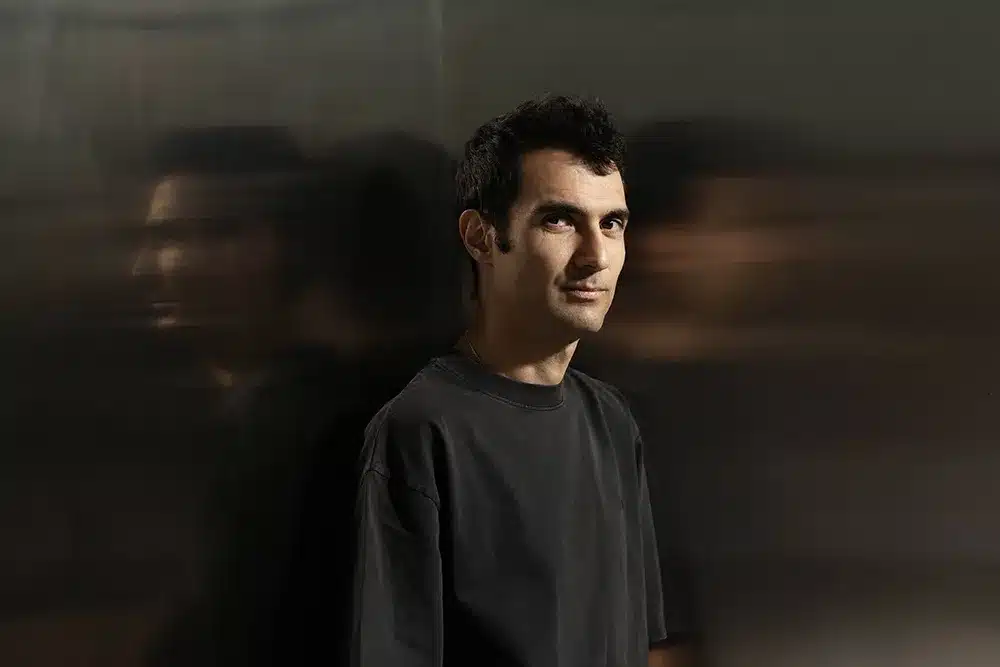
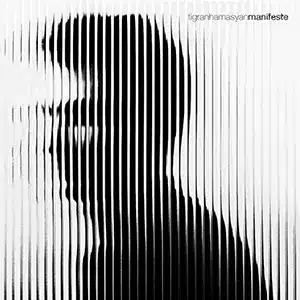
In the liner notes of his new album Manifeste, pianist and composer Tigran Hamasyan writes, among other things, that his role as an artist is to facilitate catharsis. This idea goes back to Aristotle and has been explored by countless artists and philosophers across countless media since. Even so, I am sure I have never felt quite the same level of catharsis as when I listen to Manifeste.
What Hamasyan offers here is not just release but ecstasy. In its earthiest, growliest moments, it is still transcendent. Not raw, not visceral, it nonetheless hits the listener on pre-verbal levels, primordial if not primal. At the same time, it is as technically proficient and polished as any Hamasyan work (which is to say, extremely so). So Manifeste deserves as much praise for the skill it demonstrates as for the intense emotion it evokes.
Throughout Manifeste are many of the stylistic manoeuvres and musical textures we’ve come to expect from Hamasyan at this point. Complex time signatures shift at high speeds. The album’s orientation to genre is as fluid as ever, jazz morphing into progressive rock, electronic beats interwoven with Armenian folk melodies and occasional choral layers. Hamasyan’s keys go from sprightly to ominous at a moment’s notice as it suits the arc of a piece.
His many collaborators help bend the record into even more interesting shapes, as on “Per Mané”, in which singer Asta Mamikonyan’s voice drifts gently in sharp counterpoint to Hamasyan’s hectic electronics, or following track “A Window From One Heart to Another (For Rumi)”, which features Armenian folk instruments over rapid piano: Yessai Karapetian on delicate blul, an end-blown flute, and Hamin Honari on the haunting daf frame drum. Trumpet, bass, electric guitar, and a full drum kit all come and go with purpose throughout Manifeste, making it an even more engrossing adventure for the variety.
I don’t mean to overstate the revelatory qualities of this work. Hamasyan does not compose out of thin air. Another slice of wisdom from his liner notes: “I feel like everything has already been done… it all comes down to what we really want to do with music: what we love about it and, most importantly, what we hear inside.” It’s a humble statement, laden with an important reminder: the familiar can be as stunning as the new.
Indeed, some of the album’s most memorable moments are ones that follow directly from Hamasyan’s work. I know well the composer’s tuneful whistling as heard on “Yerevan Sunrise”. In “Ultradance”, a tightly wound piece driven by sharp drum kit and undergirded by stinging electric strings, Hamasyan’s keys move between lilting and frantic throughout, familiar moods in his work found here in new permutations that tell new stories.
At the start of his liner notes, Hamasyan reflects on searching for the self, on suffering and joy, on the endlessness of it. Manifeste opens, appropriately, with “Prelude for All Seekers”, a piece that goes from liquid keys to plugged-in noise and back in a microcosm of the entire record. His liner notes end with a rebuke of war and a memory of peace and homeland; the album with the solemn choral vocables of “National Repentance Anthem”.
This is a journey, profoundly personal and at the same time rooted in the world, seeking purpose within it, and for this it is moving as well as aurally rapturous. May all our quests for meaning be as deeply affective as Tigran Hamasyan’s has been and continues to be on Manifeste.