
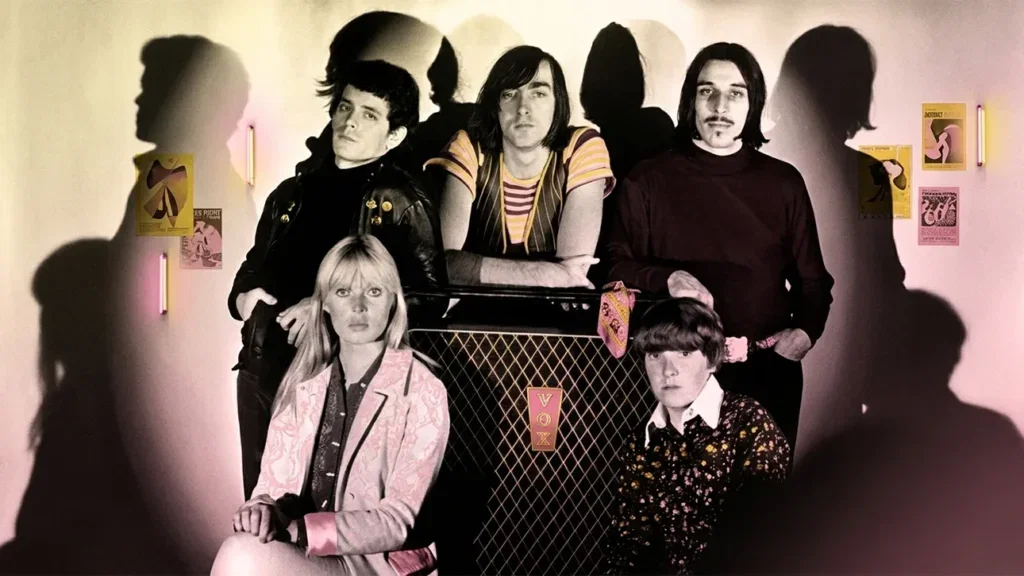
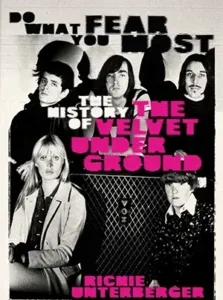
For some bands, the myth is mightier than the music. That’s not the case with the Velvet Underground. Now, NYC’s original art punks, the collective that merged Brill Building-inspired pop craft and avant-garde sonics with lyrics about the darkest sides and simplest beauties of the human experience, are the subject of a biography that does justice to their massive and still-resonant impact.
Do What You Fear Most: The History of the Velvet Underground is the latest work by Richie Unterberger, an acclaimed rock writer and historian with well over a dozen essential reads to his credit, including Unknown Legends of Rock ‘n’ Roll, Urban Spacemen and Wayfaring Strangers, Turn! Turn! Turn: the ‘60s Folk-Rock Revolution, and White Light/White Heat: The Velvet Underground Day-by-Day.
Now Unterberger has unleashed what will likely remain the most comprehensive book on one of rock’s most talked-about and imitated cult bands. It’s a nearly day-by-day narrative and critical testament spanning 800 pages, crafted from more than 100 interviews and firsthand research drawn from a staggering array of resources, including the deep archives of Lou Reed and the band’s early benefactor, Andy Warhol.
Many journalists simply take what’s already been written and repeat it without investigation, magnifying untruths until they become set in stone. Not Unterberger. Do What You Fear Most is something diehard Velvet Underground trivia buffs will find most illuminating.
The formative years and influences of the band’s chief architects, Lou Reed and John Cale, are revealed in new ways. By high school, it was clear that music was where Reed was headed. Unterberger quotes inscriptions from his classmates in his senior yearbook, such as “Stay cool with your twangy guitar” and “Lots of luck to a cool ‘gitar’ player.” The legends surrounding Reed’s electroshock therapy treatments in his teens are also questioned. “All this nonsense about his parents wanting to give him electroshock therapy so they would prevent him from being gay, it’s all bullshit,” says a high school bandmate, Allan Hyman, in an unpublished interview unearthed by the author, a sentiment seconded by Lou’s sister.
Unterberger also trawls Reed’s formative years at Syracuse University for new revelations, including the cancelable name he gave the black female vocalists who sometimes backed his group, LA & The Eldorados: The Three Screaming N*ggers. He also includes revealing content from the cache of daily letters Lou Reed wrote to his college girlfriend and longtime confidant, Shelly Albin. These included drawings and short stories, one of which became the basis for “The Gift” on the Velvet Underground’s second LP, 1968’s White Light/White Heat.
Thanks to the author, John Cale’s journey from a farm family in Wales to the red-hot center of the NYC avant-garde and Lou Reed get almost equal time. There are many revealing anecdotes about his tutelage, and the many works created with the pioneering minimalist LaMonte Young and his Theater of Eternal Music, and his three associates there would also play important roles in the proto-Velvets: the artists Walter De Maria and Tony Conrad, and the poet/percussionist/occultist Angus MacLise.
Unterberger also dispels some long-held beliefs about Reed’s time churning out copycat pop songs for the budget label, Pickwick Records. “The usual party line in Velvet Underground histories is that Reed and Cale gave up on Pickwick as the label was unsympathetic to their idiosyncratic ambitions,” writes Unterberger. “The truth is probably more complicated. (His producer) Philip’s willingness to record and praise ‘Heroin’ signifies he was at least open to giving them a whirl.”
One Do What You Fear Most’s strengths are its history and critical assessment of the entirety of the music created by the band’s members. Unterberger seems to have uncovered, critiqued, and worked to answer lingering mysteries surrounding every home recording, demo, album outtake, and live recording committed to tape. There are also detours into a host of ancillary characters who played a part in the story, many of whom I had never heard of before.
One such person is Elektrah Lobel. After a brief affair with Cale, the sometimes-Warhol actress would join him and Reed in a folk trio, which went by either the Falling Spikes or the Warlocks, to perform at Greenwich Village haunts, including Café Figaro and Café Wha? In these venues, the trio churned out developmental versions of “Heroin” and “Wrap Your Troubles in Dreams” for “bucket money,” possibly as an ersatz Peter, Paul and Mary?
The Velvet Underground’s emergence under Andy Warhol is covered in great depth, as it should be. The author paints a vivid picture of the creativity behind events like Warhol’s Exploding Plastic Inevitable multimedia happenings and the callousness of the cast of characters in the famed artist’s orbit. In the first in-depth piece on the band, rock journalist Richard Goldstein called them “intensely sadistic”, like little kicking Simon Cowell’s “just waiting for the next suicide or overdose or whatever.” Some also served as inspiration for their best-known songs. Warhol’s comment to Reed that Edie Sedgwick was a “femme fatale” birthed that song, while singer Nico’s comment to Reed, ‘I’ll be your mirror,” provided the lyric spark for the tune of the same name.
Again, Unterberger’s description of unheard tapes will make fans salivate and scour YouTube for evidence. There is an unreleased 28-minute instrumental improvisation, “Melody Laughter”, from a 1966 show at West Virginia University, which Unterberger calls the Velvet Underground’s “at their most avant-garde extreme.” Another 1966 performance captures a Reed-less quarter at an Exploding Plastic Inevitable show in Chicago, during which Reed was hospitalized in New York with hepatitis. It features a daintier version of debut album tunes like “Heroin”, this version with Angus MacLise on tablas.
Then there’s “No John Blues”, a 58-minute blues jam from the Lou Reed Archives. It’s all screeching feedback and sustain, something played to “celebrate” Reed’s firing, in absentia, of Cale from the band. “I wanted to push the envelope and fuck up the songs; that’s why we split,” added Cale. “He wanted me to be a sideman in my own fucking group.” Unterberger also provides rich context for the many solo projects of Nico and John Cale when they are outside the fold, from Nico’s stark Marble Index to the majestic orchestral pop of Cale’s 1973 album, Paris 1919.
With John Cale’s exit and the arrival of the more malleable multi-instrumentalist Doug Yule, the Velvet Underground finally garnered some critical success with the album that followed their frenetic sophomore album, White Light/White Heat. “Having made perhaps the loudest album of all time, the record titled The Velvet Underground sounds almost as if they’d decided to make the world’s quietest LP,” writes Unterberger.
According to guitarist Sterling Morrison, the “pump-down-the-volume” approach, which helped create mellower third-album entries like “Pale Blue Eyes” and “Jesus”, was the result of the theft of their equipment at JFK Airport while they were heading out on a West Coast tour. Yule, however, had “no recollection of such an incident” and just believed the shift in the music was a natural evolution. With this album, critical appraisal turned positive for a collection that the author relates was Reed’s “personal favorite, in terms of ambiance and sentiment.”
Unterberger gives his readers an almost as detailed day-by-day account of Velvet’s Mach II-era as the original foursome – their recordings, their many wonderful live performances, and the tracks that were left on the cutting room floor. He also offers a more detailed overview than I’ve read of the Velvets’ brief soldiering on after Reed went solo. He also takes us through the periodic reunions. These include the incredible performance by Reed, Cale, and Nico at Paris’ Bardavon in 1972; Reed and Cale’s Andy Warhol tribute album and concerts, 1990’s Songs for Drella; and the less-than-successful European tour by the original quartet in 1993.
While 800 pages may seem like a mighty task, it’s well worth your time to devour every word. If you’re like me, it will take a while. Why? Because you will use Unterberger’s information to leap off into searching for and devouring more of the live tapes and lost interviews, the ones he had to sniff out to make the ultimate book about the Velvet Underground, and the best and final word on one of rock’s most enduring acts.