
One of the more whimsical Saturday Night Live sketches pits actor Matt Damon against cast member Leslie Jones in a verbal battle of Weezer fan types. Aired in December 2018, the two characters clash at a Christmas holiday dinner party. Damon plays a “ride-or-die” fan obsessed with every release, while Jones represents a “purist” who considers Weezer dead after their first two “perfect” mid-1990s albums.
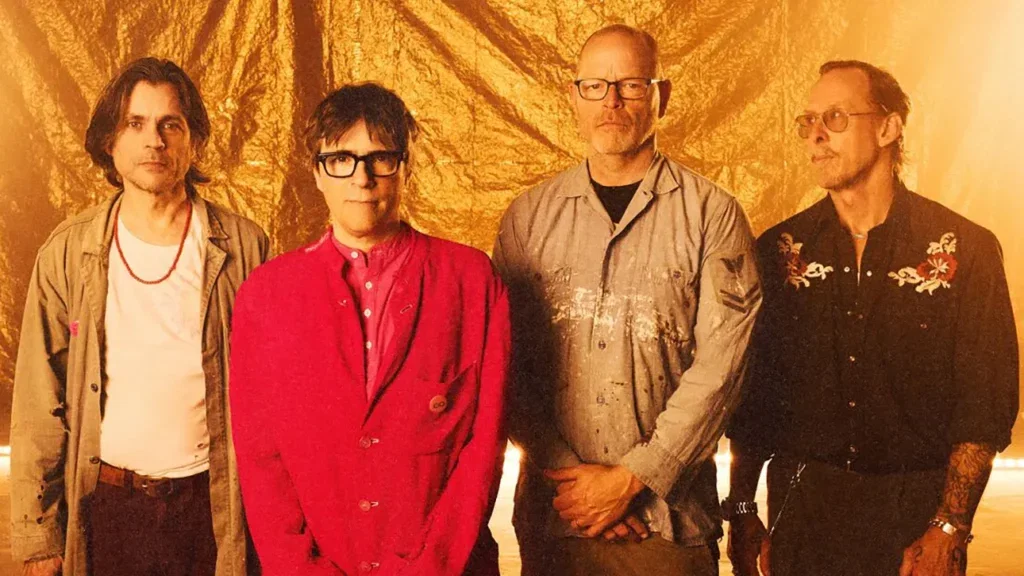
Jones’s camp has grown since; Rivers Cuomo and company’s sonic explorations during the 2020s only elicited more ire from those fans and critics hoping the band would return to the form that made Blue (1994) and Pinkerton (1996) among the most beloved and influential albums of their era. If the recently released singles, “Shine Again”, “We Might As Well Be Strangers”, and “C.E.O.”, are any indication, Weezer originalists might have their prayers answered with Gold, the band’s upcoming album due for release this August.
Damon types (such as myself) have no reason to grumble, either. For them, this decade has been among the band’s most fruitful, with six albums released between January 2021 and December 2022 showcasing creativity and innovation while maintaining the fundamental traits that have defined the band’s essence. Much of this material was written during the Covid-19 lockdown. The quarantine crippled many artists, but Cuomo thrived, the notorious loner given ample time and space to craft and arrange fresh material without interruption. These songs speak to that time, too, giving the songwriter’s perennial themes of isolation and escapism new context and relevance.
Counterpoint and Curiosities in OK Human
Between 2001 and 2019, Weezer released 11 studio albums to mixed reception. A treasure trove of classic songs exist therein, though many fans balked whenever the band ventured too far from the patented pop-grunge template that brought us such gems as “Buddy Holly” and “Say It Ain’t So”. Ever in pursuit of mainstream success—despite their indie identity—Weezer periodically dipped their toes into hip-hop, R&B, and synthpop, much to the chagrin of the purists.
The results sometimes felt forced; Cuomo’s natural inclination to write songs in the vein of the Beatles, Beach Boys, and Nirvana sounded contrived when set to drum machines and pseudo-rapping. For some, the last straw came with Teal, an album of covers released in 2019. Despite the band enjoying some commercial success with their barely altered version of Toto’s “Africa”, Weezer-heads only felt further let down by another seemingly senseless departure from the norm.
When OK Human landed in the midst of the COVID outbreak in 2021, fans were still in a bad mood, expectations low for an album that arrived with the promise of a 38-piece orchestra and no electric guitars. Was this the final betrayal?
Weezer have always been victims of critique by contrast, each release judged not on its own merits but by how closely it measures up to previous masterworks. Even Pinkerton, since credited with spawning a generation of emo punk, was initially panned for not sounding sufficiently like Blue. Ever since, the same process unfolds: critics feel duty-bound to explain an album’s failings based more on what is missing than on what is there.
OK Human, most notably, lacks guitars, the primary instrument in the Weezer oeuvre. Without those familiar crunching riffs, what were they? It turns out they were even more melodic, the orchestration providing countless counterpoints and curiosities. Cuomo’s vocals benefit, too, a less cluttered canvas providing more space for the singer to paint on.
Unlike the albums that preceded it, OK Human marked the band’s move away from digital production. Cuomo’s increasing fascination with technology had grown such that songs sometimes sounded too exact, too polished, and too machine-like. Here, though, the band literally showed that what is OK is the human, not the computer, the band recording in the studio together in analog, using classical instruments invented centuries before the digital age.
This partial retreat from the modern age is reflected in the album’s main topic, which—as the title infers with its hat-tip to Radiohead—is our changing relationships with technology. “Screens” and “Numbers” describe our addictions to the titular items, each offering anecdotal musings on the asocial world we are increasingly inhabiting. “Numbers are out to get you,” Cuomo mournfully opines, prompting listeners to consider our obsessions with how many likes we get for a social media post or his own constant checking of sales figures.
No judgments are made, and no solutions are offered; each personalized story merely provides “day in the life” narratives of universal relatability. Cuomo does not presume to have any answers, but he poses the questions we are all pondering: Is technology irrevocably separating us from one another? Are we becoming disconnected from what it once meant to be human? Where is our species going? Themes of alienation, anxiety, and social withdrawal have always been staples of Cuomo’s lyricism, but they are given heightened significance in these songs written in the midst of the pandemic.
Things Can Be Funny in the Glam Van Weezer
Weezer are often cast as miserabilists indulging in excesses of self-pity and self-flagellation. However, as with that other prince of pessimism, Morrissey, what is often overlooked is Cuomo’s omnipresent sense of humor. Ubiquitous to Weezer’s catalog, incongruity humor cushions the bleak self-reflections, injecting irony into the darkest lyrics. Such humor relies upon listeners experiencing pleasure from a surprise, something unexpected disrupting an established mood or narrative train of thought.
It was apparent in the earliest Weezer, in the video for “Buddy Holly”, for example, which presents the band performing a pastiche of a 1970s show (Happy Days) about the 1950s from a 1990s alternative rock band. A similar startling juxtaposition occurred when, only four months after releasing an album of chamber pop in OK Human, the band put out Van Weezer, a record full of guitar-propelled glam-metal songs. For those still settling into the latest Weezer, this follow-up took them from the sublime to the ridiculous.
What makes Van Weezer incongruous in a comedic way is how the metal genre is deployed. While enabling the band to revel in a style all four members played and enjoyed prior to the grunge revolution, this workout is more than an exercise in scratching an itch. In Van Weezer, glam-metal is used semi-ironically. Van Halen-style tapping and shredding are demonstrably displayed in “The End of the Game”, and the chugging riff from Ozzy Osbourne’s “Crazy Train” is interpolated into “Blue Dream” in ways suggesting reference, reverence, and parody. The music becomes a device that transports listeners back to an idealized 1980s, to carefree days Cuomo recalls through metal-rimmed, rose-colored glasses.
If OK Human articulates adult reflections on entrapment and unease, Van Weezer is its opposite, a post-pandemic celebration of youthful abandon. “I Need Some of That” is emblematic, Cuomo straining his voice on the chorus line as though reaching for an innocent time lost but not forgotten. “Even if we blow up / We’re never gonna grow up” vows this Peter Pan of pop.
In “Beginning of the End”, he admits the absurdity of the endeavor of an aging rocker seeking solace in his long-gone youth. “Watch us kick off the dust / In heavy metal we trust / Then kick back and read The Sunday Times,” he quips, undercutting the album’s mission statement of raging against the dying of the light.
After the challenges of OK Human, Van Weezer might be considered a fan-friendly album, giving supporters the electrified red meat they craved after bombarding them with violins and cellos. Nostalgia can be comforting, too, particularly after going through the trials of a global pandemic, and Van Weezer provided the release, retreat, and rehabilitation many were seeking.
SZNZ‘s Series of Craving Connection
Weezer’s most ambitious project of the decade—and perhaps of their entire 34-year career—is surely 2022’s SZNZ, a series of four mini-albums spanning the seasons of the year. With seven songs released on the first day of each season, 28 songs in one year is prolific even by Cuomo’s recent standards. The SZNZ concept was straightforward enough: produce collections of songs that would capture the moods and feelings of each season.
Up first was Spring, released in March. Here it is apparent that the band had seasonal sounds, styles, and lyrics in mind, too, though those aspects of the concept were increasingly jettisoned as the project developed. “A Little Bit of Love” and “The Sound of Drums” meet the remit, both fulfilling the band’s continuing curiosity in exploring instrumental alternatives to their stock electric guitar arsenal.
Mandolins, pan pipes, recorders, and acoustic guitars are heard, transporting us to a Ye Olde Weezer world, a pop Renaissance fair celebrating post-lockdown liberation. Springtime hope, happiness, and cheer are evoked by the upbeat ballads, Cuomo enthusing “It’s good to see my old friends / Man, it’s been so long” in “The Sound of Drums,” and “I’ve got all this love that I’ve been saving up” in “All This Love.” Breaking out of hibernation, “Wild at Heart” has the singer declaring he is “changing this lullaby into my own battle cry” before a wall of warm, fuzzy guitars surges through the speakers in a loving embrace.
Turning 180 degrees from the acoustic folk of Spring, Weezer broke out the Marshall amps again for Summer, released in June. Cuomo’s goal, he noted in a spreadsheet plan, was to capture the season’s youthful indignation, though again this was hardly a novel theme for him. Still, on its merits, Summer rocks like it’s 1994. The melodies sound Blue and the axes Green, as the band waltz through “Blue Like Jazz” then power through “The Opposite of Me”.
Autumn runs darker than the previous SZNZ, with Halloween no doubt on Cuomo’s mind when he wrote “Run Raven Run”, the epic closer that has more parts than a 10cc song. In a Poe-inspired nightmare piece, listeners are taken on an engrossing journey as the nervous narrator runs from impending fate, predators in pursuit. Simultaneously, the rock lullaby tune shifts in tempo and mood to mirror the action until the dream and instruments finally settle on the singer alone riding his bike, taking in the Pacific sunset in a plaintive, Gatsby-esque moment. An ominous postscript follows as a death knell, and coughing sounds remind us of the toll of the real nightmare the world has just been through.
Like SZNZ in general, the seven songs on Autumn show high levels of songwriting skill, complexity, and imagination. Not all critics were so positive in their assessment, though. Alex Hudson from Exclaim! magazine calls the album a “confusing, pointless project” and “a nonsensical collage of faux 2006 dance rock” in his 2022 review.
Incoherence was the primary complaint levelled at Winter, too, the last of the four SZNZ, released in December. Seeking songs of sadness, loss, and despair, Cuomo cited Elliott Smith as his model. None of the songs sound like Smith, though some capture the bleak meditations and existential angst he is renowned for. Seasonal associations are, again, tenuous at best, though the hook of “Dark Enough to See the Stars” hints at “We Wish You a Merry Christmas”, while holiday memories of wrapped toys and mistletoe are recalled in “The Deep and Dreamless Sleep”.
Lyrically, Cuomo has always had that rare ability to plumb personal depths without resorting to psycho-babble. His clever and deceptively simple lines, images, and allusions often leave would-be songwriters thinking “I wish I had thought of that.” Winter’s “I Want a Dog” represents the epitome of this talent.
In another Weezer song about loneliness and the need for human connection, Cuomo is both honest and self-deprecating as he implicitly admits that a dog is better suited to his self-absorption than a human partner. He sings mock-mournfully of the “need to feel connected” because “sometimes humans hold it all inside.” What he really needs is the unconditional and unquestioning affection and attention only a dog can provide, literally a service animal. One feels years of therapy coursing through the veins of this song, Cuomo’s deficiencies and demands reduced to that one simple declarative statement: “I want a dog.”
Anticipating Gold
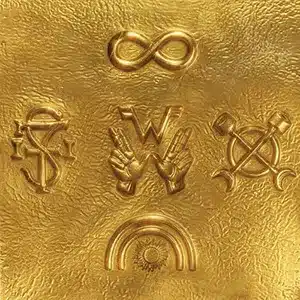
Weezer message boards are swelling with anticipation about Gold, the band’s 20th studio album and seventh self-titled (hence differentiated by the colors of the sleeves). Fans are searching for signs of where the band is at and what sonic paths they have taken. Are the multiple songwriters, producers, and contributors cited thus far indicators that the front-man is relinquishing some control over operations?
It has been four years since Weezer’s last album, a lifetime considering that six were released during the two years prior. Is the prolific (post-)pandemic period winding down? Will the band continue to integrate new instruments, styles, and production techniques? Cuomo has already mentioned in recent interviews that the band sought a live sound in the studio, dispensing with click tracks, grids, and pitch correction. Will this conscious uncoupling from technology’s crutches signal a less precise—perhaps less pop—sound?
However Gold ultimately shines for fans, any overview of the band’s career will surely recognize the 2020s as Weezer’s most productive, exploratory, and innovative decade. Musically, their scope has broadened beyond all expectations, while lyrically, Cuomo is delving ever deeper into his psyche, penning with an adeptness that ensures the personal always translates into the universal and timeless.