

Sheffield, November 1985. Division Street was infamously known for Sven Books, an adult bookstore that epitomized the first gateway to suggestive content for local sneaky kids, long before the internet made everything too easy. That night, however, most people walking down the street weren’t interested in any risqué items the store offered behind its windows. Their attention was drawn elsewhere – specifically, to the apartment of one Russell Senior, guitarist and violinist for the local band Pulp, located above the shop.
Someone was hanging out of the flat’s window, and you could sense that things were about to take an even more awkward turn. Jarvis Cocker, a friend and bandmate of Russell, had just decided that trying to wow Russell’s girlfriend with a Spider-Man impression was a brilliant idea. Later, he would dismiss it as “just senseless bravado”, but at that moment, as he dangled precariously from Russell’s window just a few feet above the adult bookstore, he was very committed to the stunt.
As he would go on to recall in his 2022 memoir, Good Pop, Bad Pop, such shenanigans were inspired by something he had recently witnessed: “A guest had performed that same trick […] at a party […] the week before. He got a round of applause when he re-entered the room […] (from) the adjacent window ledge about three feet away.” No applause awaited Jarvis, though, as he reminisced years later to biographer Martin Aston: “I realized I didn’t have the strength to do it, or climb back in, so I had to count to three and just let go.”
That’s how Jarvis Cocker fell out of a second-story window, landing on the pavement right in front of Sven Books, breaking his pelvis, a wrist, and an ankle in the process. “His broken glasses and splayed limbs serving as a dire warning on the dangers of pornography to several adolescent boys who had been plucking up the courage to go in,” Russell remarked sardonically in his autobiography Freak Out the Squares (2015). Now, those names might ring a bell. Yes, it’s that Jarvis Cocker – the same one who, with guitarist Russell Senior still by his side, would go on to score a string of smash hits at the height of the Britpop era in the mid-’90s.
When Jarvis fell out of that window, his band, Pulp, had released only one album: 1983’s It, a collection of sugary, vaguely Leonard Cohen-esque acoustic songs that came and went without much fanfare. The band were already turning into something different at that point: the EP Little Girl (With Blue Eyes), released that same month, unveiled a certain love for Lou Reed. The addition of Senior, brought in during the multiple line-up reshuffles that followed the debut album, proved to be crucial: “I spiked up (Jarvis’) poncey ballads with acidic guitar lines and something new started to happen,” reflected the guitarist in his book. This transformation was confirmed with the release of another EP, Dogs Are Everywhere, later in 1986. It really was Jarvis’ painful accident, though, that further accelerated the change.
The Freaks Come Out at Night
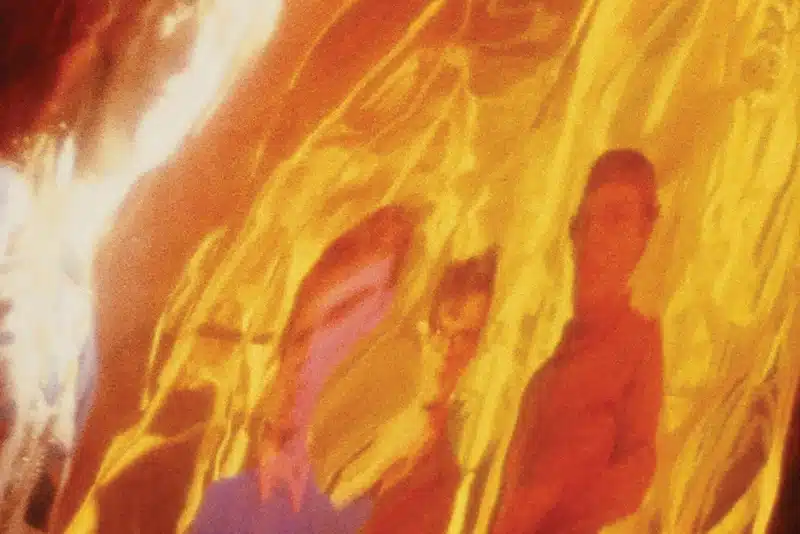
By the time Freaks, their second full-length album, came out in May 1987, Pulp’s sound had taken on a darker, eerie tone, reminiscent of post-punk icons the Fall, and filled with a genuine sense of fear and discomfort. Ironically, according to Russell’s memoir, the Fall’s lead singer Mark E. Smith once described Pulp as “The Fall for children.” Another label was more often attached to them, and that’s how the album got its title. “We were always getting called freaks,” Jarvis famously proclaimed to Sounds weeks after the release, also painting a vivid picture of such a motley crew: “I’m thin with specs, he (Russell) looks like Count Dracula, Candida (Doyle, keyboards) although she’s 23 looks 14, while Pete (‘Manners’ Mansell, bass) looks like a football hooligan.”
Drummer Magnus Doyle, Candida’s brother, didn’t make the list, but the description Russell gives in his autobiography proves he was freaky enough to be part of it: “a man of few words but many remarkable actions.” Among them: destroying drum kits, crashing into walls while wearing a bucket on his head, and vomiting into pint glasses.
If the title of the record was all about its creators, its subtitle – Ten Stories About Power, Claustrophobia, Suffocation and Holding Hands – was very revealing about its themes. It’s no surprise, considering Jarvis wrote many of those songs while temporarily confined to a wheelchair after spending six weeks in the hospital recovering from his injuries. “This was the low point, emotionally, of my life. It’s such a depressing album,” he later told Record Collector.
During a separate interview with Mojo in the early 2000s, he added: “I liked the ridiculousness of writing “Master of the Universe” while being on the dole and not being the master of anything at all. I was stuck in a wheelchair at my mother’s watching Lovejoy. So it had a certain grim humour.” Indeed, the sinister laughter on the opening track, “Fairground” – sung by Senior and inspired by a childhood visit to a freak show – is one of the creepiest things you’ll ever hear.
The menacing crescendo of “Being Followed Home”, with its palpable sense of paranoia, lives up to its title. Even seemingly tender moments turn ominous, like the bittersweet Velvet Underground vibe of “I Want You”, with lines like “I’ll take you, just to push you far away” doing nothing to lighten the mood. If that weren’t enough, “They Suffocate at Night” still evokes the Velvets, now with a more brooding atmosphere and lyrics that portray a worn, tattered relationship. In essence, Freaks is the sound of a man falling out of a window.
Far from perfect – recorded for just £600, the producer disowned Freaks and asked that his name not be printed in the liner notes, so the credits simply read “Produced by Pulp” – yet it was strikingly vibrant and true, earning decent reviews but failing to make any real impact. Issues with Fire Records kept it in a limbo for almost a year, and that certainly didn’t help. When it finally released, the line-up that recorded it had already disintegrated, and despite the buzz from a few concerts with Jarvis in a wheelchair the previous year, there wasn’t much promotion. According to Russell, the album only sold a few hundred copies at the time but, more importantly, it started to send “its tentacles of influence into the bedrooms of a number of people we were to later encounter.”
When Pulp finally resurfaced a few years later, it was a completely different story, as they were almost ready to take over the charts. In a video interview for Faber & Faber, Jarvis Cocker confessed to seeing the fall accident as a kind of epiphany, a pivotal turning point: “(After that) I stopped trying to be profound and started writing about normal things. I really did come down to earth”. In the long run, this shift let him pen a hit like “Common People”, which helped etch his name into pop music history.
In the short term, the accident spurred the most intense – and largely forgotten – Pulp album ever. Or, as Russell summed it up in his memoir: “an album I’m embarrassed by but not ashamed of – if that makes any sense.” Today, on Division Street, an unofficial blue plaque is affixed to the window of a flower shop right next to where Sven Books once stood. It reads: “Jarvis Cocker, musician. Sustained broken leg due to clambering out of a window above this site. 1985”.
Works Cited
Aston, Martin. Pulp. Pan. 1996.
Senior, Russell. Freak Out the Squares: Life in a band called Pulp. Aurum Press. 2015.
Cocker, Jarvis. Good Pop, Bad Pop. Penguin Random House. 2023.