

Country music fans will tell you, there’s country music, and there’s Texas country music. They are not the same thing. Just because someone’s from the Lone Star state doesn’t make one a Texas country artist. Defining just what Texas music is can be difficult. It is characterized more by what it is not, almost more than what it is (grittier than Nashville production, populated by self-described outlaws, more honky-tonk danceable than ballad driven, etc.).
Because Texas music contains elements of pop (Buddy Holly), rock (ZZ Top), folk (Nanci Griffiths), gospel (Beyoncé), R&B (Leon Bridges), blues (Stevie Ray Vaughn), jazz (Lyle Lovett), ad infinitum, it’s hard to find a unifying principal that binds all of these artists together other than the high quality of work.
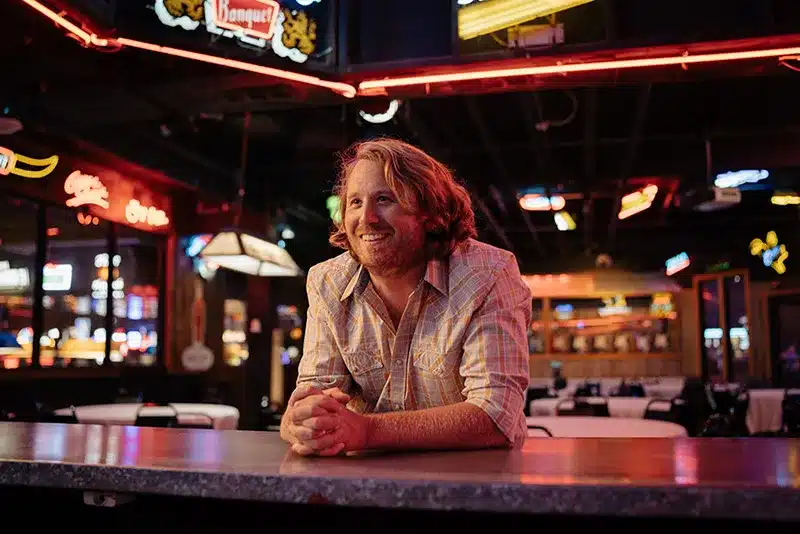
However, there is no doubt that William Clark Green is a Texas country musician. He grew up in the small East Texas town of Flint, went to high school in College Station (home of the George H.W. Bush Presidential Library and Museum) and attended Texas Tech in Lubbock. He continues to perform throughout the state, where he enjoys a strong fan base.
Green also writes lots of songs about Texas, its particular places and local characters. The best songs on his latest album, Watterson Hall, are the ones that refer to the Lone Star State. That is clearly evident in tunes such as “Whole Lotta Lubbock” and “Cowtown”, with references to everything from feedlots and the smell of cow dung to cowgirls and cowboys in the big city of Fort Worth.
Even when the details are less explicit about the state, such as in the title song and “Where the Wild Things Are”, which concern his love for his wife and children, the references to dancehalls and saloons set the sentimental action in you know where. Green is a family man. He loudly expresses this in several songs, such as “I Am the Kite” and “Fight to Love Another Day”. These ground his philosophy in domestic matters.
Other songs provide the wider context for his ethical concerns. In cuts such as “Something You Would Die For” and “Hawks Don’t Fly With Chickens”, Green offers enlightened visions about individual responsibilities and community. The instrumental accompaniment to these songs is hard-driving beats that emphasize the material’s importance and seriousness.
That doesn’t mean Green is always well-behaved. It just means he knows he should know better. He has a dry, self-deprecating sense of humor. “I ain’t never had a hard time / having me a good time,” he confesses over a western swing beat on “Good Time”. When he sings about “Drinkin’ and Drivin'”, he’s crooning about playing golf when inebriated. Green sings in an earnest voice, even when he is silly. These cuts leave the more serious concerns.
Watterson Hall offers a glimpse into the mythical Texas that many of its denizens still consider their God-given heritage. Green personifies the good ol’ boy without the negative stereotypes. One can easily imagine this as the soundtrack to a Saturday night of two-stepping with one’s main squeeze at a dance hall in the Panhandle. That’s also its greatest limitation. Green writes about what he knows. One senses that the singer-songwriter is very familiar with what he’s singing about. It would be more interesting if he addressed the current reality of Texas, including its complexities.