
For most of the last 20 years, the official World Cup song has been the kind of project that gets the cynical wing of the music press cracking its knuckles before the first listen, a co-write between four songwriters in a Stockholm studio, a chant repurposed from a deodorant ad, a hook held together with the duct tape of corporate goodwill. Then 2010 happened. Shakira and Freshlyground recorded “Waka Waka (This Time for Africa)” in a studio in Punto del Este, lifted the foundational chant from Cameroon’s Golden Sounds, and turned an obligation into a global hymn: four billion YouTube views, 15 million copies sold, a song that outlived every team that played to it.
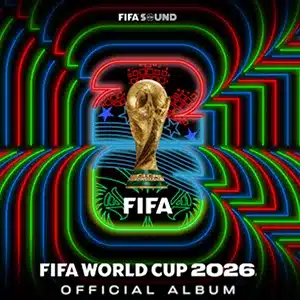
Sixteen years later, FIFA has done something both bolder and stranger. It has, for the first time in World Cup tournament history, abandoned the idea of a single definitive anthem altogether and instead built a sprawling 18-track double album that runs nearly an hour and tries to do for global pop in 2026 what Shakira did almost by accident in 2010. Most of the time, against the odds, it works.
What FIFA Sound and the producer Sal XO have assembled and released on the 5th of June, before Mexico and South Africa walk out at the Estadio Azteca to open the tournament, is, on paper, the most aggressive bet on the future of Afrobeats that any sporting body has ever placed. Six of the 18 tracks are anchored by Afrobeats voices in lead positions: Burna Boy on the closing anthem “Dai Dai” with Shakira; Rema on the opening track “Goals” alongside LISA and Anitta; and Davido on “No Place Like Home” with Major Lazer and Nelly Furtado.
Ayra Starr trades bars with Atlanta’s Latto on “Show Me”; Angel joins Fridayy and Stormzy on “Blessings”; and Tyla, South Africa’s amapiano breakthrough, now arguably the most important pop voice on her continent, riding a trap-and-R&B groove with Future on “Game Time”. Add to that ledger the percussive vocabulary that has migrated from Lagos to Toronto, from Accra to Atlanta, in the past five years, and what you are listening to is not a soundtrack with Afrobeats on it. It is a soundtrack built on Afrobeats. The genre has, in this album, finally taken its rightful place at the center of the global pop economy rather than on its periphery.
The World Cup album opens, as it should, with three tracks that throw the stadium doors open. “Goals”—LISA, Anitta, Rema—is the kind of three-continent collaboration that, ten years ago, would have read as a marketing fantasy. Today it reads as inevitable. LISA, the Thai-born BLACKPINK rapper, takes the song’s first verse with the icy precision that has made her one of the highest-paid solo K-pop acts in the world. Anitta, the Rio funkeira who has been Brazil’s biggest export since Romário, takes the second. Rema, the Edo State prince of Afrobeats whose “Calm Down” remix with Selena Gomez still won’t leave any global Top 40 chart it has touched, walks the bridge home in the patois of a victory lap.
Then comes “Game Time”, with Tyla’s silken upper register threading itself around Future’s languid Auto-Tuned drawl. If the song’s trap-R&B fusion is less stadium-ready than the opener, it works as a kind of after-party hush. By the time Jessie Reyez and the Palestinian-Chilean Elyanna trade verses on “Illuminate”, the record has set its thesis: this is a world tournament, and it sounds like one.
What follows is a genuine, sometimes surprising, and only intermittently silly tour of the genres that organize popular music in 2026. Daddy Yankee—back from the gospel hiatus that some of us thought was permanent—and the Jamaican dancehall queen Shenseea turn in “Echo”, a reggaetón-and-bashment hybrid that gives the album its first real chant. Then Los Ángeles Azules, the Mexican cumbia institution from Iztapalapa whose accordion lines have been a wedding-reception inheritance for three generations of Latinos, are paired with Belinda for “Por Ella”, and the resulting cumbia is the most generous gesture toward the host country on the entire record, more honest than most of the Tex-Mex flag-waving that surrounds it.
“Three Nations”, with 21 Savage, the Mexican rapper Nata Cano, and French Montana, is the album’s geographic conceit made literal, a US/Mexico/Morocco-via-the-Bronx handshake, and works much better than such a setup has any right to. Major Lazer’s “No Place Like Home”, with a deeply game Nelly Furtado returning to a kind of music she hasn’t made since “Loose,” and Davido finally getting the global cosign he has been quietly owed since “Fall,” is the album’s clear summer-anthem candidate. It is the song most likely to make people remember where they were 15 years from now.
The misses, when they come, come exactly where you would expect. The Rolling Stones’ “In the Stars (Remix)”, a reworking of a Mick Jagger ballad from earlier in their career, is the album’s grand-old-man interlude, handsomely produced, emotionally inert, and almost certainly included to bait the boomer demographic that still buys physical copies of soundtrack albums. Alejandro Fernández’s “Mi México Lindo” is a sturdy ranchera that will play beautifully on the day Mexico hosts a knockout-round match and will probably never be played again.
IShowSpeed’s “Champion”, yes, the streamer with the 80 million YouTube subscribers, has now released an official FIFA World Cup single, is exactly the dare-you-to-hate-it novelty that you would write into a script about FIFA in 2026 and then delete because it was too on the nose. It is somehow not the worst song on the album. Nora Fatehi, Vegedream and Sanjoy’s “Siir Siir” is a charming Indo-Maghrebi excursion that nobody is going to play twice. Danny Ocean’s “Partidazo” is a competent Venezuelan reggaetón cut whose primary virtue is that it doesn’t overstay its welcome.
The middle and back half of the record, however, run hotter than they should. “Blessings” is the album’s secret pleasure. Stormzy’s Ghanaian-British baritone is laid over a beat that splits the difference between gospel and amapiano, with Fridayy’s Philadelphia-Nigerian melisma and Angel’s drill-adjacent threats turning the whole thing into something close to a sermon. Ava Max and BIA’s “Energy” is exactly the EDM thump it advertises itself as, and is none the worse for that.
Jelly Roll and Carín León’s “Lighter”, the first single released from the record back in March, was the most pleasant surprise of the entire rollout: a country-and-música-Mexicana ballad with a stomp-clap drum pattern that, in a less polarized cultural moment, would already be a Number One on both Hot Country Songs and Regional Mexican Airplay. Shaggy, the Cuban funkateer Cimafunk, and the Brazilian newcomer Zema’s “Love Always Wins” is the album’s most genuinely surprising track. This reggae-funk-axé hybrid has no business working and does anyway.
Then, of course, Shakira and Burna Boy’s “Dai Dai”, which closes the album as the official song of the tournament and the theme of the FIFA Global Citizen Education Fund. The title comes from the Italian “dai, dai”, a roughly translatable “come on, come on”, and the song stretches that phrase into Japanese, French, Spanish, and English over a beat that pulls Afrobeats percussion into the same room as Colombian cumbia and Latin pop chorus structure.
It does not have “Waka Waka’s” feral, once-in-a-lifetime hook; almost nothing ever will, but it does something subtler and arguably more politically interesting. It puts a Colombian woman and a Nigerian man at the center of a song about children’s education, with the royalties pledged to a $100 million fund for kids’ schooling, and it makes a quiet argument about what global pop can do when it stops pretending it is only about partying. The fact that Shakira and Burna will perform it together at the World Cup Final’s halftime show on the 19th of July at MetLife Stadium only confirms how seriously FIFA Sound takes this thing.
What is most striking about the Official FIFA World Cup 2026 Album is its acknowledgement of where the music actually lives now. Pop in 2026 is not a thing that radiates outward from London and Los Angeles; it is a network whose nodes are in Lagos and Seoul and Mexico City and Atlanta and Riyadh and Bogotá, with influences sloshing back and forth between them in something close to real time. An album that wanted to flatter that geography would have made tokens of its Afrobeats, Latin, and K-pop contributions and let the white-tower stars carry the singles. They have done the opposite. The Stones get a bonus track; Burna gets the anthem. Rema gets the opener. Tyla, Ayra Starr and Davido are not garnishes here. They are the dish.
It is not a perfect record. It cannot be. The 18-song format guarantees that at least four songs will end up as airport-lounge background and at least two will be the kind of curiosities you skip on the second listen and forget by the third. Still, on the basic question of whether a multinational sporting body can put together a soundtrack that does justice to the actual sound of 2026, the answer this album gives, across countries, languages, accents and rhythms, is mostly, genuinely, yes. Football is the world’s game because everyone gets to play it. The best moments on the Official FIFA World Cup 2026 Album understand that pop is, finally, the same.
Twenty-five days from now, the Mexico City crowd will sing along to “Por Ella”. Two weeks after that, in Vancouver, fans will scream “No Place Like Home”. On the 19th of July in Rutherford, New Jersey, when Shakira and Burna Boy take a stage in front of a hundred thousand people and four billion more on television, and “Dai Dai” begins, the album will get the test it was always going to get. Whether it survives that test, the only one that has ever mattered for music of this kind, is a question for July. For now, in the long warm-up to the largest sporting event in human history, the soundtrack is up to the occasion. The squad is, in Infantino’s words, strong. The starting 11, especially the Africans on it, look very ready to play.